
Summary
Geshe Phende Gyaltsen was a Tibetan Buddhist monk born in Jhongpa village in Lithang, who went to India in 1985 to study and earned a Geshe degree at Sera Mey Monastery. Chinese police arrested him in March 2022 for actively taking part in the renovation of Shedrub Dhargyeling monastery in Lithang, a source told Radio Free Asia. He died in custody on 26 January 2023, aged 56. A source said his health had deteriorated in prison after physical torture.
Timeline
Dies in prison
Radio Free Asia
Tibetan political prisoner and monk dies in Chinese custody
Open original source (opens in a new tab)Taken to hospital, then returned to detention
He was taken to a hospital in Lithang because of ill health. A source said he had been very healthy before he was imprisoned.
Radio Free Asia
Tibetan political prisoner and monk dies in Chinese custody
Open original source (opens in a new tab)Arrested by Chinese police
A source said he had also helped as a mediator between conflicting parties in the county.
Radio Free Asia
Tibetan political prisoner and monk dies in Chinese custody
Open original source (opens in a new tab)
Sources
This page consolidates publicly available external sources. Links open the original publication.
External source
Radio Free Asia
Tibetan political prisoner and monk dies in Chinese custody
Open original source (opens in a new tab)People named in the same record
Kamile Wayit卡米萊·瓦依提
Uyghur preschool education student at the Shangqiu Institute of Technology · XinjiangCHR-170225
Kamile Wayit, a 19-year-old Uyghur preschool education student at the Shangqiu Institute of Technology in Henan province, was arrested in Atush, where her family lives, while home for winter break, for sharing a video about the "white paper" protests on a social media app, Radio Free Asia reported. A staff member at an Atush police station confirmed to RFA that she was serving a three-year sentence in Mush Women's Prison. Amnesty International reported in January 2026 that she had been released after completing her sentence.
· Amnesty International
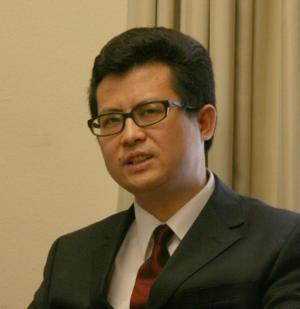
Guo Feixiong郭飛雄
Human rights defender · Mainland ChinaCHR-598374
Guo Feixiong, also known as Yang Maodong, was sentenced to six years on 28 November 2014 and left Yingde Prison on 7 August 2019 at the end of that term. His sister said he was detained again in December 2021. On 11 May 2023 the Guangzhou Intermediate People's Court sentenced him to eight years for incitement to subvert state power, his sister told Radio Free Asia.
· Radio Free Asia
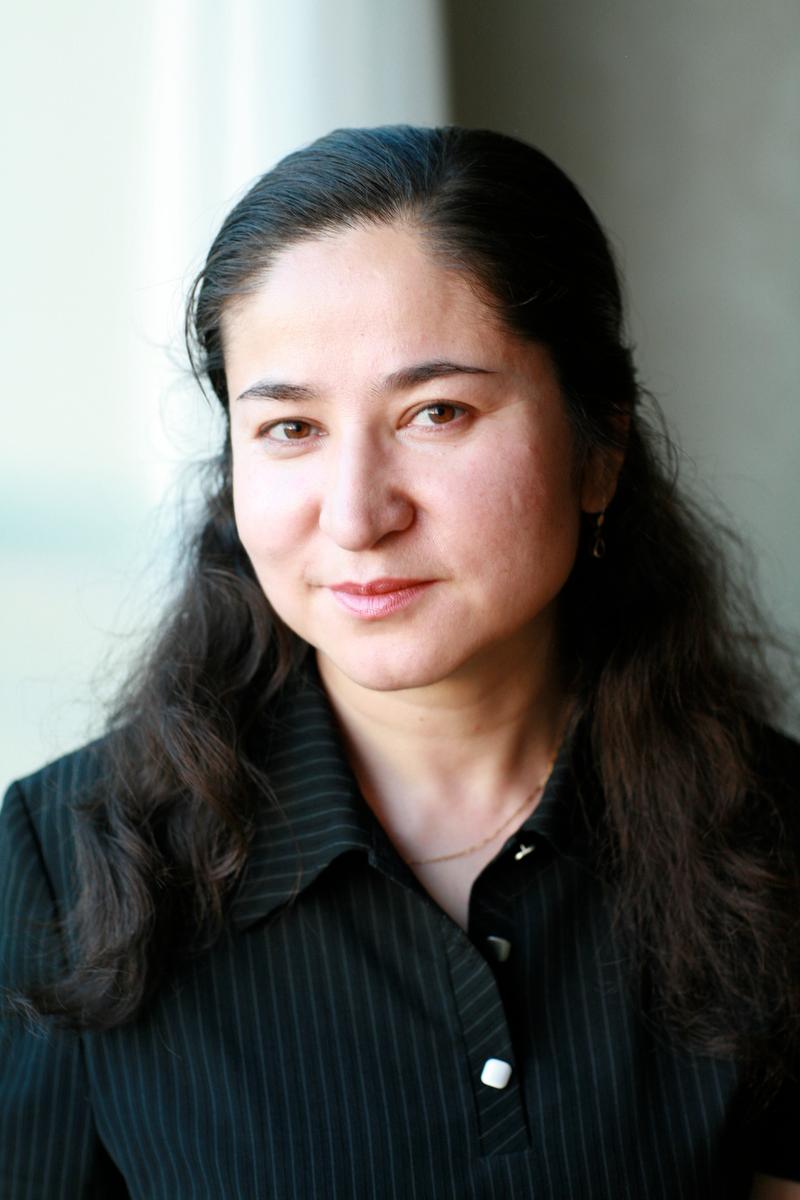
Rahile Dawut熱依拉·達吾提
Uyghur ethnographer and university lecturer · XinjiangCHR-649528
Rahile Dawut, a Uyghur ethnographer, taught at Xinjiang University and founded its Ethnic Minorities Research Center. She was detained in December 2017. The Dui Hua Foundation reported on 21 September 2023 that a Chinese government source confirmed she is serving a life sentence for endangering state security, after a December 2018 trial for splittism and a rejected appeal, together with deprivation of political rights for life. On 27 August 2026 Human Rights Watch again named her among prominent figures who remain in prison.
· Human Rights Watch
Events on the same issues
Persecution
BBC reports satellite images and testimony on Xinjiang detention camps, including one at Dabancheng
The BBC reported on 24 October 2018 that a satellite image taken on 22 April 2018 showed a large, heavily guarded compound in the desert outside Dabancheng, near Urumqi, with an outer wall about two kilometres long and 16 watchtowers. The BBC says China is accused of holding hundreds of thousands of Muslims in Xinjiang without trial; the Chinese government denies this and says people attend voluntary "vocational schools" to combat "terrorism and religious extremism". According to the BBC, German scholar Adrian Zenz found Xinjiang government tender documents describing dozens of camps with watchtowers, barbed wire and guard rooms, and an Australian architecture firm's most conservative estimate was that the Dabancheng site could hold about 11,000 people. The BBC interviewed eight Uyghurs abroad whose accounts of detention it describes as consistent.
Persecution
China insists Dalai Lama's successor needs Beijing's approval after Dalai Lama affirms succession plan
According to RFA and Al Jazeera, the Dalai Lama said in a statement on 2 July 2025 that the institution of the Dalai Lama will continue and that the Gaden Phodrang Trust alone has the authority to recognise his future reincarnation. RFA reported that China's foreign ministry reiterated that the selection of a new Dalai Lama must follow Chinese law and take place in China, and Al Jazeera reported that China said the succession must be approved by the central government in Beijing. Amnesty International said Chinese policy requires all reincarnations of Tibetan Buddhist "Living Buddhas" to be approved by state authorities under the 2007 Measures on the Management of Reincarnation of Living Buddhas, and called the authorities' efforts to control the selection "a direct assault on the right to freedom of religion or belief".
Persecution
China adopts the Law on Promoting Ethnic Unity and Progress
China passed the Law on Promoting Ethnic Unity and Progress on 12 March 2026, and it took effect on 1 July 2026, according to Radio Free Asia. The 65-article law gives Mandarin priority in education and government affairs (Article 15), requires religious groups, schools and places of worship to follow the "Sinicization of religion" (Article 46), and states that people outside China could face legal consequences if Beijing determines their actions undermine "ethnic unity" (Article 63). Al Jazeera reported that Amnesty International said the law pushes Uyghurs, Tibetans and Mongolians to adopt a single state-defined national identity, and that Vice Justice Minister Hu Weilie called the overseas provision "legitimate, lawful, necessary and feasible". UN human rights chief Volker Türk called on China in June to repeal the law.
Reports that name this person
Source record · Freedom House
China: Freedom in the World 2024 Country Report
Freedom House's Freedom in the World 2024 country report on China covers 2023. It rates China Not Free with a total score of 9 out of 100 (Political Rights -2 of 40, Civil Liberties 11 of 60). The Chinese Communist Party maintains tight control over all aspects of life and governance, Xi Jinping has consolidated personal power to a degree not seen in decades, and civil society has been largely decimated. Hong Kong and Tibet are assessed separately.
Source record · Human Rights Watch
World Report 2024: China
Human Rights Watch's World Report 2024 chapter on China, covering events of 2023, says repression deepened across the country in the tenth year of Xi Jinping's rule. It reports a surge in Covid-19 deaths after the abrupt end of "zero Covid", one of the world's most stringent censorship regimes, continued crimes against humanity in Xinjiang, severe restrictions in Tibet, and Beijing's full control of Hong Kong under the National Security Law. It also records the revised Counter-Espionage Law and new pressure on foreign firms.
Reports on similar issues
Source record · Freedom House
China: Freedom in the World 2023 Country Report
Freedom House's Freedom in the World 2023 country report on China covers events in 2022. It gives China a total score of 9 out of 100 (unchanged), with Political Rights at -2 out of 40 and Civil Liberties at 11 out of 60, and the status Not Free. Xi Jinping secured a third term as party leader in October 2022, and the largest protests since 1989 erupted in late November against zero-COVID rules and were quickly suppressed.