
Overview

The US Congressional-Executive Commission on China (CECC) says that the Party's use of "fazhi" signifies in practice "rule by law", where the law becomes a tool of control wielded by the Chinese Communist Party, and that what is seen now with respect to the rule of law is "not development but rather regression". It reports that in its 2025 reporting year the criminal justice system remained a political instrument, and that authorities targeted individuals who exercise free speech and seek remedies within the legal system. In January 2017, Supreme People's Court Chief Justice Zhou Qiang told courts to "firmly resist" the Western ideas of "constitutional democracy", "separation of powers" and "judicial independence", according to a translation published by Hong Kong Free Press.

Carl Minzner of the Jamestown Foundation writes that "rule according to law" was first introduced into a Party plenum decision in 1997 and incorporated into the Constitution in 1999. The Fourth Plenum in October 2014 made "ruling China according to law" its focus; Minzner writes that the Decision states political-legal committees will remain the core organizational channel for Party control of the legal system. In 2016 the Ministry of Justice issued directives requiring lawyers and law firms to "support the leadership of the Chinese Communist Party", according to Human Rights Watch. The CECC says the Criminal Procedure Law requires prior permission for counsel visits during the investigation of state security or terrorism cases and does not provide for family visits per se.

A joint statement signed by Amnesty International and other groups says police seized over 300 lawyers and activists from 9 July 2015, and that ten lawyers and activists were imprisoned for three to eight years, including Wu Gan for eight years and Zhou Shifeng for seven. It says that in the following years at least 20 lawyers were stripped of their law licenses and another 26 lawyers faced other sanctions, and that Ding Jiaxi and Xu Zhiyong received 12 and 14 years in 2023 for "subversion of state power". The CECC reports that the Beijing Justice Bureau revoked the license of lawyer Zhang Qingfang in September 2024, and HRW that lawyer Lu Siwei was sentenced in April 2025 to 11 months in a closed trial.

In Hong Kong, HRW reports that since 2020 authorities have arrested at least 365 people and convicted 174 for allegedly violating national security laws, according to official figures, and that nearly everyone charged is eventually convicted. The CECC says national security cases in Hong Kong must be adjudicated by three judges. On Taiwan, the CECC reports that the guidelines on "separatism" that took effect in June 2024, issued by the Supreme People's Court, Supreme People's Procuratorate, Ministry of Public Security, Ministry of State Security and Ministry of Justice, provide that the statute of limitations may be extended indefinitely for people who avoid investigation or trial and that they may be tried in absentia.

Key laws and methods

Fourth Plenum Decision on comprehensively advancing law-based governance

Minzner writes that the October 2014 Decision names political-legal committees as the core organizational channel for Party control of the legal system and provides that important draft legislation be reported to central Party leaders to "discuss and decide".

Rejection of "judicial independence"

At a Supreme People's Court meeting on 14 January 2017, Chief Justice Zhou Qiang said courts must firmly resist "constitutional democracy", "separation of powers" and "judicial independence", which he called erroneous Western notions threatening Party leadership, according to a translation published by HKFP.

Ministry of Justice directives on law firms and lawyers (2016)

HRW reports that the directives (Nos. 133 and 134, effective 1 November 2016) require lawyers and law firms to "support the leadership of the Chinese Communist Party" and to set up Party branches, and prohibit lawyers from expressing opinions that "reject the fundamental political system" of China.

Limits on counsel and family visits (Criminal Procedure Law)

The CECC says the Criminal Procedure Law circumscribes counsel visits during the investigation phase in state security or terrorism cases, requiring prior permission, and permits visits by family members only if they are acting as defense representatives.

"Injuring the reputation of a hero or martyr"

The CECC reports that police took artist Gao Zhen into custody in August 2024 on suspicion of "insulting or slandering heroes and martyrs", reportedly in connection with his artwork, including art reassessing Mao Zedong's rule.

"Comprehensive management" centers

The CECC says early intervention efforts within the framework of comprehensive management (zonghe zhili) are overseen by the Party's Political and Legal Affairs Commission, which in January 2025 outlined a goal of unifying services for litigation, legal consultation and petition reception in one location and of using AI and behavioral analytics to monitor public security challenges.

Key milestones

  1. Tenth anniversary of the "709" crackdown

    A joint statement signed by Amnesty International and other groups calls for an independent international investigation, saying no Chinese authorities have been held accountable.

    Amnesty International

    Chinese government impunity for crackdown on lawyers fuels decade of repression (including the joint statement "International action critical for accountability for “709” crackdown, other violations")

    Open original source (opens in a new tab)
  2. Supreme People's Court interpretation on violence toward police

    The January 2025 interpretation requires that violent acts toward police officers be weighed in light of any police misconduct. The CECC reports that a commentary noted an uptick in people being criminally charged for minor scuffles or verbal altercations with police, a trend it says the interpretation implicitly addressed.

  3. Beijing Justice Bureau revokes lawyer Zhang Qingfang's license

    The CECC reports the Bureau accused him of "hyping up" cases online; he had previously represented detained democracy advocate Xu Zhiyong.

  4. Ding Jiaxi and Xu Zhiyong sentenced for "subversion of state power"

    Lawyer Ding Jiaxi received 12 years and legal advocate Xu Zhiyong 14 years, according to the 2025 joint statement.

    Amnesty International

    Chinese government impunity for crackdown on lawyers fuels decade of repression (including the joint statement "International action critical for accountability for “709” crackdown, other violations")

    Open original source (opens in a new tab)
  5. Chief Justice Zhou Qiang rejects "judicial independence"

    At a Supreme People's Court meeting, Zhou said courts must firmly resist the western idea of "judicial independence", according to a translation published by HKFP. HKFP reports the Court later published posts explaining his position in more moderate language.

  6. Ministry of Justice directives on lawyers and law firms take effect

    HRW reports that the amended directives require lawyers and law firms to support the leadership of the Communist Party and to establish Party branches, and impose restrictions on lawyers' freedom of expression.

  7. "709" crackdown on human rights lawyers

    Authorities across China launched what a joint statement signed by Amnesty International and other groups calls an unprecedented assault on human rights lawyers and rule of law activists; police seized over 300 lawyers and activists.

    Amnesty International

    Chinese government impunity for crackdown on lawyers fuels decade of repression (including the joint statement "International action critical for accountability for “709” crackdown, other violations")

    Open original source (opens in a new tab)
  8. Fourth Plenum concludes with "ruling China according to law" as its focus

    Minzner writes that it was the first time top Chinese leaders had designated law as the central focus of a plenum, and that the Decision reaffirms one-party political control and calls for greater political indoctrination of lawyers.

  9. "Rule according to law" written into the Constitution

    Minzner writes that the term was first introduced into a Party plenum decision in 1997 and incorporated into the Constitution in 1999, and has been a contested term for state and society alike.

Sources

External source

Amnesty International

Chinese government impunity for crackdown on lawyers fuels decade of repression (including the joint statement "International action critical for accountability for “709” crackdown, other violations")

Open original source (opens in a new tab)
Persecution

Persecution

Three Tibetan schools in Golog, Qinghai, closed in recent months, RFA reports

Radio Free Asia reported on 23 October 2026, citing sources inside Tibet, that Chinese authorities closed three Tibetan schools in the Golog region of Qinghai in recent months: Gangjong Grassland Girls' School in Ragya Township, Machen County, closed on 28 August; Jasag Village Primary School, shut in September; and Golog Tadra Orphan School, ordered to close in October. Its Tibetan sources linked the closures to the Chinese government's education policies and its promotion of the Ethnic Unity and Progress Law, which took effect on 1 July 2026. The Chinese government has cited Golog's high altitude and shortages of teachers as reasons for establishing schools outside the region. The Golog prefecture education department told RFA "We don't know the details", and the Machen County Education Department said it had "no authority to respond".

Persecution

Hong Kong Alliance dismantled and annual 4 June vigil ended: from vigil bans to the 2026 sentencing of its leaders

According to Amnesty International, the Hong Kong Alliance in Support of Patriotic Democratic Movements of China held a vigil in Victoria Park on 4 June every year from 1990; the vigil was banned on Covid-19 grounds in 2020 and 2021. In August 2021 the police national security unit sent the Alliance a letter accusing it of "collusion with foreign forces" and asking for details of its membership and finances; the Alliance voted to disband on 25 September 2021, and Lee Cheuk-yan, Chow Hang-tung and Albert Ho were charged with inciting subversion under the National Security Law. Human Rights Watch reported that the High Court convicted Chow and Lee on 21 August 2026, Ho having pleaded guilty in January. On 11 September 2026 Chow was sentenced to seven years and three months, Lee to seven years and Ho to five years and two months, and the Alliance was fined HK$1.5 million.

Persecution

Hong Kong police raid two independent bookstores and arrest five on suspected sedition offences

According to the Committee to Protect Journalists, Hong Kong police said that on 15 July 2026 the National Security Department arrested two men and three women after raiding two bookstores in Mong Kok, on suspicion of violating the Safeguarding National Security Ordinance by displaying items with "seditious intent" and selling publications with "seditious content". Those held included Sum Wan-wah and Mandy Lau, co-founders of the Have a Nice Stay bookstore, and books were seized. Amnesty International said the raids hit Have a Nice Stay and Greenfield Bookstore, one day after Have a Nice Stay announced it would close citing financial difficulties and "unclear red lines", and that two other bookstores had been raided earlier in 2026.

Persecution

China adopts the Law on Promoting Ethnic Unity and Progress

China passed the Law on Promoting Ethnic Unity and Progress on 12 March 2026, and it took effect on 1 July 2026, according to Radio Free Asia. The 65-article law gives Mandarin priority in education and government affairs (Article 15), requires religious groups, schools and places of worship to follow the "Sinicization of religion" (Article 46), and states that people outside China could face legal consequences if Beijing determines their actions undermine "ethnic unity" (Article 63). Al Jazeera reported that Amnesty International said the law pushes Uyghurs, Tibetans and Mongolians to adopt a single state-defined national identity, and that Vice Justice Minister Hu Weilie called the overseas provision "legitimate, lawful, necessary and feasible". UN human rights chief Volker Türk called on China in June to repeal the law.

Persecution

Hong Kong court sentences 45 defendants in the "Hong Kong 47" national security case

According to Al Jazeera, on 19 November 2024 a Hong Kong court sentenced 45 defendants in the city's largest national security case to prison terms over an unofficial primary election held to choose pro-democracy candidates. Benny Tai, whom prosecutors cast as the "organiser", received 10 years; Owen Chow received seven years and nine months, Gwyneth Ho seven years and Joshua Wong four years and eight months. Of the 47 people charged with conspiracy to commit subversion under the 2020 National Security Law, two were acquitted and 31 pleaded guilty. Human Rights Watch's Maya Wang said running in an election could now lead to a decade in prison, and the US consulate in Hong Kong said it "strongly condemns" the sentences.

Persecution

Hong Kong police issue arrest warrants and HK$1 million bounties for eight overseas activists

Human Rights Watch said that on 3 July 2023 the Hong Kong Police National Security Department issued baseless arrest warrants and offered HK$1 million bounties for eight exiled democracy activists and former legislators, extending China's campaign of political intimidation beyond its borders. The eight are former legislators Ted Hui, Dennis Kwok and Nathan Law, activists Anna Kwok, Elmer Yuen and Finn Lau, labour activist Mung Siu-tat and lawyer Kevin Yam. Police accused them of "committed serious crimes endangering national security, advocated sanctions, undermined Hong Kong, and intimidated Hong Kong officials" and "schemed for foreign countries to undermine Hong Kong's financial status". According to HRW, seven face a charge of collusion with foreign forces, and police cited Article 38 of the National Security Law to say it applies outside Hong Kong and China.

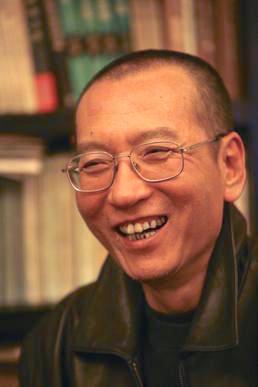
Liu Xiaobo劉曉波

Writer and Nobel Peace Prize laureate · Mainland ChinaCHR-331904

Liu Xiaobo, a writer, former Beijing Normal University lecturer, former president of the Independent Chinese PEN Center and co-author of Charter 08, was sentenced in December 2009 to 11 years for inciting subversion. He died in custody of liver cancer on 13 July 2017, aged 61. His wife, Liu Xia, was kept under house arrest without explanation.

Died in custody

· BBC Chinese

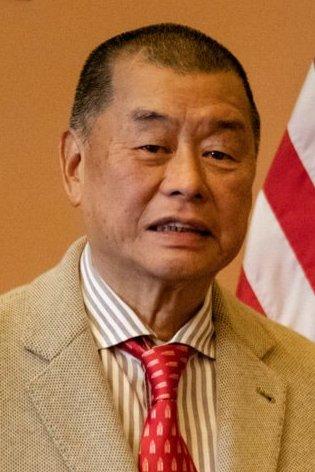
Jimmy Lai黎智英

Publisher and founder of Apple Daily · Hong KongCHR-779605

Jimmy Lai, a British citizen, founded the pro-democracy newspaper Apple Daily, which has since closed. Hong Kong's High Court convicted him on 15 December 2025 of two counts of conspiracy to collude with foreign forces and one count of conspiracy to publish seditious materials. On 9 February 2026 he was sentenced to 20 years in prison. His lawyers said on 6 March 2026 that he would not appeal. A separate fraud conviction was overturned on 26 February 2026. The Committee to Protect Journalists reported in May 2026 that he has been jailed since 2020 and that prolonged solitary confinement has affected his health. On 17 September 2026 it reported that he remained jailed and that his health was declining.

Last reported serving sentence

· Committee to Protect Journalists

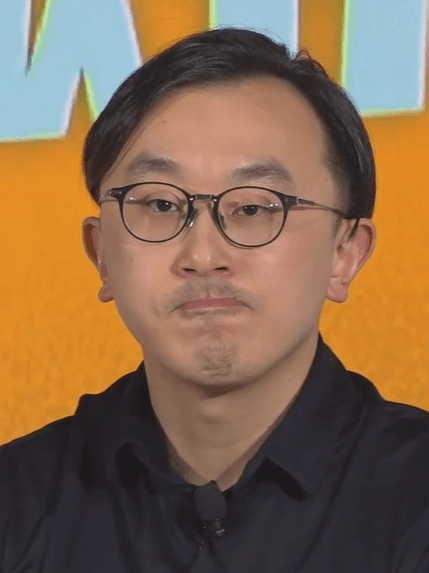
Mike Lam King-nam林景楠

Businessman · Hong KongCHR-824829

Mike Lam King-nam took part in the unofficial pro-democracy primary in July 2020. Hong Kong Free Press reported that he was the only defendant who remained on bail throughout the proceedings. On 19 November 2024 the High Court sentenced him to five years and two months for conspiracy to commit subversion.

Sentenced to five years and two months ·

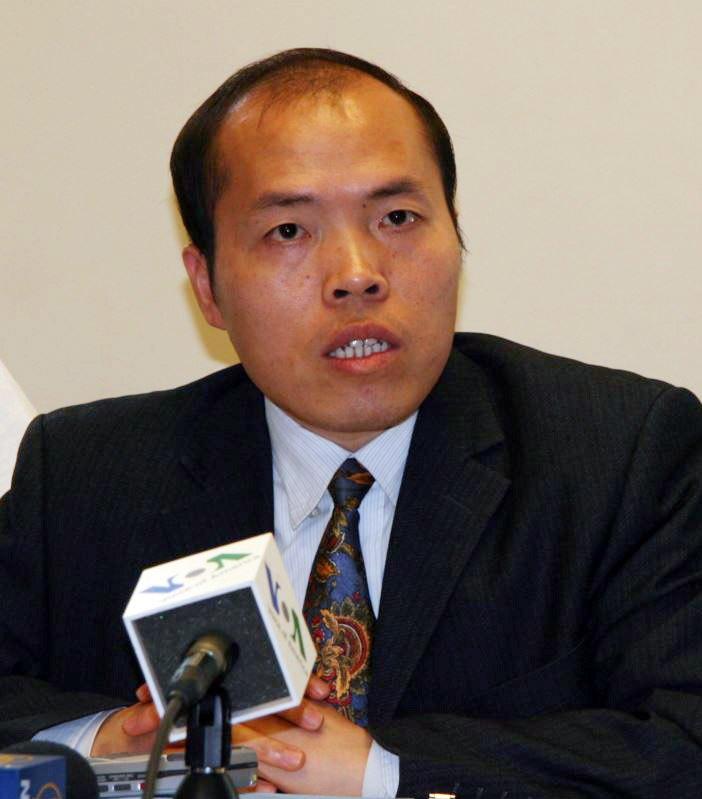
Li Boguang李柏光

Human rights lawyer · Mainland ChinaCHR-185320

Li Boguang, a human rights lawyer who advised farming communities in land disputes, was detained on 17 December 2004 and charged with defrauding farmers, which he denied, according to the Congressional-Executive Commission on China. He was later released on bail on condition that he not advise farmers or petitioners. ChinaAid quoted the National Endowment for Democracy as saying he was detained for the first time in 2004. Radio Free Asia reported in February 2018 that he died at a Nanjing hospital two days after a liver cancer diagnosis, according to relatives, and that no cause of death was given on his death certificate, according to Christian Solidarity Worldwide, which called the death "highly suspicious".

Deceased

· Radio Free Asia

Yang Hengjun楊恆均

Writer · Mainland ChinaCHR-849617

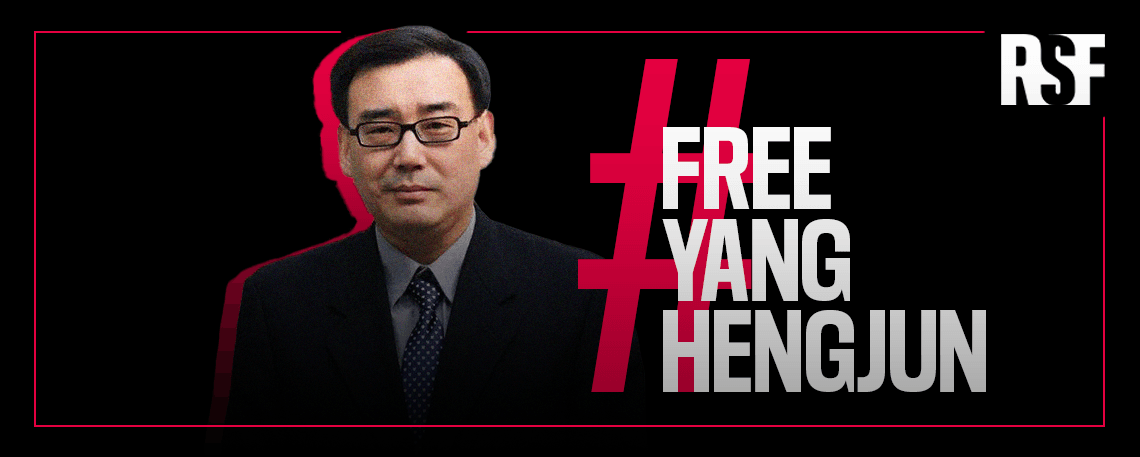
Reporters Without Borders said Yang Hengjun was arrested in January 2019 while visiting China with his family, tried in closed court in 2021, and sentenced on 5 February 2024 to death with a two-year reprieve for espionage. The Australian Embassy, in a statement of 5 February 2026 that refers to him as Yang Jun, said he remained detained two years after that sentence.

Last reported serving sentence

· Australian Embassy, China

Reports

Source record · Reporters Without Borders (RSF)

Reporters Without Borders: 2026 World Press Freedom Index - China

RSF's China page in the 2026 World Press Freedom Index ranks China 178th of 180 countries with a score of 13.85, against 178th and 14.80 in 2025. It calls China the world's largest prison for journalists, with more than 100 currently detained, and says its regime conducts a campaign of repression against journalism and the right to information worldwide. The page says major media groups are state-owned, the Party's Propaganda Department sends all media daily editorial guidelines and censored topics, and journalists are accused of "espionage", "subversion" or "picking quarrels and provoking trouble".

View record

Source record · Freedom House

China: Freedom in the World 2026 Country Report

Freedom House's Freedom in the World 2026 country report on China covers 2025. It rates China Not Free with a total score of 9 out of 100 (Political Rights -2 of 40, Civil Liberties 11 of 60). The CCP oversees a repressive authoritarian regime and civil society has been devastated by a multiyear crackdown. Key 2025 developments include the expulsion of General He Weidong and eight other generals from the CCP and the PLA in October, large Sichuan protests in August and a national digital ID system in July.

View record

Source record · Human Rights Watch

World Report 2026: China

Human Rights Watch's World Report 2026 chapter on China, covering events of 2025, says Chinese authorities systematically deny freedom of expression, association, assembly and religion and persecute government critics. It reports tightened Party ideological control, forced assimilation of Tibetans and Uyghurs, a repressive national security regime in Hong Kong, and no accountability for crimes against humanity in Xinjiang, where several hundred thousand Uyghurs remain unjustly imprisoned.

View record

Source record · Congressional-Executive Commission on China (CECC)

Congressional-Executive Commission on China: 2025 Annual Report

The Congressional-Executive Commission on China's 2025 Annual Report covers 1 July 2024 to 30 June 2025 under the theme "promises made, promises broken": the gap between the PRC's treaty and legal commitments and its practice. Its 17 chapters document restrictions on expression and religion, arbitrary detention, Xinjiang, Tibet, Hong Kong and transnational repression. Its Political Prisoner Database held 11,262 records on 30 June 2025, 2,755 of them active detentions.

View record

Source record · Freedom House

China: Freedom in the World 2025 Country Report

Freedom House's Freedom in the World 2025 country report on China covers 2024. It rates China Not Free with a total score of 9 out of 100 (Political Rights -2 of 40, Civil Liberties 11 of 60). China is ruled by a repressive regime, Xi Jinping has consolidated personal power to a degree not seen in decades, and civil society has been largely decimated. The report lists new Xinjiang religious regulations, an amended state secrets law and the Zhuhai attack that killed 35 people.

View record

Source record · Human Rights Watch

World Report 2025: China

Human Rights Watch's World Report 2025 chapter on China, covering events of 2024, says that more than a decade into Xi Jinping's rule, efforts to centralize control have heightened repression throughout the country. It reports no independent civil society and no freedom of expression, association, assembly or religion, particularly harsh repression of Tibetans and Uyghurs, hundreds of thousands of Uyghurs still imprisoned, and the end of long-protected civil liberties in Hong Kong.

View record

Source record · Freedom House

China: Freedom in the World 2024 Country Report

Freedom House's Freedom in the World 2024 country report on China covers 2023. It rates China Not Free with a total score of 9 out of 100 (Political Rights -2 of 40, Civil Liberties 11 of 60). The Chinese Communist Party maintains tight control over all aspects of life and governance, Xi Jinping has consolidated personal power to a degree not seen in decades, and civil society has been largely decimated. Hong Kong and Tibet are assessed separately.

View record

Source record · Human Rights Watch

World Report 2024: China

Human Rights Watch's World Report 2024 chapter on China, covering events of 2023, says repression deepened across the country in the tenth year of Xi Jinping's rule. It reports a surge in Covid-19 deaths after the abrupt end of "zero Covid", one of the world's most stringent censorship regimes, continued crimes against humanity in Xinjiang, severe restrictions in Tibet, and Beijing's full control of Hong Kong under the National Security Law. It also records the revised Counter-Espionage Law and new pressure on foreign firms.

View record

Source record · Freedom House

China: Freedom in the World 2023 Country Report

Freedom House's Freedom in the World 2023 country report on China covers events in 2022. It gives China a total score of 9 out of 100 (unchanged), with Political Rights at -2 out of 40 and Civil Liberties at 11 out of 60, and the status Not Free. Xi Jinping secured a third term as party leader in October 2022, and the largest protests since 1989 erupted in late November against zero-COVID rules and were quickly suppressed.

View record

Source record · Human Rights Watch

World Report 2023: China

Human Rights Watch's China chapter of World Report 2023 covers events of 2022. The report finds that repression deepened as Xi Jinping secured an unprecedented third term as Communist Party general secretary, and repeated Covid-19 lockdowns on hundreds of millions of people led to deaths and hardship. Assaults on rights continued in Hong Kong, Xinjiang and Tibet, and the UN human rights chief's August Xinjiang report concluded that abuses "may amount to crimes against humanity".

View record

Source record · Office of the United Nations High Commissioner for Human Rights (OHCHR)

OHCHR Assessment of human rights concerns in the Xinjiang Uyghur Autonomous Region, People's Republic of China

OHCHR's assessment of 31 August 2022 concludes that serious human rights violations were committed in Xinjiang under counter-terrorism and counter-"extremism" strategies, with a discriminatory component affecting Uyghurs and other predominantly Muslim communities. It finds that large-scale arbitrary detention took place in "Vocational Education and Training Centres" at least between 2017 and 2019, and that allegations of patterns of torture or ill-treatment are credible. It says the extent of this arbitrary and discriminatory detention may constitute international crimes, in particular crimes against humanity.

View record

Source record · Freedom House

China: Freedom in the World 2022 Country Report

Freedom House's Freedom in the World 2022 country report on China covers events in 2021. It gives China a total score of 9 out of 100 (unchanged from the previous year), with Political Rights at -2 out of 40 and Civil Liberties at 11 out of 60, and the status Not Free. The regime has become increasingly repressive, the CCP keeps tightening control, and the report says new evidence showed that top leaders were directly involved in policies against Uyghurs and other minorities.

View record

Source record · Human Rights Watch

World Report 2022: China

Human Rights Watch's China chapter of World Report 2022 covers events of 2021. The report finds that under Xi Jinping the Chinese government doubled down on repression inside and outside the country, using its zero-tolerance Covid-19 policy to strengthen its hand, and authorities devastated rights in Hong Kong. The report adds that the government is committing crimes against humanity against Uyghurs and other Turkic Muslims, Tibetans face grave abuses, and space for women's and LGBT rights shrank.

View record

Source record · Human Rights Watch

"Take Maternity Leave and You'll Be Replaced": China's Two-Child Policy and Workplace Gender Discrimination

Human Rights Watch's June 2021 report examines pregnancy-based discrimination against women in Chinese workplaces after the two-child policy took effect in January 2016, based on Chinese websites, media reports and court verdicts. The report finds that women face discriminatory job ads, interview questions, contracts forbidding pregnancy, demotion and dismissal, and that laws and enforcement give victims inadequate redress. It calls on the government to end the two-child policy.

View record

Source record · Freedom House

China: Freedom in the World 2021 Country Report

Freedom House's Freedom in the World 2021 country report on China covers events in 2020. It gives China a total score of 9 out of 100 (down from 10 the year before), with Political Rights at -2 out of 40 and Civil Liberties at 11 out of 60, and the status Not Free. The regime has become increasingly repressive, the CCP is tightening control over the state bureaucracy, media, religion, universities and civil society, and COVID-19 was used to speed up surveillance.

View record

Source record · Human Rights Watch

World Report 2021: China

Human Rights Watch's China chapter of World Report 2021 covers events of 2020. The report finds that the Chinese government's authoritarianism was on full display as it handled the Covid-19 outbreak, Beijing imposed the National Security Law on Hong Kong on 30 June, and Turkic Muslims in Xinjiang continued to face arbitrary detention, forced labor and mass surveillance, controls on Tibet, religion, the internet and rights defenders tightened, and international concern grew.

View record