Overview
USCIRF reports that China is officially an atheist state and that the government recognizes Buddhism, Catholicism, Islam, Protestantism and Taoism and regulates them through state-controlled religious organizations that enforce the Party's ideological requirements. Religious communities must register to practice legally, minors are prohibited from religious activities or education in registered communities, and authorities surveil houses of worship. The CECC adds that Article 36 of the Constitution protects "normal religious activities" but leaves "normal" undefined, so that the government stipulates what counts as normal. According to the CECC, the Party and government closely supervise official groups while suppressing unsanctioned faith, including unregistered Protestant "house" churches, underground Catholic bishops and members of groups designated xiejiao ("cult organizations").
The CECC reports that since 2015 Xi Jinping has promoted "sinicization" (zhongguohua) as a major policy priority, emphasizing that religious groups must "actively guide religion to adapt to socialist society", and that the United Front Work Department has directly overseen religious affairs since 2018, when the National Religious Affairs Administration was reorganized under it. The revised Regulations on Religious Affairs took effect on 1 February 2018. The CECC lists three further instruments: the Measures for the Administration of Religious Personnel (2021), the Measures for the Administration of Internet Religious Information Services (2022) and the Measures for the Management of Venues for Religious Activities (2023). Human Rights Watch recorded that the Ministry of Public Security declared Falun Gong an unlawful organization on 22 July 1999.
USCIRF cites U.S. government estimates that 18 percent of China's 1.4 billion people are Buddhist (including Tibetan Buddhist), five percent Christian and two percent Muslim. The CECC reports that, in addition to Falun Gong, the Party and government have designated 22 religious groups as xiejiao. USCIRF reports that in June 2025 authorities sentenced around a dozen members of the Golden Lampstand Church, including 15 years' imprisonment for pastor Yang Rongli, that in October law enforcement detained more than 20 members of Zion Church, including pastor Ezra Jin Mingri, and that in or around May authorities in Sichuan Province demolished three hundred Tibetan Buddhist stupas and statues. The CECC reports that around 1,000 monks and nuns were expelled from Larung Gar Buddhist Academy in late 2024.
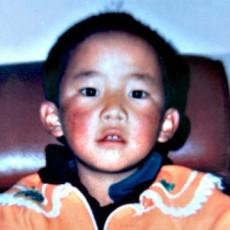
USCIRF reports that restrictions are tighter in Tibet and Xinjiang, where Xi Jinping touted sinicization during his 2025 visits. In Xinjiang, officials in March 2025 ordered Uyghur Muslims to provide video proof they were not fasting during Ramadan, and USCIRF reports that Uyghur Muslim Seylihan Rozi was sentenced to 17 years for teaching her children and a neighbor Qur'anic verses used for daily prayers. In Tibet, USCIRF reports that authorities disappeared and imprisoned monks who honored the Dalai Lama, and that officials gave no details on 11th Panchen Lama Gedhun Choekyi Nyima 30 years after his enforced disappearance. In Hong Kong, USCIRF reports that prison authorities continued to deny Jimmy Lai the Eucharist. It also reports that Chinese authorities continued to harass, surveil and pursue the deportation of religious minorities abroad.
Key laws and methods
- Regulations on Religious Affairs
The State Council regulations (Order No. 686, revised 2017) state that the State "actively guides religion to fit in with socialist society", prohibit religious activities and donations at non-designated sites (Article 41) and bar religious activity in schools other than religious schools (Article 44).
China Law Translate
Religious Affairs Regulations 2017 (State Council Order No. 686)
Open original source (opens in a new tab)- Registration of religious groups and sites
Under Article 7 of the Regulations, the establishment, modification or deregistration of a religious group is registered under State provisions on social groups, and activity sites apply for registration with the county-level religious affairs department (Article 22).
China Law Translate
Religious Affairs Regulations 2017 (State Council Order No. 686)
Open original source (opens in a new tab)- "Organizing and using a cult to undermine implementation of the law"
Article 300 of the Criminal Law criminalizes "organizing and using a cult to undermine implementation of the law". The CECC reports that authorities most often charge Falun Gong practitioners under it, and that 22 other groups have been designated xiejiao.
Congressional-Executive Commission on China (CECC)
2025 Annual Report: Freedom of Religion
Open original source (opens in a new tab)- "Fraud" and "illegal business operations" charges, and administrative detention
The CECC reports that authorities use "fraud" and "illegal business operations" charges against house church clergy and members over church schools and donations, and use 14-day administrative detention for "illegally organizing a gathering" or acting "in the name of an association with voided registration".
Congressional-Executive Commission on China (CECC)
2025 Annual Report: Freedom of Religion
Open original source (opens in a new tab)- Measures for the Administration of Internet Religious Information Services
The Measures (2022) regulate online religious content. The CECC reports that in April 2025 authorities in Song county, Henan, issued a "Notice on the Reward for Reporting Illegal Religious Activities" offering rewards to anyone reporting people who disseminate religious trainings through online platforms.
Congressional-Executive Commission on China (CECC)
2025 Annual Report: Freedom of Religion
Open original source (opens in a new tab)- "Strict governance of religion" training and control of theological education
The CECC reports that the United Front Work Department leads a campaign to train religious personnel in the "strict governance of religion", based on a December 2021 conference where Xi Jinping proposed that religious groups should "comprehensively and strictly govern religion", and that the Party seeks to control theological institutions to ensure the political reliability of future leaders.
Congressional-Executive Commission on China (CECC)
2025 Annual Report: Freedom of Religion
Open original source (opens in a new tab)- Demolition and forced modification of places of worship
USCIRF reports that authorities have destroyed, shut down and forcibly modified churches, mosques, temples and other houses of worship under the "sinicization of religion" policy, and that those who refuse to submit face harassment, fines, detention, political reeducation, forced labor, imprisonment, enforced disappearance and torture.
U.S. Commission on International Religious Freedom (USCIRF)
USCIRF 2026 Annual Report - China
Open original source (opens in a new tab)
Key milestones
Regulations ban clergy from online religious activity outside approved sites
USCIRF reports that in September 2025 the government published regulations banning clergy from engaging in online religious activities outside government-approved websites.
U.S. Commission on International Religious Freedom (USCIRF)
USCIRF 2026 Annual Report - China
Open original source (opens in a new tab)Rules on foreigners' religious activities
The CECC reports that in April 2025 the National Religious Affairs Administration published Detailed Implementation Rules limiting foreigners' collective religious activities to designated registered facilities and barring other Chinese citizens from attending ceremonies organized by foreigners.
Congressional-Executive Commission on China (CECC)
2025 Annual Report: Freedom of Religion
Open original source (opens in a new tab)Holy See extends Sino-Vatican Agreement
The CECC reports that in October 2024 the Holy See announced a provisional four-year extension of the Sino-Vatican Agreement on appointing bishops, while the Party continued to assert ultimate authority over the Chinese Catholic Church.
Congressional-Executive Commission on China (CECC)
2025 Annual Report: Freedom of Religion
Open original source (opens in a new tab)Conference on religious affairs work calls for "strict governance of religion"
The CECC reports that at a December 2021 conference on religious affairs work Xi Jinping proposed that religious groups should "comprehensively and strictly govern religion", the basis of a later training program for religious personnel.
Congressional-Executive Commission on China (CECC)
2025 Annual Report: Freedom of Religion
Open original source (opens in a new tab)Revised Regulations on Religious Affairs take effect
The State Council's revised Regulations on Religious Affairs, amended on 14 June 2017, took effect on 1 February 2018.
Congressional-Executive Commission on China (CECC)
2025 Annual Report: Freedom of Religion
Open original source (opens in a new tab)United Front Work Department takes over religious affairs
The CECC reports that the United Front Work Department has directly overseen religious affairs since 2018, when the National Religious Affairs Administration was dissolved and reorganized under it.
Congressional-Executive Commission on China (CECC)
2025 Annual Report: Freedom of Religion
Open original source (opens in a new tab)Church demolitions in Zhejiang
Radio Free Asia reported in July 2015 that officials pulled down a cross on a church in Zhejiang as part of a demolition program targeting churches and crosses, with Wenzhou, home to an estimated one million Christians, a focus.
Radio Free Asia
China Continues to Tear Down Crosses From Zhejiang's Churches
Open original source (opens in a new tab)"Sinicization" becomes a policy priority
The CECC reports that since 2015 Xi Jinping has promoted "sinicization" (zhongguohua) as a major policy priority for religious affairs management.
Congressional-Executive Commission on China (CECC)
2025 Annual Report: Freedom of Religion
Open original source (opens in a new tab)Falun Gong declared an unlawful organization
Human Rights Watch records that the Ministry of Public Security announced on 22 July 1999 that Falun Gong was an unlawful organization, beginning the crackdown. By 8 November 1999 China's State Council had confirmed the formal arrest of at least 111 members.
Human Rights Watch
China Uses "Rule of Law" to Justify Falun Gong Crackdown
Open original source (opens in a new tab)
Sources
External source
U.S. Commission on International Religious Freedom (USCIRF)
USCIRF 2026 Annual Report - China
Open original source (opens in a new tab)External source
Congressional-Executive Commission on China (CECC)
2025 Annual Report: Freedom of Religion
Open original source (opens in a new tab)External source
China Law Translate
Religious Affairs Regulations 2017 (State Council Order No. 686)
Open original source (opens in a new tab)External source
Human Rights Watch
China Uses "Rule of Law" to Justify Falun Gong Crackdown
Open original source (opens in a new tab)External source
Radio Free Asia
China Continues to Tear Down Crosses From Zhejiang's Churches
Open original source (opens in a new tab)External source
Congressional-Executive Commission on China (CECC)
2025 Annual Report: Tibet
Open original source (opens in a new tab)