
Summary
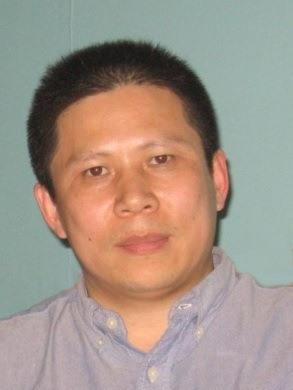
Wang Huian, known online as Wang Feiyang, is a human rights defender from Shaodong, Hunan, who supported Hong Kong's Umbrella Movement, attended sensitive trials such as those of Fan Mugen and Zhang Shengyu, and joined support campaigns for other activists, according to Weiquanwang. Weiquanwang reported that police had forcibly committed him to psychiatric hospitals repeatedly since 2021, and that in October 2026 his friends could not find out where he was.
Timeline
Lost contact with friends
Weiquanwang reported on 6 October 2026 that several friends had been unable to reach Wang for days in a row and that the reason for the loss of contact was unknown. It also says Guangzhou police had earlier taken Wang away, leaving him briefly out of contact, and that state security officers told his family he might be sentenced.
Weiquanwang
Hunan human rights defender Wang Huian out of contact; previously forcibly sent to psychiatric hospitals several times
Open original source (opens in a new tab)Forcibly sent to a psychiatric hospital
According to Weiquanwang, this was the most recent of five occasions between 2021 and 2026 on which police forcibly committed Wang to a psychiatric hospital.
Weiquanwang
Hunan human rights defender Wang Huian out of contact; previously forcibly sent to psychiatric hospitals several times
Open original source (opens in a new tab)
Sources
This page consolidates publicly available external sources. Links open the original publication.
External source
Weiquanwang
Hunan human rights defender Wang Huian out of contact; previously forcibly sent to psychiatric hospitals several times
Open original source (opens in a new tab)External source
Weiquanwang
Weiquanwang: monthly report on political prisoners and prisoners of conscience held in mainland China (31 October 2026), issue 133 (1,597 people)
Open original source (opens in a new tab)Cases on similar issues
December 26 citizens「12·26」公民案
Citizen activists · Mainland ChinaCHR-109549
On 26 December 2019, authorities began taking people away from a private gathering in Xiamen. Legal advocate Xu Zhiyong, lawyers Ding Jiaxi and Chang Weiping, and others had met to talk about public affairs. More than 20 citizens and lawyers were disappeared, summoned, or detained. Many were accused of inciting subversion or picking quarrels.
Detentions and prosecutions following the December 2019 gathering ·
Gu Xiaofeng顧曉峰
Rights activist from Changshu, Jiangsu · Mainland ChinaCHR-207025
Gu Xiaofeng, a rights activist from Changshu, Jiangsu, who had held up a sign in support of detained lawyer Xie Yang, was placed under residential surveillance at a designated location by Suzhou police in February 2017 on suspicion of "picking quarrels and provoking trouble", Weiquanwang reported as part of its coverage of the Suzhou crackdown on activists that began on 8 September 2016. Gu's lawyer, Sui Muqing, reported in August 2017 that Gu had been released after six months, the maximum term of such surveillance.
· Weiquanwang
Guo Bangqing郭幫卿
Petitioner from Hedong district, Linyi, Shandong · Mainland ChinaCHR-703163
Guo Bangqing, a petitioner from Hedong district in Linyi, Shandong, accompanied Chen Guangfu, the elder brother of activist Chen Guangcheng, on petitioning trips to Beijing in 2013. Weiquanwang reported that local stability-maintenance staff twice seized Guo and held him in unofficial "black jails", where he was beaten and robbed. It said he went missing for a third time on 23 July 2013, after police sent him to the district petitions office over his complaint.
· Weiquanwang (Rights Defense Network)
Events on the same issues
Persecution
Authorities detain nearly 30 Zion Church members including founder Ezra Jin Mingri
Human Rights Watch reported that on 10-11 October 2025 Chinese authorities arrested nearly 30 pastors, preachers and members of the unofficial Zion Protestant Church in seven cities, including Beijing, Shanghai and Zhejiang. Among them was the church's pastor and founder, Ezra Jin Mingri, 56, in Beihai, Guangxi; he was arrested for "illegal use of information networks", which carries up to three years in prison. According to a statement by family members cited by HRW, Jin and seven other pastors were held in Beihai City No. 2 Detention Center, and at least five of those detained had reportedly been released. NPR reported that church spokesperson Sean Long said more than 30 pastors and staff were arrested or unreachable, and that China's Foreign Ministry spokesman Lin Jian said the government manages religious affairs in accordance with the law.
Persecution
Prisoners of conscience denied medical care, with deaths soon after release, Bitter Winter reports
Bitter Winter reported on 6 October 2019 that dissidents and religious believers in Chinese prisons are denied medical care, and that seriously ill prisoners are forced to do physical labour. It cites the rights activist Cao Shunli, whose relatives repeatedly asked for medical parole, granted only after she fell into a coma, and who died days after reaching hospital; Liu Xiaobo, diagnosed with late-stage liver cancer in prison, who died one month after medical parole; and the writer Yang Tongyan, whose lawyer repeatedly applied for parole, granted three months before his death. It says Huang Qi and Yao Wentian, still imprisoned, are seriously ill and their families' applications have failed. It also describes Church of Almighty God members, one forced to work 12 hours a day with cirrhosis, and says some people suspect that delayed release is a way of killing prisoners of conscience.
Persecution
Uyghurs abroad describe relatives who disappeared or died in Xinjiang camps
Bitter Winter reported on 4 September 2020 on Uyghurs abroad who gathered outside the Chinese embassy in London on 30 August, the International Day of the Disappeared, to speak about relatives missing in Xinjiang. The article says a Turkish television report that week showed that the uncles and cousins of Dilnaz, a teenager, are held in a Chinese prison; her father died in tears after learning they had been sentenced to five to 15 years. It says the Chinese consulate had recently contacted London MPs about her relatives, said to be living normal, happy lives, which a relative in Istanbul called a lie. Salman Uyghur, who lives in Turkey, said his brother Amatjan Sayim, 43, died in a re-education camp in May 2018, Amatjan's wife Patigul was sentenced to 14 years after his death and their five children sent to a state orphanage, and his sister Tursungul Sayim, 41, is also held in a camp.
Reports on similar issues
Source record · Amnesty International
The State of the World's Human Rights: April 2026 - China
Amnesty International's China entry in The State of the World's Human Rights (April 2026), covering 2025, says authorities intensified control over information and public discourse and continued to suppress dissent and peaceful assembly. Religious participants were persecuted, defenders, writers and artists were detained and prosecuted under vague national security provisions, Uyghurs and Tibetans were strictly controlled, and Jimmy Lai was convicted in Hong Kong on 15 December.
Source record · U.S. Commission on International Religious Freedom (USCIRF)
USCIRF 2026 Annual Report - China
The USCIRF 2026 Annual Report, covering 2025, says China perpetuated particularly severe violations of religious freedom and recommends that the State Department redesignate it a "country of particular concern". It says authorities sought complete control over religion and pursued the "sinicization of religion" policy, that at least half a million Uyghurs and other Turkic Muslims remained imprisoned or interned in Xinjiang, that Tibetan Buddhist monasteries were cracked down on, and that Protestant leaders including pastors Yang Rongli and Ezra Jin were targeted.
Source record · Congressional-Executive Commission on China (CECC)
Congressional-Executive Commission on China: 2025 Annual Report
The Congressional-Executive Commission on China's 2025 Annual Report covers 1 July 2024 to 30 June 2025 under the theme "promises made, promises broken": the gap between the PRC's treaty and legal commitments and its practice. Its 17 chapters document restrictions on expression and religion, arbitrary detention, Xinjiang, Tibet, Hong Kong and transnational repression. Its Political Prisoner Database held 11,262 records on 30 June 2025, 2,755 of them active detentions.