Overview
Human Rights Watch writes that human rights defenders in China are frequently harassed, tortured, and imprisoned. Amnesty International reports that in 2025 authorities continued to target human rights defenders, lawyers and activists under vague national security and public order provisions, with prolonged pretrial detention, closed proceedings and restricted access to legal counsel. Human Rights Watch reports that the rules for lawyers are set out in the Measures on the Administration of Lawyers' Practice and the Measures on the Administration of Law Firms, which empower judicial authorities to disbar law firms or lawyers. A rights defense lawyer interviewed by Human Rights Watch said that, a decade after the 709 crackdown, rights defense lawyers confront "more comprehensive and sophisticated" controls by the Ministry of Justice and the government-controlled lawyers' associations.
Human Rights Watch dates the rise of the "rights defense" movement of lawyers and legal experts to around 2003, when they began using litigation to hold local officials accountable for abuses from land seizures to forced evictions. It reports that soon after Xi Jinping came to power in late 2012, the government dismantled nascent civil society, and that in 2014 authorities began to arrest and prosecute prominent rights lawyers including Pu Zhiqiang, Tang Jingling and Xu Zhiyong. In July 2015, the nationwide "709 crackdown" followed. A rights defense lawyer interviewed by Human Rights Watch said that the suppression of human rights lawyers was once very blatant and that the means are now more covert and more rules-based. Human Rights Watch also reports rules requiring law firms to establish Party cells and to make supporting Party leadership a basic requirement for practising.
Human Rights Watch says police rounded up and interrogated about 300 lawyers, legal assistants and activists in July 2015, that some were forcibly disappeared for months and tortured, and that 10 were sentenced to harsh prison terms. A joint statement by Amnesty International and other groups on the tenth anniversary reports sentences of three to eight years, and says at least 20 lawyers were stripped of their law licences and another 26 sanctioned. The Congressional-Executive Commission on China reported in 2020 that at least 15 people detained in the crackdown had been convicted. Safeguard Defenders reports about 270,000 mentions of residential surveillance in the Supreme People's Court's judgment database, and estimates that at least 560,000 to 860,000 people were placed under lawful residential surveillance during Xi Jinping's rule.
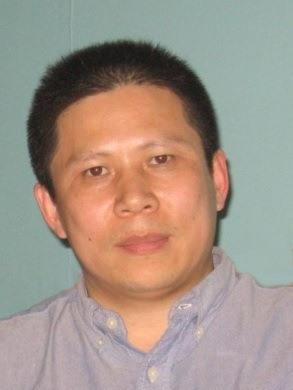
The pressure extends beyond the 2015 cases and beyond mainland China. Amnesty International reports that Xu Zhiyong and Ding Jiaxi were forcibly disappeared after a December 2019 gathering in Xiamen and sentenced in April 2023 to 14 and 12 years for "subverting state power", and that at least five other participants were detained. Human Rights Watch reports that lawyer Lu Siwei, who fled China, was seized by Laos authorities in 2023 and forcibly returned, and that authorities still bar many 709 lawyers from travelling abroad. It adds that in July 2025 Macao police arrested former lawmaker Au Kam San under the Law on Safeguarding National Security, the first use of that law in Macao.
Key laws and methods
- Residential surveillance at a designated location
Article 75 of the Criminal Procedure Law, as revised in 2018, provides that for a criminal suspect or defendant suspected of a crime endangering state security or a crime of terrorist activity, where house arrest at his domicile may impede the investigation, he may be placed under house arrest at a designated place of residence upon approval by the public security organ at the next higher level, but house arrest may not be enforced in a detention house or a special venue for case investigation.
National People's Congress of the People's Republic of China (English translation)
Decision of the Standing Committee of the National People's Congress on Revising the Criminal Procedure Law of the People's Republic of China
Open original source (opens in a new tab)- Inciting subversion of state power and subversion of state power
Amnesty International says Chinese authorities systematically use national security charges with extremely vague provisions, such as "subverting state power" and "inciting subversion of state power", to prosecute lawyers, scholars, journalists, activists and NGO workers. The UN Working Group on Arbitrary Detention has repeatedly called on China to repeal the crime of "inciting subversion" or bring it into line with international standards.
Amnesty International
China: ‘Malicious’ conviction of #MeToo and labour activists shows Beijing’s growing fear of dissent
Open original source (opens in a new tab)- Picking quarrels and provoking trouble
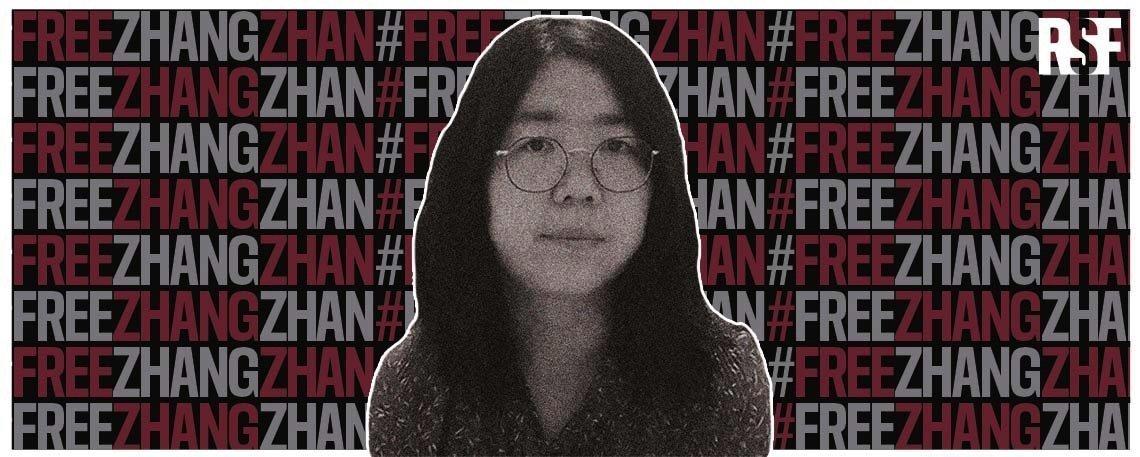
Human Rights Watch reports that lawyer turned citizen journalist Zhang Zhan, released in May 2024 after four years in prison for her critical reporting, was arrested again in August 2024 for "picking quarrels and provoking trouble" and sentenced in September 2025 to another four years.
Human Rights Watch
World Report 2026: China
Open original source (opens in a new tab)- Regulations on the administration of lawyers and law firms
Human Rights Watch reports that the Measures on the Administration of Lawyers' Practice and the Measures on the Administration of Law Firms, both revised in 2016 (the second further amended in 2018), make law firms responsible for ensuring their lawyers do not take part in activities that the authorities deem to "endanger national security", and empower judicial authorities to disbar firms or lawyers for failing to comply.
Human Rights Watch
China: 10 Years Since ‘709 Crackdown,’ Lawyers Still Under Fire
Open original source (opens in a new tab)- Party cells and loyalty requirements in law firms
Human Rights Watch reports that the 2018 revisions to the Measures on the Administration of Law Firms require firms to establish Party cells "to the extent possible" and to make supporting the leadership of the Communist Party of China a basic requirement for practicing, and that by mid-2019 all law firms had met these requirements, according to China's Legal Daily.
Human Rights Watch
China: 10 Years Since ‘709 Crackdown,’ Lawyers Still Under Fire
Open original source (opens in a new tab)- Deprivation of political rights
The Congressional-Executive Commission on China reports that lawyer Wang Quanzhang returned home in April 2020 after a sentence of 4 years and 6 months for "subversion", but remained subject to the supplemental punishment of deprivation of political rights for five years, including the rights of speech, publication and gathering.
Congressional-Executive Commission on China
Five Years after 709 Crackdown, Lawyers Continue to Face Repression and Punishment
Open original source (opens in a new tab)- Collective punishment of relatives and exit bans
A joint statement by Amnesty International and other groups says authorities impose collective punishment on family members and associates of detained lawyers and activists, including daily police surveillance, harassment leading to loss of housing and employment, restrictions on children's access to education, and exit bans.
Amnesty International and other organizations
Chinese government impunity for crackdown on lawyers fuels decade of repression
Open original source (opens in a new tab)
Key milestones
Tenth anniversary of the 709 crackdown
On the anniversary, a joint statement by Amnesty International and other groups called on concerned governments and the United Nations to establish an independent international investigation into Beijing's persecution of civil society.
Amnesty International and other organizations
Chinese government impunity for crackdown on lawyers fuels decade of repression
Open original source (opens in a new tab)Xu Zhiyong and Ding Jiaxi sentenced
A court in Shandong province sentenced Xu Zhiyong to 14 years and Ding Jiaxi to 12 years for "subversion of state power" after closed-door trials, Human Rights Watch reports.
Human Rights Watch
China: Quash Convictions of Prominent Rights Lawyers
Open original source (opens in a new tab)Lu Siwei returned from Laos
Human Rights Watch reports that Lu Siwei, who fled China, was seized by Laos authorities in 2023 and forcibly returned to China, where a court sentenced him to 11 months in prison.
Human Rights Watch
China: 10 Years Since ‘709 Crackdown,’ Lawyers Still Under Fire
Open original source (opens in a new tab)Wang Quanzhang released into political-rights deprivation
The Congressional-Executive Commission on China reports that Wang Quanzhang completed a sentence of 4 years and 6 months for "subversion" and returned home in April 2020, subject to five years' deprivation of political rights.
Congressional-Executive Commission on China
Five Years after 709 Crackdown, Lawyers Continue to Face Repression and Punishment
Open original source (opens in a new tab)Xiamen gathering and detentions
Human Rights Watch reports that authorities detained Ding Jiaxi in December 2019, after he and Xu Zhiyong attended a gathering in Fujian province of rights lawyers and activists, and apprehended Xu in Guangzhou in February 2020.
Human Rights Watch
China: Quash Convictions of Prominent Rights Lawyers
Open original source (opens in a new tab)Rules on lawyers and law firms tightened
Human Rights Watch reports that the Measures on the Administration of Lawyers' Practice and the Measures on the Administration of Law Firms were revised in 2016, with the latter amended again in 2018 to require Party cells and loyalty to the Party's leadership.
Human Rights Watch
China: 10 Years Since ‘709 Crackdown,’ Lawyers Still Under Fire
Open original source (opens in a new tab)The "709 crackdown"
Beginning around 9 July 2015, authorities across China seized more than 300 lawyers and activists, according to Amnesty International and other groups, many of whom were forcibly disappeared in the days and months that followed.
Amnesty International and other organizations
Chinese government impunity for crackdown on lawyers fuels decade of repression
Open original source (opens in a new tab)Arrests of prominent rights lawyers begin
Human Rights Watch reports that in 2014 the authorities began to arrest and prosecute prominent rights defense lawyers including Pu Zhiqiang, Tang Jingling and Xu Zhiyong.
Human Rights Watch
China: 10 Years Since ‘709 Crackdown,’ Lawyers Still Under Fire
Open original source (opens in a new tab)Revised Criminal Procedure Law takes effect
Safeguard Defenders reports that after Xi Jinping came to power in 2012 and the revised Criminal Procedure Law came into effect in 2013, the use of lawful house arrest rose rapidly.
Safeguard Defenders
Home as Prison
Open original source (opens in a new tab)
Sources
External source
Human Rights Watch
China: 10 Years Since ‘709 Crackdown,’ Lawyers Still Under Fire
Open original source (opens in a new tab)External source
Amnesty International and other organizations
Chinese government impunity for crackdown on lawyers fuels decade of repression
Open original source (opens in a new tab)External source
Congressional-Executive Commission on China
Five Years after 709 Crackdown, Lawyers Continue to Face Repression and Punishment
Open original source (opens in a new tab)External source
Human Rights Watch
China: Quash Convictions of Prominent Rights Lawyers
Open original source (opens in a new tab)External source
Amnesty International
China: ‘Malicious’ conviction of #MeToo and labour activists shows Beijing’s growing fear of dissent
Open original source (opens in a new tab)External source
Safeguard Defenders
Home as Prison
Open original source (opens in a new tab)External source
National People's Congress of the People's Republic of China (English translation)
Decision of the Standing Committee of the National People's Congress on Revising the Criminal Procedure Law of the People's Republic of China
Open original source (opens in a new tab)External source
Human Rights Watch
World Report 2026: China
Open original source (opens in a new tab)External source
Amnesty International
Human rights in China
Open original source (opens in a new tab)External source
Amnesty International
China: Five years on, activists jailed in ‘cruel’ 2019 crackdown must be released
Open original source (opens in a new tab)