
Summary
Wang Zang is a poet and artist in Chuxiong, Yunnan. Radio Free Asia says police arrested him and his wife, Wang Li, in May 2020 for inciting subversion of state power, citing his poetry, essays, foreign-media interviews, and performance art, and that he was released in May 2024 at the end of a four-year term. In August 2026 China Focus reported that he had been taken away, and later reports that year concern his children's cases.
Timeline
Public account of hearing his son
China Focus reported on 29 October 2026 that on the afternoon of 26 October his son came home and that Wang Zang's public account described a teacher grabbing the child's neck. China Focus says Minsheng Guancha recorded the accusation on 27 October. It identifies him as the poet whose original name is Wang Yuwen, released in May 2024 after a four-year term.
China Focus
Wang Zang's public account of his son after school
Open original source (opens in a new tab)First-person update about his children
Weiquanwang that day published a first-person text under his name, posted by the site's editor. It says the main attacker in Wang Nianci's case was told by the school to withdraw, others received a warning sanction, an apology and 10,000 yuan were given, and the local government paid 9,600 yuan. It says he had heard that a teacher in Wang Shiyin's case was criticised and then transferred, and that his child was not beaten again.
Weiquanwang
Wang Zang's update on the outcome of his children's cases
Open original source (opens in a new tab)Taken away by state-security officers
China Focus said that day it had been told that Wang Zang, whose original name it gives as Wang Yuwen, was taken that day by Chuxiong state-security officers, that contact with him was cut, that the family had received no legal document, and that his whereabouts were unknown.
China Focus
Report that Wang Zang was taken in Chuxiong on 6 August
Open original source (opens in a new tab)Said he was barred from interviews
Radio Free Asia reported on 18 September 2024 that he said he could not comment because, two days earlier, police had told him he was not allowed to give interviews.
Radio Free Asia
Chinese police 'stalling' after school attack on dissident's son
Open original source (opens in a new tab)Released at the end of four years
Radio Free Asia says he was released from prison in May 2024 at the end of a four-year term. Wang Li had been released in 2022 after two and a half years.
Radio Free Asia
Chinese police 'stalling' after school attack on dissident's son
Open original source (opens in a new tab)Arrested in Chuxiong
Radio Free Asia says that in May 2020 police in Chuxiong Yi Autonomous Prefecture arrested Wang Zang and Wang Li for inciting subversion. Radio Free Asia also says the intermediate court jailed them behind closed doors in May 2020.
Radio Free Asia
Chinese police 'stalling' after school attack on dissident's son
Open original source (opens in a new tab)
Sources
This page consolidates publicly available external sources. Links open the original publication.
External source
Radio Free Asia
Chinese police 'stalling' after school attack on dissident's son
Open original source (opens in a new tab)External source
Weiquanwang
Wang Zang's update on the outcome of his children's cases
Open original source (opens in a new tab)External source
China Focus
Report that Wang Zang was taken in Chuxiong on 6 August
Open original source (opens in a new tab)External source
China Focus
Wang Zang's public account of his son after school
Open original source (opens in a new tab)Relatives with profiles
wife
Wang Liqin王莉芹
Wife of the dissident poet Wang Zang · Mainland ChinaCHR-533345
Wang Liqin, known as Wang Li, is the wife of the dissident poet Wang Zang in Chuxiong, Yunnan. Chinese Human Rights Defenders (CHRD) reported that she went missing in June 2020 after tweeting about her husband's detention and was arrested in July 2020 for "inciting subversion of state power". Radio Free Asia reported that she was sentenced to two and a half years in November 2022, was released on 16 December 2022, and was kept under heavy watch by local officials afterwards.
· Radio Free Asia
People named in the same record
Cai Wei蔡偉
Right to information defender · Mainland ChinaCHR-825140
Cai Wei volunteered in Beijing for Terminus2049. Front Line Defenders says he went missing on 19 April 2020 with Chen Mei and his partner, a woman surnamed Tang, and was held under residential surveillance. He was formally arrested on 12 June 2020, tried on 11 May 2021, sentenced on 13 August 2021 to one year and three months for picking quarrels and provoking trouble, and released on 15 August 2021.
· Front Line Defenders
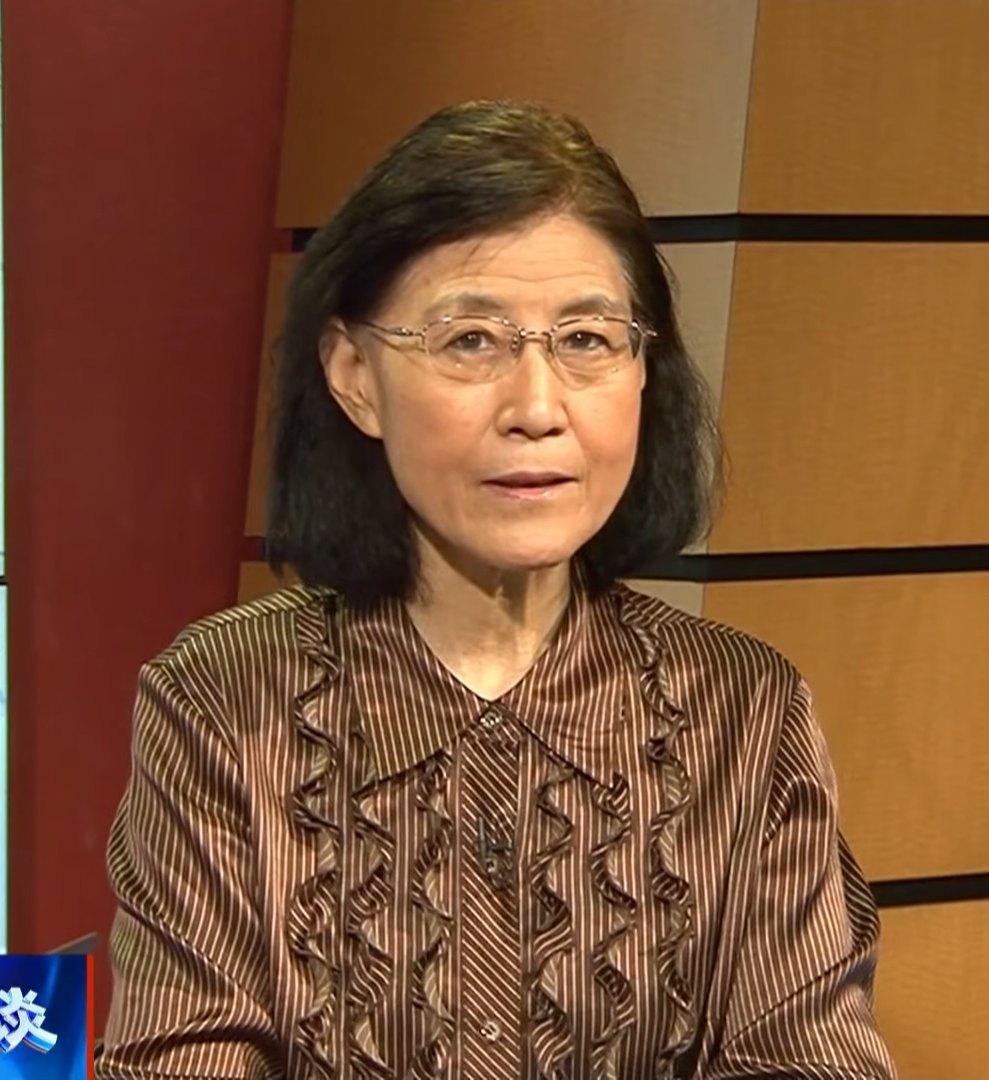
Cai Xia蔡霞
Scholar · Mainland ChinaCHR-183657
Cai Xia taught at the Central Party School in Beijing for 15 years, until 2012. In a talk she called the Communist Party "a political zombie" and said Xi Jinping "bears a great deal of culpability" for its problems. The Central Party School announced in August 2020 that she had been expelled from the Party. The New York Times reported that she has lived in the United States since 2019.
Last documented · The New York Times (via SBS)
Chen Mei陳玫
Right to information defender · Mainland ChinaCHR-134251
Chen Mei volunteered for Terminus2049, a GitHub archive of material deleted by censors. Front Line Defenders says he was placed under residential surveillance on the evening of 19 April 2020, formally arrested on 12 June 2020, tried on 11 May 2021, and sentenced on 13 August 2021 to one year and three months for picking quarrels and provoking trouble. He was released on 15 August 2021 with pre-trial detention counted.
· Front Line Defenders
Events on the same issues
Persecution
Mainland internet users penalized for bypassing the Great Firewall and posting on foreign platforms in 2019–2020
Bitter Winter reported that mainland Chinese internet users are punished for browsing foreign websites or using foreign social media, and that posting criticism of the government on foreign platforms can bring prison sentences. On 19 May 2020 the Ankang Public Security Bureau in Shaanxi announced that a man surnamed Yang was warned and fined 500 yuan for using "wall-climbing" software; after internet users asked why officials such as Global Times editor Hu Xijin were not punished, the notice was deleted. In February two men in Henan were detained for browsing foreign websites; one told Bitter Winter he was fined 500 yuan and wrote a repentance letter. Citing court judgments, Bitter Winter reports that in November 2019 a court in Zhongshan, Guangdong, sentenced Wang Beiyuan to one year for "defamation", finding that some of the more than 2,000 tweets he posted were harmful.
Persecution
Human Rights Watch researcher: China's "Great Firewall" is changing a generation
In an essay published by Human Rights Watch, senior China researcher Yaqiu Wang writes that the online attacks in 2020 on the writer Fang Fang, after the English edition of her Wuhan Diary appeared, reflect a change under Xi Jinping among young people who once had relatively open online discussion. In her account, the Great Firewall has existed since 2000, when the Ministry of Public Security launched the "Golden Shield" project, and after the Party's Document No. 9 of November 2013 a harsh crackdown on the internet, media, civil society and education closed off almost all effective channels to views different from the official line. Some people have gone to prison for selling VPNs and others have been fined for using them; she writes that the generation that went to university after Xi took power defends the Great Firewall.
Persecution
Mainland authorities question relatives of Hong Kong students and penalize posts and travel linked to the Hong Kong protests
Bitter Winter reported that mainland authorities were investigating people with connections to Hong Kong after the 2019 protests. In November 2019 a woman in Inner Mongolia whose son was studying in Hong Kong was repeatedly questioned by police about his views on the anti-extradition movement and made to sign a pledge that he would not take part in protests; police warned that his remarks would leave a "lifelong stain" and affect relatives on the mainland. A Jining, Shandong, resident said officials visited in November 2019 to ask about a son working in Hong Kong and said all Shandong natives there were being counted. A Henan woman was investigated by police over an article she had forwarded three months earlier, and a friend who had sent it to her was detained for a week. A Jiangxi self-employed man said he and a friend were detained for 12 and 10 days for forwarding Hong Kong posts.
Reports that name this person
Source record · Human Rights Watch
World Report 2021: China
Human Rights Watch's China chapter of World Report 2021 covers events of 2020. The report finds that the Chinese government's authoritarianism was on full display as it handled the Covid-19 outbreak, Beijing imposed the National Security Law on Hong Kong on 30 June, and Turkic Muslims in Xinjiang continued to face arbitrary detention, forced labor and mass surveillance, controls on Tibet, religion, the internet and rights defenders tightened, and international concern grew.
Reports on similar issues
Source record · Amnesty International
The State of the World's Human Rights: April 2026 - China
Amnesty International's China entry in The State of the World's Human Rights (April 2026), covering 2025, says authorities intensified control over information and public discourse and continued to suppress dissent and peaceful assembly. Religious participants were persecuted, defenders, writers and artists were detained and prosecuted under vague national security provisions, Uyghurs and Tibetans were strictly controlled, and Jimmy Lai was convicted in Hong Kong on 15 December.
Source record · Freedom House
China: Freedom in the World 2026 Country Report
Freedom House's Freedom in the World 2026 country report on China covers 2025. It rates China Not Free with a total score of 9 out of 100 (Political Rights -2 of 40, Civil Liberties 11 of 60). The CCP oversees a repressive authoritarian regime and civil society has been devastated by a multiyear crackdown. Key 2025 developments include the expulsion of General He Weidong and eight other generals from the CCP and the PLA in October, large Sichuan protests in August and a national digital ID system in July.