
Summary
Zhao Yaliang is the wife of the dissident artist Gao Zhen and, like him, a permanent resident of the United States, according to the Dui Hua Foundation. Chinese Human Rights Defenders reported that she, Gao and their son had returned to China in 2024 to visit a family member, and that after Gao's detention the authorities arbitrarily barred her and the boy from leaving the country. In August 2026, when a court in Hebei sentenced Gao, Zhao told Reuters that she and her son were still blocked from leaving China.
Timeline
Told Reuters the exit ban continued
Reuters reported that the Sanhe City People's Court in Hebei gave Gao the maximum three-year sentence for defaming national heroes and martyrs. Zhao, who learned of the verdict through Gao's lawyer, told Reuters the family felt outraged and that Gao planned to appeal; she said she and her son had been blocked from leaving China since his detention two years earlier.
Reuters (via Internazionale)
Chinese dissident artist jailed for 3 years over Mao sculptures, family and rights group say
Open original source (opens in a new tab)Rights group called the exit ban baseless
Chinese Human Rights Defenders urged the authorities to end their baseless exit ban on Gao's family members. It said Gao, held at Sanhe City Detention Center in Hebei, was awaiting trial on a charge of slandering China's heroes and martyrs over artwork critical of Mao Zedong.
Chinese Human Rights Defenders
Alert: Chinese authorities target writer, artist for critical cultural expression
Open original source (opens in a new tab)Placed under an exit ban
The Dui Hua Foundation reported that Gao Zhen was detained on 27 August 2024 during a family trip to China, accused of slandering China's heroes and martyrs, and that at the same time Zhao and their son Gao Jia, a seven-year-old US citizen, were placed under exit bans. It said no charges had been filed against the boy, who had been unable to attend school for a year.
Dui Hua Foundation
Dui Hua Decries Exit Ban on Seven-Year-Old American Citizen
Open original source (opens in a new tab)
Sources
This page consolidates publicly available external sources. Links open the original publication.
External source
Chinese Human Rights Defenders
Alert: Chinese authorities target writer, artist for critical cultural expression
Open original source (opens in a new tab)External source
Dui Hua Foundation
Dui Hua Decries Exit Ban on Seven-Year-Old American Citizen
Open original source (opens in a new tab)External source
Reuters (via Internazionale)
Chinese dissident artist jailed for 3 years over Mao sculptures, family and rights group say
Open original source (opens in a new tab)Relatives with profiles
husband
Gao Zhen高兟
Artist · Mainland ChinaCHR-347491
Gao Zhen, an artist living in the United States whose work depicts Mao Zedong, was detained by Beijing police in 2024 while visiting China. On 25 August 2026 the Sanhe City People's Court in Hebei sentenced him to three years for slandering heroes and martyrs, and he has decided to appeal. Amnesty International says the charges relate to artistic works dating back a decade or more.
· Amnesty International
Cases on similar issues
Abdullajan AbdulmennanAbdullajan Abdulmennan
Young Uyghur man from Yarkand county · Mainland ChinaCHR-564898
Abdullajan Abdulmennan, 21, was jailed for 11 months in Pingxiang prison in Guangxi after Vietnam returned him to China for travelling illegally, his father told RFA in October 2014. The father said Chinese police told the family that his son had died in prison with about two months of the sentence left, and said he could not believe his son died of illness.
· Radio Free Asia
Ai Fen艾芬
Doctor, head of the emergency department at Wuhan Central Hospital · Mainland ChinaCHR-585519
Ai Fen is a doctor at Wuhan Central Hospital who, according to Chinese Human Rights Defenders, was among the first medical professionals to try to share information and sound the alarm about the new coronavirus. The group said authorities summoned her and Li Wenliang for questioning and sternly warned them to keep quiet, and that censors blocked a magazine interview with her in March 2020. In April 2025 RFA reported that her social media accounts had been shut down, a step a friend said had the support of "the relevant departments".
· Radio Free Asia
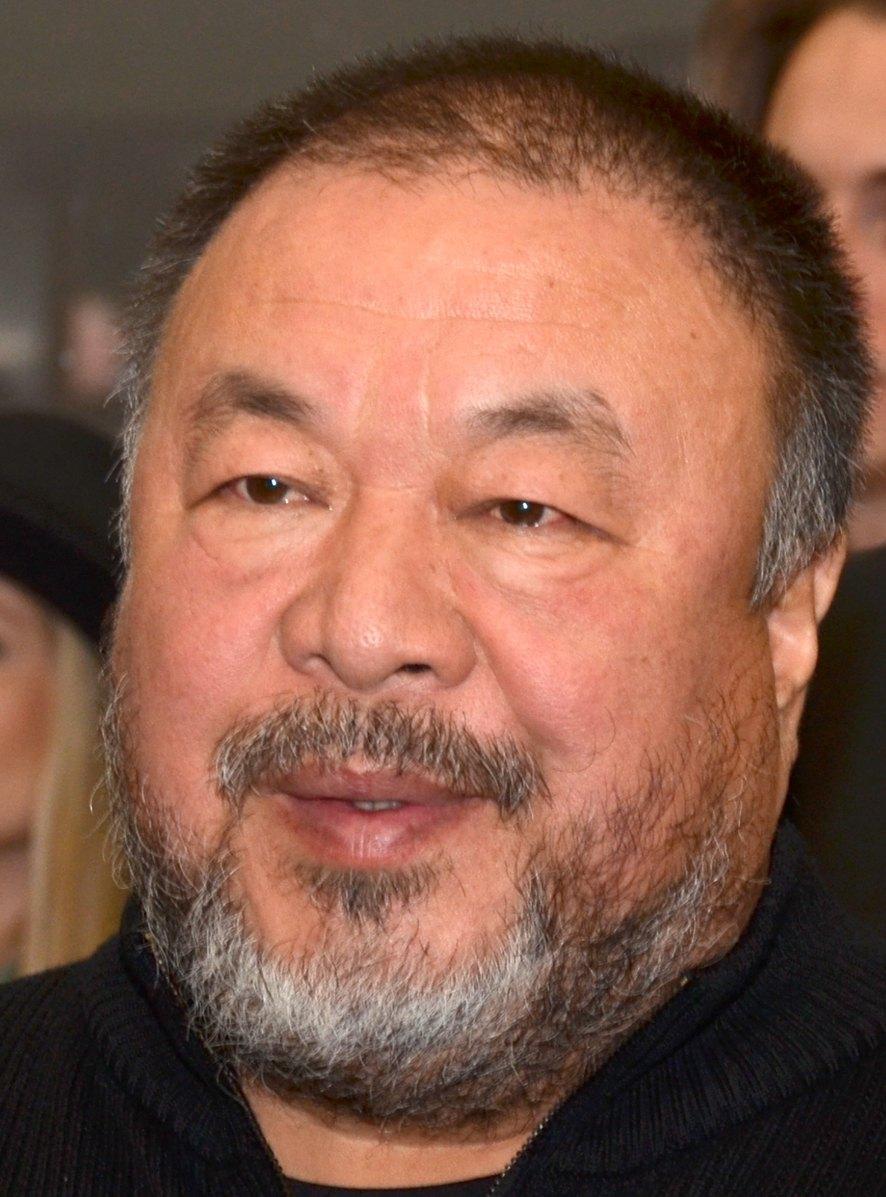
Ai Weiwei艾未未
Artist · Mainland ChinaCHR-381769
Ai Weiwei is an artist who investigated the collapse of schools in the 2008 Sichuan earthquake and criticized the government. In April 2011 he was arrested at Beijing Capital Airport for what the authorities called economic crimes and held for 81 days without charge.
A travel ban continued until his passport was returned ·
Events on the same issues
Persecution
Mainland internet users penalized for bypassing the Great Firewall and posting on foreign platforms in 2019–2020
Bitter Winter reported that mainland Chinese internet users are punished for browsing foreign websites or using foreign social media, and that posting criticism of the government on foreign platforms can bring prison sentences. On 19 May 2020 the Ankang Public Security Bureau in Shaanxi announced that a man surnamed Yang was warned and fined 500 yuan for using "wall-climbing" software; after internet users asked why officials such as Global Times editor Hu Xijin were not punished, the notice was deleted. In February two men in Henan were detained for browsing foreign websites; one told Bitter Winter he was fined 500 yuan and wrote a repentance letter. Citing court judgments, Bitter Winter reports that in November 2019 a court in Zhongshan, Guangdong, sentenced Wang Beiyuan to one year for "defamation", finding that some of the more than 2,000 tweets he posted were harmful.
Persecution
Human Rights Watch researcher: China's "Great Firewall" is changing a generation
In an essay published by Human Rights Watch, senior China researcher Yaqiu Wang writes that the online attacks in 2020 on the writer Fang Fang, after the English edition of her Wuhan Diary appeared, reflect a change under Xi Jinping among young people who once had relatively open online discussion. In her account, the Great Firewall has existed since 2000, when the Ministry of Public Security launched the "Golden Shield" project, and after the Party's Document No. 9 of November 2013 a harsh crackdown on the internet, media, civil society and education closed off almost all effective channels to views different from the official line. Some people have gone to prison for selling VPNs and others have been fined for using them; she writes that the generation that went to university after Xi took power defends the Great Firewall.
Persecution
Mainland authorities question relatives of Hong Kong students and penalize posts and travel linked to the Hong Kong protests
Bitter Winter reported that mainland authorities were investigating people with connections to Hong Kong after the 2019 protests. In November 2019 a woman in Inner Mongolia whose son was studying in Hong Kong was repeatedly questioned by police about his views on the anti-extradition movement and made to sign a pledge that he would not take part in protests; police warned that his remarks would leave a "lifelong stain" and affect relatives on the mainland. A Jining, Shandong, resident said officials visited in November 2019 to ask about a son working in Hong Kong and said all Shandong natives there were being counted. A Henan woman was investigated by police over an article she had forwarded three months earlier, and a friend who had sent it to her was detained for a week. A Jiangxi self-employed man said he and a friend were detained for 12 and 10 days for forwarding Hong Kong posts.
Reports on similar issues
Source record · Amnesty International
The State of the World's Human Rights: April 2026 - China
Amnesty International's China entry in The State of the World's Human Rights (April 2026), covering 2025, says authorities intensified control over information and public discourse and continued to suppress dissent and peaceful assembly. Religious participants were persecuted, defenders, writers and artists were detained and prosecuted under vague national security provisions, Uyghurs and Tibetans were strictly controlled, and Jimmy Lai was convicted in Hong Kong on 15 December.
Source record · Freedom House
China: Freedom in the World 2026 Country Report
Freedom House's Freedom in the World 2026 country report on China covers 2025. It rates China Not Free with a total score of 9 out of 100 (Political Rights -2 of 40, Civil Liberties 11 of 60). The CCP oversees a repressive authoritarian regime and civil society has been devastated by a multiyear crackdown. Key 2025 developments include the expulsion of General He Weidong and eight other generals from the CCP and the PLA in October, large Sichuan protests in August and a national digital ID system in July.
Source record · Human Rights Watch
World Report 2026: China
Human Rights Watch's World Report 2026 chapter on China, covering events of 2025, says Chinese authorities systematically deny freedom of expression, association, assembly and religion and persecute government critics. It reports tightened Party ideological control, forced assimilation of Tibetans and Uyghurs, a repressive national security regime in Hong Kong, and no accountability for crimes against humanity in Xinjiang, where several hundred thousand Uyghurs remain unjustly imprisoned.