Overview

Reporters Without Borders (RSF) describes the People’s Republic of China as the world’s largest prison for journalists. According to RSF, major media groups including Xinhua, CCTV, China National Radio, China Daily, People’s Daily and the Global Times are state-owned and directly controlled by the authorities, and the Party’s Propaganda Department sends all media a detailed notice every day with editorial guidelines and censored topics. Freedom House states that the CCP controls news reporting through direct ownership, accreditation of journalists, harsh penalties for comments critical of party leaders and daily directives on the coverage of breaking news. RSF adds that journalists must download the Study Xi, Strengthen the Country application, which can collect their personal data, to receive and renew press cards.

Freedom House reports that on 19 February 2016 Xi Jinping made a series of visits to three flagship state outlets, the People’s Daily, Xinhua and CCTV, and said in a speech that the media should be “surnamed party”. In March 2020 the Chinese Foreign Ministry announced that US citizens working as journalists at The New York Times, The Wall Street Journal and The Washington Post whose press credentials end in 2020 must surrender them within 10 days; the Foreign Correspondents’ Club of China said at least 13 US correspondents would be affected. The Committee to Protect Journalists reports that the editor Dong Yuyu was convicted of espionage in November 2024 and sentenced to seven years, and describes his case as underscoring a growing trend of using espionage and security charges against journalists in China.

The Committee to Protect Journalists counted at least 50 journalists held in China as of 1 December 2025, including seven in Hong Kong, making China the world’s worst jailer of journalists for a third consecutive year. RSF puts the figure above 100, and its online tally listed 106 journalists and 3 media workers detained when consulted on 21 November 2026. The Foreign Correspondents’ Club of China, in a survey of 89 correspondents conducted in February and March 2026, found that 94 percent said reporting conditions in China do not usually, or almost never, meet international standards, 64 percent had been obstructed by police or other officials while reporting, and 77 percent said sources had declined interviews because they were not permitted to speak to foreign media.

In Hong Kong, the Stand News editors Chung Pui-kuen and Patrick Lam were found guilty of conspiracy to publish seditious publications; Hong Kong Free Press describes theirs as the first convictions of journalists since 1997, and Chung was jailed for one year and nine months in September 2024. The Committee to Protect Journalists reports that on 9 February 2026 Jimmy Lai, convicted of two counts of conspiracy to collude with foreign forces and one count of conspiracy to publish seditious material, was sentenced to 20 years. RSF states that the Chinese regime conducts a campaign of repression against journalism and the right to information worldwide, and says that in Thailand it has attempted to silence stories it does not like by intimidating Thai outlets and journalists.

Key laws and methods

Daily Propaganda Department directives to the media

The Propaganda Department of the Chinese Communist Party sends all media a detailed notice every day with editorial guidelines and censored topics, according to RSF.

Press card accreditation and the Study Xi, Strengthen the Country application

Journalists must download the Study Xi, Strengthen the Country application, which can collect their personal data, to receive and renew their press cards, according to RSF.

Espionage and anti-state charges

The Committee to Protect Journalists found that at least 34 of the 50 journalists it counted behind bars in China at the 2025 census were held for crimes such as “subversion of state power” and “inciting subversion”; the editor Dong Yuyu was convicted of espionage and sentenced to seven years.

Picking quarrels and provoking trouble

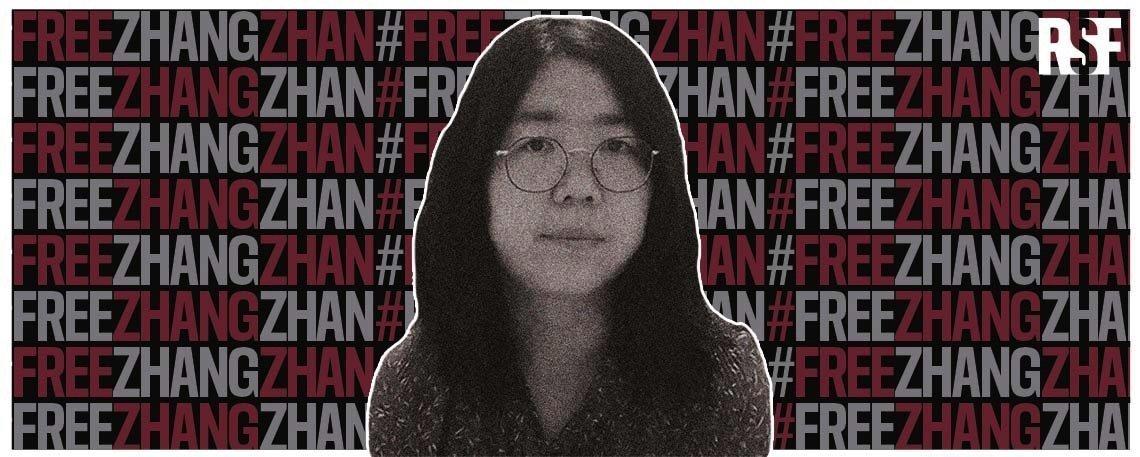
Freedom House reports that the citizen reporter Zhang Zhan, rearrested in August 2024 after a four-year term for her reporting, was convicted of “picking quarrels and provoking trouble” in September 2025 and sentenced to another four years.

Residential surveillance at a designated location

RSF states that independent journalists can legally be held in solitary confinement for six months in China’s “black prisons” under this measure, deprived of legal representation and potentially subjected to torture.

Revocation of foreign correspondents’ press credentials

In March 2020 the Ministry of Foreign Affairs required US citizens working as journalists at three outlets to surrender press credentials ending in 2020 within 10 days, and said they would not be able to report from Hong Kong or Macao, according to the Committee to Protect Journalists.

Cutting a journalist’s internet connection

Freedom House reports that authorities disconnected the journalist Gao Yu from fixed and mobile internet in August 2024 in retaliation for her online commentary.

Collusion with foreign forces and seditious publication charges in Hong Kong

Jimmy Lai was convicted of two counts of conspiracy to collude with foreign forces and one count of conspiracy to publish seditious material, according to the Committee to Protect Journalists.

Key milestones

  1. Foreign Correspondents’ Club of China publishes its 2025 Media Freedoms Report

    The report, titled “The New Abnormal”, concludes that restrictions on reporting are no longer experienced as isolated incidents but as a routine feature of life for foreign journalists in China.

  2. Jimmy Lai sentenced to 20 years

    Jimmy Lai is sentenced to 20 years in prison, and six former Apple Daily editors and executives to terms of six to 10 years.

  3. Dong Yuyu’s seven-year sentence upheld on appeal

    At a November 2025 hearing, after the appeal was postponed three times, the court upholds Dong Yuyu’s seven-year sentence.

  4. Zhang Zhan sentenced to another four years

    Zhang Zhan is convicted of “picking quarrels and provoking trouble” and sentenced to four more years, months after her release from a four-year term for her reporting.

  5. Dong Yuyu convicted of espionage

    Dong Yuyu, arrested in February 2022 while having lunch with a Japanese diplomat in Beijing, is convicted of espionage and sentenced to seven years.

  6. Stand News editors sentenced for sedition

    Chung Pui-kuen is jailed for one year and nine months, and Patrick Lam is released immediately after serving 10 months in pre-trial detention; Hong Kong Free Press attributes his release to a rare disease.

  7. Journalist Gao Yu disconnected from fixed and mobile internet

    Authorities disconnect Gao Yu from fixed and mobile internet in retaliation for her online commentary.

  8. Apple Daily board halts all Hong Kong operations

    The board announces the halt after about 500 police raided the paper and arrested five senior executives, and HK$18 million of its assets were frozen.

  9. Foreign Ministry orders US correspondents at three outlets to surrender credentials

    The Ministry of Foreign Affairs announces that US citizen journalists at The New York Times, The Wall Street Journal and The Washington Post whose credentials end in 2020 must surrender them within 10 days.

  10. Xi Jinping visits People’s Daily, Xinhua and CCTV

    Xi visits the three flagship state outlets and gives a speech to a symposium of nearly 200 officials, stating that the media should be “surnamed party”.

Sources

Persecution

Persecution

Hong Kong police raid two independent bookstores and arrest five on suspected sedition offences

According to the Committee to Protect Journalists, Hong Kong police said that on 15 July 2026 the National Security Department arrested two men and three women after raiding two bookstores in Mong Kok, on suspicion of violating the Safeguarding National Security Ordinance by displaying items with "seditious intent" and selling publications with "seditious content". Those held included Sum Wan-wah and Mandy Lau, co-founders of the Have a Nice Stay bookstore, and books were seized. Amnesty International said the raids hit Have a Nice Stay and Greenfield Bookstore, one day after Have a Nice Stay announced it would close citing financial difficulties and "unclear red lines", and that two other bookstores had been raided earlier in 2026.

Persecution

Local authorities order removal of private satellite dishes, Bitter Winter reports

Bitter Winter reported that Chinese authorities had urgently ordered the removal of satellite dishes that can receive foreign programme signals. On 30 April, the "Foreign Satellite Rectification Work Leading Group" of Zhuanghe, Liaoning, issued a notice citing "ideological security" and requiring residents to clear unauthorized receivers by 30 June, after which they would be removed by force and refusers could face legal liability. According to Bitter Winter, a worker removing dishes in Jilin City said more than 700 dishes had been forcibly removed from over 1,000 households in one area, and residents who resisted were threatened with fines and loss of benefits: a woman living alone in Jiaohe was threatened with the loss of her pension, and a man in his seventies with a 3,000 yuan fine. Official media cite lightning protection, falling objects and harm to minors from foreign programmes.

Persecution

Citizen journalists detained after reporting from Wuhan; others sentenced for providing state secrets or intelligence abroad

Bitter Winter reported that three self-described citizen journalists, Fang Bin, Chen Qiushi and Li Zehua, were detained one after another by the authorities after reporting from Wuhan on the epidemic. It also reported that since the authorities designated it a "hostile overseas website" in summer 2018, at least 45 of its reporters and contributors have been detained on grounds such as "leaking state secrets". It cites earlier cases: on 24 February 2020 a Ningbo court announced a ten-year sentence for Gui Minhai, a shareholder of the Causeway Bay Books, for "illegally providing intelligence abroad"; in July 2019 Huang Qi was sentenced to 12 years for "illegally providing state secrets abroad"; and in 2015 journalist Gao Yu was sentenced to five years for leaking a Party document.

Persecution

Hong Kong journalists accuse police of abuse at protests; police deny violence against reporters

BBC Chinese reported on 7 January 2020 that relations between Hong Kong journalists and police had worsened over six months of anti-extradition protests. Journalists and media outlets accused officers of verbal abuse and violent treatment at protest scenes, including shining strong lights to stop filming, forcibly removing gas masks and firing projectiles toward groups of reporters. Drawing on Hong Kong Journalists Association statements and media reports, it counted more than 20 reporters arrested and dozens injured; association chairperson Chris Yeung said it had received 52 complaints and 47 injury cases. An Indonesian reporter was blinded in the right eye. Police deny using violence against journalists and say reporters often stand between protesters and officers and obstruct their work; a police spokesperson said the force respects press freedom.

Hong Kong

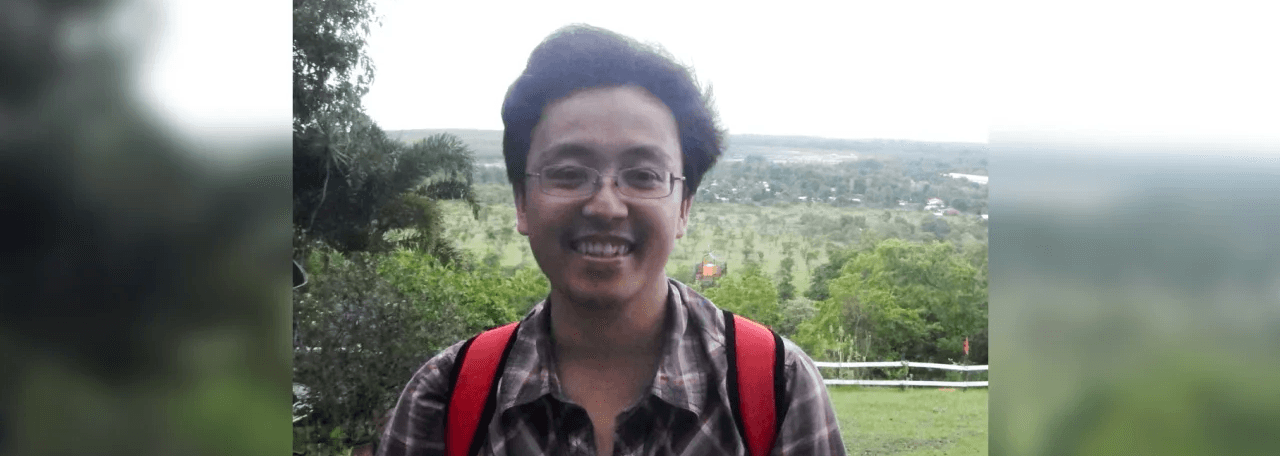
Ruan Xiaohuan阮曉寰

Blogger · Mainland ChinaCHR-478625

Ruan Xiaohuan is the author of ProgramThink, an anonymous blog he kept from 2009 on how to circumvent China's internet controls and on politics. Police took him from his Shanghai home on 10 May 2021 and held him at the Yangpu District Detention Center, without access to his family or a lawyer, until the verdict. On 10 February 2023 the Shanghai No. 2 Intermediate People's Court sentenced him to seven years for inciting subversion of state power, and the Shanghai High People's Court upheld that sentence on 13 December 2024. His wife visited him at Tilanqiao Prison on 22 August 2025.

Last reported serving sentence

· Dui Hua Foundation

Zhang Zhan張展

Citizen journalist · Mainland ChinaCHR-542143

In early 2020, Zhang Zhan traveled to Wuhan to report on the COVID-19 outbreak, documenting overcrowded hospitals and harassment of victims' families. Arrested in May 2020, she was later sentenced to four years for "picking quarrels and provoking trouble." She staged long-term hunger strikes in protest, was force-fed, and her health deteriorated. Rearrested shortly after completing her sentence in 2024, she remains detained.

Last reported serving sentence

· Reporters Without Borders

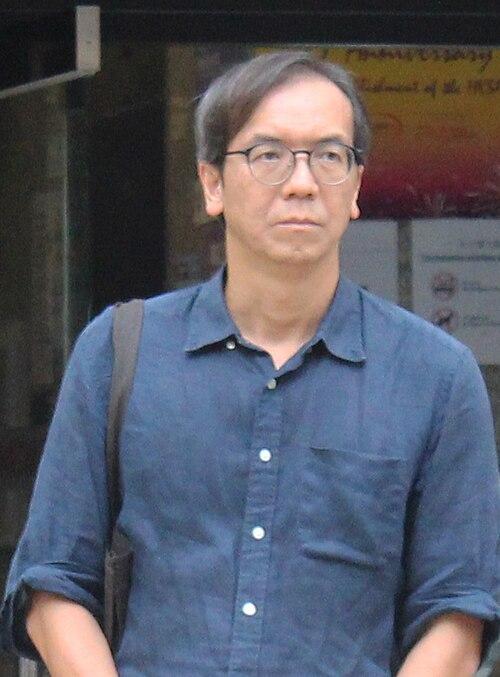
Chung Pui-kuen鍾沛權

Journalist and former editor-in-chief of Stand News · Hong KongCHR-795198

Chung Pui-kuen was chief editor of Stand News, a digital outlet that shut down after a national-security raid in December 2021. On 26 September 2024 a court sentenced him to 21 months for conspiring to publish seditious publications, based on 17 articles. Amnesty International said time already spent in pre-trial detention meant he would return to prison, unlike his co-defendant. He was released on 10 July 2025.

Released

· Hong Kong Watch

Huang Xueqin黃雪琴

Journalist and women's rights advocate · Mainland ChinaCHR-569718

A 15 September 2026 statement by the International Federation for Human Rights said journalist Sophia Huang Xueqin was arrested in Guangzhou on 19 September 2021 and sentenced in June 2024 to five years for inciting subversion, plus four years' deprivation of political rights. Radio Free Asia reported that, according to her lawyer Xu Kai, the Guangdong High People's Court secretly rejected her appeal on 10 September 2024. Weiquanwang reported that she completed her sentence on 18 September 2026 and was released.

Released

· Weiquanwang

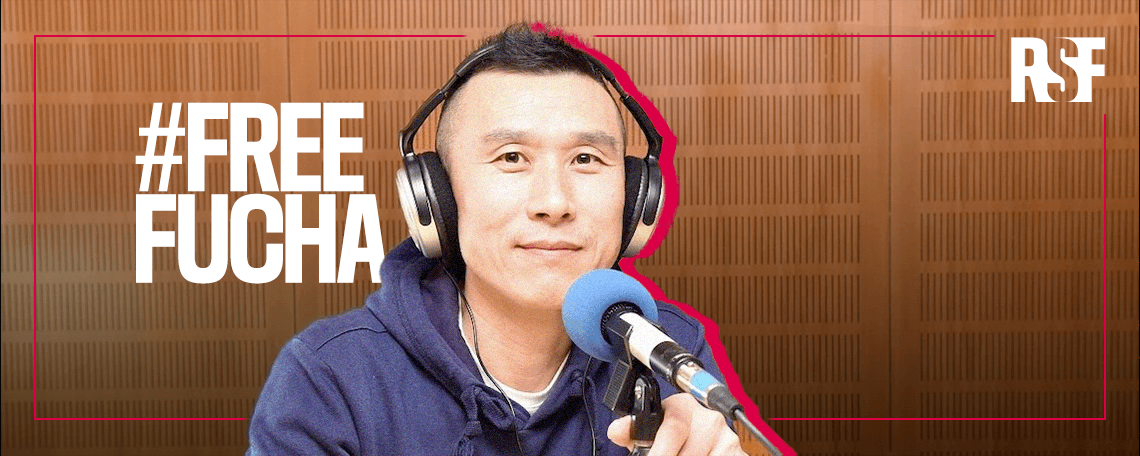
Li Yanhe李延賀(富察)

Publisher · Mainland ChinaCHR-623438

Li Yanhe (pen name Fucha), a Taiwan-based Chinese publisher and host at Radio Taiwan International, was sentenced to three years in prison by the Shanghai No. 1 Intermediate People's Court on 17 February 2025, for "inciting secession." Li is the founder and editor-in-chief of Gūsa Publishing House, which specializes in books on Chinese politics. He had been held incommunicado since March 2023. According to a source quoted by the Taipei Times, he was released in May 2026.

Last reported under restrictions

· Taipei Times

Reports

Source record · Reporters Without Borders (RSF)

Reporters Without Borders: 2026 World Press Freedom Index - China

RSF's China page in the 2026 World Press Freedom Index ranks China 178th of 180 countries with a score of 13.85, against 178th and 14.80 in 2025. It calls China the world's largest prison for journalists, with more than 100 currently detained, and says its regime conducts a campaign of repression against journalism and the right to information worldwide. The page says major media groups are state-owned, the Party's Propaganda Department sends all media daily editorial guidelines and censored topics, and journalists are accused of "espionage", "subversion" or "picking quarrels and provoking trouble".

View record

Source record · Amnesty International

The State of the World's Human Rights: April 2026 - China

Amnesty International's China entry in The State of the World's Human Rights (April 2026), covering 2025, says authorities intensified control over information and public discourse and continued to suppress dissent and peaceful assembly. Religious participants were persecuted, defenders, writers and artists were detained and prosecuted under vague national security provisions, Uyghurs and Tibetans were strictly controlled, and Jimmy Lai was convicted in Hong Kong on 15 December.

View record

Source record · Freedom House

China: Freedom in the World 2026 Country Report

Freedom House's Freedom in the World 2026 country report on China covers 2025. It rates China Not Free with a total score of 9 out of 100 (Political Rights -2 of 40, Civil Liberties 11 of 60). The CCP oversees a repressive authoritarian regime and civil society has been devastated by a multiyear crackdown. Key 2025 developments include the expulsion of General He Weidong and eight other generals from the CCP and the PLA in October, large Sichuan protests in August and a national digital ID system in July.

View record

Source record · Congressional-Executive Commission on China (CECC)

Congressional-Executive Commission on China: 2025 Annual Report

The Congressional-Executive Commission on China's 2025 Annual Report covers 1 July 2024 to 30 June 2025 under the theme "promises made, promises broken": the gap between the PRC's treaty and legal commitments and its practice. Its 17 chapters document restrictions on expression and religion, arbitrary detention, Xinjiang, Tibet, Hong Kong and transnational repression. Its Political Prisoner Database held 11,262 records on 30 June 2025, 2,755 of them active detentions.

View record

Source record · Freedom House

China: Freedom on the Net 2025 Country Report

Freedom House's Freedom on the Net 2025 country report on China covers 1 June 2024 to 31 May 2025. It scores China 9 out of 100 (Obstacles to Access 7 of 25, Limits on Content 2 of 35, Violations of User Rights 0 of 40) and rates it Not Free. The report finds that Chinese internet users have faced the world's worst conditions for internet freedom for over a decade, with severe legal and extralegal repercussions for online activity. It is an abridged edition.

View record

Source record · U.S. Department of State

U.S. Department of State: 2024 Country Reports on Human Rights Practices - China (Includes Hong Kong, Macau, and Tibet)

The 2024 U.S. Department of State Country Reports on Human Rights Practices, China (including Hong Kong, Macau and Tibet), says genocide and crimes against humanity occurred during the year against Uyghurs and other predominantly Muslim groups in Xinjiang. It lists arbitrary detention, disappearances, torture, transnational repression and restrictions on expression, religion and workers' freedom of association, and says the Hong Kong situation deteriorated and Tibet saw no significant change.

View record

Source record · Freedom House

China: Freedom in the World 2025 Country Report

Freedom House's Freedom in the World 2025 country report on China covers 2024. It rates China Not Free with a total score of 9 out of 100 (Political Rights -2 of 40, Civil Liberties 11 of 60). China is ruled by a repressive regime, Xi Jinping has consolidated personal power to a degree not seen in decades, and civil society has been largely decimated. The report lists new Xinjiang religious regulations, an amended state secrets law and the Zhuhai attack that killed 35 people.

View record

Source record · Human Rights Watch

World Report 2025: China

Human Rights Watch's World Report 2025 chapter on China, covering events of 2024, says that more than a decade into Xi Jinping's rule, efforts to centralize control have heightened repression throughout the country. It reports no independent civil society and no freedom of expression, association, assembly or religion, particularly harsh repression of Tibetans and Uyghurs, hundreds of thousands of Uyghurs still imprisoned, and the end of long-protected civil liberties in Hong Kong.

View record

Source record · Freedom House

China: Freedom in the World 2024 Country Report

Freedom House's Freedom in the World 2024 country report on China covers 2023. It rates China Not Free with a total score of 9 out of 100 (Political Rights -2 of 40, Civil Liberties 11 of 60). The Chinese Communist Party maintains tight control over all aspects of life and governance, Xi Jinping has consolidated personal power to a degree not seen in decades, and civil society has been largely decimated. Hong Kong and Tibet are assessed separately.

View record

Source record · Freedom House

China: Freedom in the World 2023 Country Report

Freedom House's Freedom in the World 2023 country report on China covers events in 2022. It gives China a total score of 9 out of 100 (unchanged), with Political Rights at -2 out of 40 and Civil Liberties at 11 out of 60, and the status Not Free. Xi Jinping secured a third term as party leader in October 2022, and the largest protests since 1989 erupted in late November against zero-COVID rules and were quickly suppressed.

View record

Source record · Human Rights Watch

World Report 2023: China

Human Rights Watch's China chapter of World Report 2023 covers events of 2022. The report finds that repression deepened as Xi Jinping secured an unprecedented third term as Communist Party general secretary, and repeated Covid-19 lockdowns on hundreds of millions of people led to deaths and hardship. Assaults on rights continued in Hong Kong, Xinjiang and Tibet, and the UN human rights chief's August Xinjiang report concluded that abuses "may amount to crimes against humanity".

View record

Source record · Freedom House

China: Freedom in the World 2022 Country Report

Freedom House's Freedom in the World 2022 country report on China covers events in 2021. It gives China a total score of 9 out of 100 (unchanged from the previous year), with Political Rights at -2 out of 40 and Civil Liberties at 11 out of 60, and the status Not Free. The regime has become increasingly repressive, the CCP keeps tightening control, and the report says new evidence showed that top leaders were directly involved in policies against Uyghurs and other minorities.

View record

Source record · Human Rights Watch

World Report 2022: China

Human Rights Watch's China chapter of World Report 2022 covers events of 2021. The report finds that under Xi Jinping the Chinese government doubled down on repression inside and outside the country, using its zero-tolerance Covid-19 policy to strengthen its hand, and authorities devastated rights in Hong Kong. The report adds that the government is committing crimes against humanity against Uyghurs and other Turkic Muslims, Tibetans face grave abuses, and space for women's and LGBT rights shrank.

View record

Source record · Freedom House

China: Freedom in the World 2021 Country Report

Freedom House's Freedom in the World 2021 country report on China covers events in 2020. It gives China a total score of 9 out of 100 (down from 10 the year before), with Political Rights at -2 out of 40 and Civil Liberties at 11 out of 60, and the status Not Free. The regime has become increasingly repressive, the CCP is tightening control over the state bureaucracy, media, religion, universities and civil society, and COVID-19 was used to speed up surveillance.

View record

Source record · Human Rights Watch

World Report 2021: China

Human Rights Watch's China chapter of World Report 2021 covers events of 2020. The report finds that the Chinese government's authoritarianism was on full display as it handled the Covid-19 outbreak, Beijing imposed the National Security Law on Hong Kong on 30 June, and Turkic Muslims in Xinjiang continued to face arbitrary detention, forced labor and mass surveillance, controls on Tibet, religion, the internet and rights defenders tightened, and international concern grew.

View record