
Summary
Freedom House's Freedom in the World 2021 country report on China covers events in 2020. It gives China a total score of 9 out of 100 (down from 10 the year before), with Political Rights at -2 out of 40 and Civil Liberties at 11 out of 60, and the status Not Free. The regime has become increasingly repressive, the CCP is tightening control over the state bureaucracy, media, religion, universities and civil society, and COVID-19 was used to speed up surveillance.
What the report says
The report finds that China's authoritarian regime has become increasingly repressive in recent years. The CCP is tightening its control over the state bureaucracy, the media, online speech, religious groups, universities, businesses and civil society associations, and has undermined its own modest rule-of-law reforms. Xi Jinping has consolidated personal power to a degree not seen in China for decades, but his actions have also triggered rising discontent among elites inside and outside the party. China scores 9 out of 100 overall, with Political Rights at -2 out of 40 and Civil Liberties at 11 out of 60; the scores do not cover Hong Kong or Tibet, which Freedom House examines in separate reports.
The report finds that the outbreak of COVID-19 at the beginning of 2020 justified accelerating programs to track, surveil and control citizens through new mobile-phone applications. The government largely contained the virus after the initial outbreak in Hubei, with fewer than 4,800 deaths reported by the WHO at year's end, using draconian methods. The CCP suppressed independent information about its early cover-up, punished whistleblowers and citizen journalists, and promoted disinformation blaming other countries. The report cites the February death of Li Wenliang, one of the whistleblowing health workers detained by police; one NGO documented 897 internet users punished for speech about the virus between 1 January and 26 March.
The report finds that the government pushed ahead with repressive programs aimed at changing demographics and ensuring "social stability" in Xinjiang, Tibet and Inner Mongolia. New evidence showed the massive scale of forced relocation of rural residents, forced sterilization of Uighur women, mass detention in "political reeducation" centers, and imprisonment of tens of thousands more by the courts; the report estimates the number held in camps at 1.8 million. An official white paper stated that 2.6 million people in Xinjiang were relocated in the year to June 2020. Boarding-school students at primary and middle level were reported to have reached 880,500 by the end of 2019. In Inner Mongolia, the August protests against reduced Mongolian-language instruction were met with mass arrests and enforced disappearances.
On expression and the media, the report finds that China has one of the world's most restrictive media environments and its most sophisticated system of online censorship, with thousands of websites blocked. It cites the Committee to Protect Journalists count of 47 journalists imprisoned as of December 2020, the 15-year sentence given to journalist Chen Jieren in April, and the expulsion of at least 17 foreign journalists, including Chris Buckley of the New York Times. Fang Bin, Chen Qiushi and Li Zehua were detained in Wuhan, and Zhang Zhan was sentenced to four years in December for "picking quarrels and stirring up trouble." Individuals have also faced fines for using a VPN.
On religion and academia, the report finds that the government continued to tighten control over religious communities and demolish unauthorized places of worship in 2020, and that police broke up the online Easter service of Early Rain Covenant Church in Chengdu and detained eight members, while its pastor Wang Yi serves nine years. The two-year extension of the Vatican-China agreement on bishops was confirmed in October 2020, Xinjiang Muslims face restrictions on mosques, fasting and baby names, and the campaign against Falun Gong continued. On academic freedom, Tsinghua professor Xu Zhangrun was detained for a week in July, and publisher Geng Xiaonan was detained in September and charged in October after expressing support for him.
On political rights and civil society, the report finds that Xu Zhiyong, founder of the New Citizens' Movement, was detained in February after weeks in hiding and formally arrested in June for "inciting subversion of state power." Businessman Ren Zhiqiang went missing in March after criticizing Xi's handling of the crisis and was sentenced in September to 18 years for corruption and embezzlement. The 2017 foreign NGO law restricts foreign groups and more deregister each year, and the government-controlled ACFTU is the only legal union. It cites China Labour Bulletin's record of about 800 strikes and protests in 2020; human rights lawyer Wang Quanzhang, released in April, filed a torture complaint in July.
On the rule of law and personal rights, the report finds that the CCP dominates the judiciary through political-legal committees, the conviction rate is estimated at 98 percent or more, and confessions obtained through torture are commonly used; it cites Safeguard Defenders' count of 87 televised confessions between mid-2013 and early 2020. Liuzhi detention can last up to six months without a lawyer, and torture, deaths in custody and thousands of executions a year persist, with 46 capital crimes. The hukou system leaves roughly 290 million migrants without full rights, abuses such as forced abortions and sterilizations continue, domestic violence affects one-quarter of women according to official figures, and 16 coal miners died in a September fire.
Key findings
Zhang Zhan sentenced to four years
Citizen journalist and former lawyer Zhang Zhan was sentenced in December to four years for "picking quarrels and stirring up trouble" over her videos from Wuhan.
Vatican-China bishops agreement extended
In October the Vatican and the Chinese government confirmed a two-year extension of their unpublished 2018 agreement on selecting Catholic bishops.
Ren Zhiqiang sentenced to 18 years
Businessman and party figure Ren Zhiqiang, who went missing in March after an essay criticizing Xi's handling of the pandemic, was sentenced in September to 18 years on corruption and embezzlement charges.
White paper reports 2.6 million relocated in Xinjiang
An official white paper released in September said 2.6 million people in Xinjiang were relocated in the year to June 2020; the report says conditions were tantamount to forced labor.
Coal mine fire kills 16
In September 16 coal miners died in an underground fire at a site run by a state-owned power company that had failed a government inspection months earlier.
Inner Mongolia protests over Mongolian-language instruction
In August students, parents and teachers protested a mandated cut in Mongolian-language instruction; the report says authorities arrested or detained thousands and carried out enforced disappearances.
Xu Zhangrun detained; Wang Quanzhang files torture complaint
Tsinghua law professor Xu Zhangrun was detained for a week in July; the same month lawyer Wang Quanzhang, released in April, filed a complaint alleging he was tortured in Tianjin.
Xu Zhiyong formally arrested
New Citizens' Movement founder Xu Zhiyong, detained in February after weeks in hiding, was formally arrested in June for "inciting subversion of state power," which can carry up to 15 years, and remained incommunicado at year's end.
Journalist Chen Jieren sentenced to 15 years
Chen Jieren was sentenced to 15 years in prison in April for publishing critical online material about the CCP, including corruption allegations in Hunan; the report calls it an unusually harsh penalty.
Death of whistleblower Li Wenliang prompts public anger and censorship
Li Wenliang died of COVID-19 in February; the report says an NGO documented 897 internet users punished for coronavirus speech between 1 January and 26 March, and the Ministry of Public Security reported 5,111 cases of "fabricating and deliberately disseminating false and harmful information."
Foreign teaching materials banned for schools
In January 2020 the national teaching materials committee banned all foreign teaching materials for primary through secondary schools and required all materials to be submitted for political review in advance.
Wuhan citizen journalists detained
Security forces in Wuhan detained Fang Bin, Chen Qiushi and Li Zehua, who had filmed videos from within the city during lockdown; Li and Chen were later released, and Chen was reportedly under tight surveillance.
At least 17 foreign journalists expelled; Chris Buckley forced to leave in May
Authorities expelled at least 17 foreign journalists during the year, many of whom had been reporting on sensitive topics; Chris Buckley of the New York Times was forced to leave in May after officials refused to renew his visa.
Early Rain Covenant Church online Easter service raided
Police broke up the online Easter service of the unregistered Early Rain Covenant Church in Chengdu and detained eight members; pastor Wang Yi was already serving nine years.
880,500 boarding-school students in Xinjiang
New evidence showed a rapid increase in Xinjiang children held in state boarding schools and orphanages, many with a parent in detention; primary and middle-school boarders reached 880,500 by the end of 2019.
Source record
Freedom House
This page is a summary. The original was published by the organization named above.
View original report (opens in a new tab)People named in this record
Chen Qiushi陳秋實
lawyer and citizen journalist · Mainland ChinaCHR-878610
Chen Qiushi, who worked as a lawyer, reported on the 2019 Hong Kong protests and, in January 2020, on the coronavirus outbreak in Wuhan. Human Rights Watch says Wuhan authorities took him into custody on 7 February 2020 and that by 27 April 2020 he had not been heard from. In September 2020 his friend Xu Xiaodong said prosecutors had decided not to prosecute him, and Central News Agency, citing Radio Television Hong Kong, reported in October that he was on bail pending trial and living with his family in Qingdao while still under residential surveillance. Voice of America reported that he reappeared on 30 September 2021 on Xu's YouTube live stream, and in an interview published by Mirror Media in June 2022 he said Shandong national security officers had brought him back to Qingdao after he tried to leave.
· Mirror Media
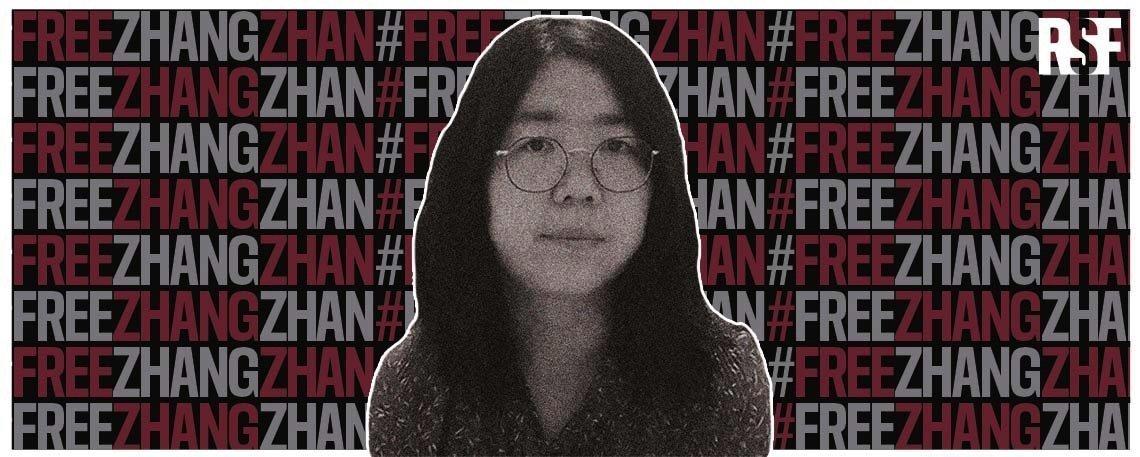
Zhang Zhan張展
Citizen journalist · Mainland ChinaCHR-542143
In early 2020, Zhang Zhan traveled to Wuhan to report on the COVID-19 outbreak, documenting overcrowded hospitals and harassment of victims' families. Arrested in May 2020, she was later sentenced to four years for "picking quarrels and provoking trouble." She staged long-term hunger strikes in protest, was force-fed, and her health deteriorated. Rearrested shortly after completing her sentence in 2024, she remains detained.
· Reporters Without Borders
Chen Jieren陳傑人
Journalist and blogger · Mainland ChinaCHR-458976
Chen Jieren is a freelance columnist who published the political blog Jieren Guancha. CPJ says Chenzhou police arrested him in Hunan on 4 July 2018 after articles about local officials, and that on 30 April 2020 the Guiyang County Court sentenced him to 15 years and a fine of 7.01 million yuan. CNN reported the 15-year sentence on 1 May 2020. China Digital Times says Hunan police took him away on suspicion of extortion and illegal business after he published on WeChat.
Sentenced to 15 years ·
Reports that name the same person
Source record · Freedom House
China: Freedom in the World 2022 Country Report
Freedom House's Freedom in the World 2022 country report on China covers events in 2021. It gives China a total score of 9 out of 100 (unchanged from the previous year), with Political Rights at -2 out of 40 and Civil Liberties at 11 out of 60, and the status Not Free. The regime has become increasingly repressive, the CCP keeps tightening control, and the report says new evidence showed that top leaders were directly involved in policies against Uyghurs and other minorities.
Source record · Human Rights Watch
World Report 2022: China
Human Rights Watch's China chapter of World Report 2022 covers events of 2021. The report finds that under Xi Jinping the Chinese government doubled down on repression inside and outside the country, using its zero-tolerance Covid-19 policy to strengthen its hand, and authorities devastated rights in Hong Kong. The report adds that the government is committing crimes against humanity against Uyghurs and other Turkic Muslims, Tibetans face grave abuses, and space for women's and LGBT rights shrank.
Source record · Freedom House
China: Freedom in the World 2023 Country Report
Freedom House's Freedom in the World 2023 country report on China covers events in 2022. It gives China a total score of 9 out of 100 (unchanged), with Political Rights at -2 out of 40 and Civil Liberties at 11 out of 60, and the status Not Free. Xi Jinping secured a third term as party leader in October 2022, and the largest protests since 1989 erupted in late November against zero-COVID rules and were quickly suppressed.