
Summary
Abidin Damollam, whom Radio Free Asia also named Abidin Ayup, was a Uyghur imam from Qayraq in Atush, Qizilsu Kyrgyz Autonomous Prefecture, Xinjiang, who RFA reported had served as imam of the Qayraq mosque for 30 years or more. In January 2020 RFA reported that a relative in the United States said he had been detained in early 2017, and that a court document called him a "disseminator of religious extremism". In February 2024 RFA reported that he was arrested in June 2017 on charges of "promoting religious extremism" and sentenced to nine years in prison. He died in Atush's Aghu prison on 5 February 2024 at the age of 96, and his body was not returned to his family.
Timeline
Died in Aghu prison
An officer of the Qizilsu prefecture justice department confirmed the death. An officer at the Aghu police station said the authorities gave illness as the cause and declined to answer further questions. According to the relative in the United States, prison authorities passed the body to the Atush police, who buried him in a cemetery.
Radio Free Asia
Uyghur imam, 96, dies in prison
Open original source (opens in a new tab)Court document calls him a "disseminator of religious extremism"
RFA's 2020 report said a verdict issued on 1 July 2019 by the Kizilsu Kirgiz Autonomous Prefecture Intermediate People's Court, in the trial of an Atush official who it said was convicted and sentenced on 26 March 2019, called him an "object of targeted transformation" and a "disseminator of religious extremism".
Radio Free Asia
Ninety-Year-Old Uyghur Imam Confirmed Detained in Xinjiang But Condition Unknown
Open original source (opens in a new tab)Hospital "supervised treatment" for 50 days
RFA's 2020 report cited a court document from the trial of an Atush official, which said he was given "supervised treatment" in hospital for 50 days beginning in May 2017. The relative told RFA he appeared to have fallen sick around May 2017 and been taken to the Atush City Hospital.
Radio Free Asia
Ninety-Year-Old Uyghur Imam Confirmed Detained in Xinjiang But Condition Unknown
Open original source (opens in a new tab)Detained in early 2017
A relative in the United States told RFA in 2020 that he was accused of "religious extremism" and detained "at the beginning of that year"; RFA described this as "early 2017".
Radio Free Asia
Ninety-Year-Old Uyghur Imam Confirmed Detained in Xinjiang But Condition Unknown
Open original source (opens in a new tab)Arrested and sentenced to nine years
In February 2024 RFA dated the arrest to June 2017, while a relative in the United States said he was arrested in May 2017. RFA's January 2020 report gave "early 2017" as the time of detention. His family said he was arrested for doing what the government had appointed him to do.
Radio Free Asia
Uyghur imam, 96, dies in prison
Open original source (opens in a new tab)
Sources
This page consolidates publicly available external sources. Links open the original publication.
External source
Radio Free Asia
Uyghur imam, 96, dies in prison
Open original source (opens in a new tab)External source
Radio Free Asia
Ninety-Year-Old Uyghur Imam Confirmed Detained in Xinjiang But Condition Unknown
Open original source (opens in a new tab)People named in the same record
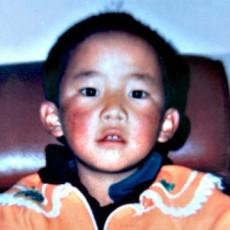
Gedhun Choekyi Nyima更登確吉尼瑪
Recognized 11th Panchen Lama · TibetCHR-676151
On 14 May 1995 the Dalai Lama recognized six-year-old Gedhun Choekyi Nyima as the 11th Panchen Lama. Three days later, Chinese authorities took him and his family away. The International Campaign for Tibet said on his 37th birthday, 25 April 2026, that he had not been seen since. On 18 May 2026 the U.S. State Department again called for his release, 31 years after the disappearance. Chinese authorities have said he is living a normal life.
· Central Tibetan Administration

Go Sherab Gyatso果·喜饒嘉措
Tibetan writer, educator, and monk · TibetCHR-106980
Go Sherab Gyatso, also known as Gosher, is a Tibetan writer, educator, and monk. Authorities detained him on 26 October 2020 in Chengdu, where PEN International says he was seeking treatment for a chronic lung condition, on suspicion of inciting secession. He was formally charged on 3 February 2021 and, after a secret trial in December 2021, sentenced to 10 years in prison. PEN International reported that he was still serving that sentence throughout 2025 and raised concerns about his health and access to medical care.
· PEN International
Ekpar Asat艾克拜爾·艾賽提
Website founder · XinjiangCHR-912907
Ekpar Asat founded the Uyghur-language website Baghdax. The U.S. Commission on International Religious Freedom says Xinjiang authorities detained him in April 2016 after he returned from a U.S. State Department program, reportedly for inciting ethnic hatred. In January 2020 the Chinese Embassy told a U.S. senator that he had been sentenced to 15 years. Human Rights Watch, on 27 August 2026, named him among prominent people who remained in prison.
· Human Rights Watch
Events on the same issues
Persecution
China adopts the Law on Promoting Ethnic Unity and Progress
China passed the Law on Promoting Ethnic Unity and Progress on 12 March 2026, and it took effect on 1 July 2026, according to Radio Free Asia. The 65-article law gives Mandarin priority in education and government affairs (Article 15), requires religious groups, schools and places of worship to follow the "Sinicization of religion" (Article 46), and states that people outside China could face legal consequences if Beijing determines their actions undermine "ethnic unity" (Article 63). Al Jazeera reported that Amnesty International said the law pushes Uyghurs, Tibetans and Mongolians to adopt a single state-defined national identity, and that Vice Justice Minister Hu Weilie called the overseas provision "legitimate, lawful, necessary and feasible". UN human rights chief Volker Türk called on China in June to repeal the law.
Persecution
Bitter Winter reports Adrian Zenz's findings on boarding schools and orphanages for children of detained Uyghurs
Bitter Winter reported on 26 October 2020 on research published about ten days earlier by German scholar Adrian Zenz, which Zenz says draws on non-public Xinjiang government spreadsheets recording the fate of more than 10,000 children in Shache County with one or both parents detained. Zenz said about 1,000 of them have both parents detained and are placed in official orphanages or full-time boarding schools. Citing government statistics, he said the number of boarding students in primary and secondary schools rose from 497,800 in 2017 to 880,500 in 2019, a rise of 76.9%, with the increase of 382,000 occurring during the detention campaign, mainly in minority regions. Xinjiang propaganda official Xu Guixiang told the BBC that a family with all members in vocational training centres would have serious problems and that he had never seen such a case.
Persecution
Xinjiang minority students in mainland China face dormitory inspections, phone monitoring and religious restrictions, Bitter Winter reports
Bitter Winter reported on 8 October 2020, citing teachers in Fujian and Shandong and a Uyghur student in Heilongjiang, that Muslim minority students from Xinjiang studying in mainland China are under constant surveillance and barred from showing ethnic or religious characteristics. A Fujian secondary-school teacher said teachers inspect dormitories during class and sometimes at night for religious items, that doors may not be locked and that students' phones are closely monitored. The Heilongjiang student said teachers photograph her in her dormitory and tell Uyghur students not to leave the city on holidays. Bitter Winter cites a South China Normal University notice on the 2017–2018 Snow Lotus grants that bars students who "take part in or privately conduct sermons, worship, fasting or other religious activities, or wear religious dress or headscarves" from applying.
Reports that name this person
Source record · U.S. Department of State
U.S. Department of State: 2024 Country Reports on Human Rights Practices - China (Includes Hong Kong, Macau, and Tibet)
The 2024 U.S. Department of State Country Reports on Human Rights Practices, China (including Hong Kong, Macau and Tibet), says genocide and crimes against humanity occurred during the year against Uyghurs and other predominantly Muslim groups in Xinjiang. It lists arbitrary detention, disappearances, torture, transnational repression and restrictions on expression, religion and workers' freedom of association, and says the Hong Kong situation deteriorated and Tibet saw no significant change.
Source record · U.S. Commission on International Religious Freedom (USCIRF)
USCIRF 2025 Annual Report - China
The USCIRF 2025 Annual Report, covering 2024, says religious freedom conditions in China remained among the worst in the world and recommends that the State Department redesignate it a "country of particular concern". It says Xi Jinping continued to lead the "sinicization of religion", that Uyghur Muslims continued to be imprisoned for religious activities, that Tibetan Buddhists and underground Catholic clergy were restricted or detained, and that pastor Kan Xiaoyong was sentenced to 14 years.
Reports on similar issues
Source record · Freedom House
China: Freedom in the World 2024 Country Report
Freedom House's Freedom in the World 2024 country report on China covers 2023. It rates China Not Free with a total score of 9 out of 100 (Political Rights -2 of 40, Civil Liberties 11 of 60). The Chinese Communist Party maintains tight control over all aspects of life and governance, Xi Jinping has consolidated personal power to a degree not seen in decades, and civil society has been largely decimated. Hong Kong and Tibet are assessed separately.