
Summary
The USCIRF 2025 Annual Report, covering 2024, says religious freedom conditions in China remained among the worst in the world and recommends that the State Department redesignate it a "country of particular concern". It says Xi Jinping continued to lead the "sinicization of religion", that Uyghur Muslims continued to be imprisoned for religious activities, that Tibetan Buddhists and underground Catholic clergy were restricted or detained, and that pastor Kan Xiaoyong was sentenced to 14 years.
What the report says
The report is the China chapter of the 2025 USCIRF Annual Report, marked "USCIRF-Recommended for Countries of Particular Concern". It says that in 2024 religious freedom conditions in China remained among the worst in the world. Chinese Communist Party leader Xi Jinping continued to lead efforts to update and enforce the "sinicization of religion" policy, which requires the complete loyalty and subordination of recognized religious groups to the Party, its political ideology and its policy agenda. The report says China continued to use high-tech surveillance outside places of worship and other means to repress religious freedom throughout the country, and that it weaponized transnational repression and disinformation using emerging technologies.
On Xinjiang, the report says February amendments to the Xinjiang Uyghur Autonomous Region Religious Affairs Regulations reinforced sinicization policy and continued to impose stringent restrictions, and that in March regional Party secretary Ma Xingrui insisted on sinicizing Islam, calling it an "inevitable trend". Authorities continued to imprison Uyghur Muslims for religious activities, including charitable contributions and religious instruction, and 96-year-old Imam Abidin Damollam died in prison in February while serving a nine-year sentence for allegedly "promoting religious extremism". The report says authorities banned Muslims from fasting and breaking fasts collectively during Ramadan and promoted tourism to Xinjiang to whitewash genocidal violations.
On Tibet, the report says officials persisted in restricting the religious activities of Tibetan Buddhists. Authorities reportedly banned the admission of new monks at a monastery in Chamdo prefecture, prohibited religious activities during Saga Dawa in Lhasa, and forced residents in Sichuan Province to remove religious symbols displayed outside their homes. According to the report, authorities closed Tibetan monastery schools and enrolled students in state-run boarding schools to forcibly assimilate them, while police arrested and imprisoned Tibetan Buddhists for public and private mentions of the Dalai Lama. Authorities indicated that they intend to interfere in the Dalai Lama's succession process and punish Tibetans who oppose.
On Christians and other groups, the report says Chinese authorities detained, forcibly disappeared or refused to disclose the whereabouts of underground Catholic clergy who declined to join the state-controlled Catholic organization. Independent house church Protestants faced similar retribution, as police raided house churches and harassed, detained, fined and imprisoned members on reportedly fabricated charges, including "fraud" and "subversion". The report says a court sentenced Pastor Kan Xiaoyong in January to 14 years in prison on groundless allegations. The government continued to target Falun Gong practitioners, the Church of Almighty God and other unrecognized groups as illegal "cults"; Falun Gong practitioner Xu Na is among thousands of adherents who faced arrest, imprisonment and mistreatment.
The report says human rights activists continued to express concerns about Hong Kong's new national security law, Article 23, and its impact on religious freedom, and that some imprisoned Hong Kong activists alleged that prison authorities deny them access to religious materials. On transnational repression, reporting emerged in September that pro-CCP diaspora groups with ties to the United Front Work Department engaged in coordinated, violent suppression of Uyghur, Tibetan and Hong Kong activists protesting Xi's 2023 visit to San Francisco. It describes the UN Universal Periodic Review of China in 2024 and the High Commissioner's March call to implement OHCHR recommendations, and recommends redesignating China as a CPC and sanctioning officials.
Key findings
Congress renews the Uyghur Human Rights Policy Act
The report says Congress renewed the Uyghur Human Rights Policy Act for another five years.
Reports of coordinated suppression of protesters during Xi's San Francisco visit
The report says reporting emerged that pro-CCP diaspora groups tied to the United Front Work Department, with support from Chinese diplomats, violently suppressed Uyghur, Tibetan and Hong Kong activists protesting Xi's 2023 visit.
OHCHR acknowledges lack of progress for religious minorities in Xinjiang
The report says OHCHR acknowledged the lack of progress on human rights for religious minorities in Xinjiang, citing problematic laws and policies, limited access to information and fear of reprisals.
State Department imposes visa restrictions on Chinese officials
The report says the State Department imposed visa restrictions on unnamed Chinese officials involved in repressing marginalized religious and ethnic communities.
Promoting a Resolution to the Tibet-China Dispute Act signed into law
The report says President Biden signed the Act (S. 138), which instructs the State Department to combat Chinese propaganda and disinformation about Tibetan institutions, including the Dalai Lama.
Xinjiang Party secretary calls sinicizing Islam an "inevitable trend"
The report says Ma Xingrui, CCP secretary of Xinjiang, insisted on sinicizing Islam in the region, calling it an "inevitable trend".
UN High Commissioner urges China to implement OHCHR recommendations
The report says Volker Turk called on China to implement OHCHR and other UN bodies' recommendations on fundamental rights violations, including in Xinjiang and Tibet.
Xinjiang Religious Affairs Regulations amended
The report says February amendments to the Xinjiang Uyghur Autonomous Region Religious Affairs Regulations reinforced sinicization policy and continued to impose stringent restrictions.
Imam Abidin Damollam, 96, dies in prison
The report says the 96-year-old imam died in prison while serving a nine-year sentence for allegedly "promoting religious extremism".
Pastor Kan Xiaoyong sentenced to 14 years
The report says a court sentenced Protestant Pastor Kan Xiaoyong to 14 years in prison on groundless allegations.
U.S. participates in China's UN Universal Periodic Review
The report says the United States joined the call at China's UPR for an end to transnational repression, forced assimilation, genocide and crimes against humanity in Xinjiang, and abuses in Tibet and Inner Mongolia.
Source record
U.S. Commission on International Religious Freedom (USCIRF)
This page is a summary. The original was published by the organization named above.
View original report (opens in a new tab)People named in this record
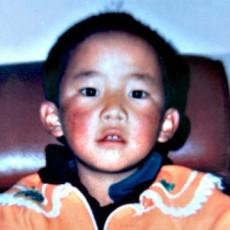
Gedhun Choekyi Nyima更登確吉尼瑪
Recognized 11th Panchen Lama · TibetCHR-676151
On 14 May 1995 the Dalai Lama recognized six-year-old Gedhun Choekyi Nyima as the 11th Panchen Lama. Three days later, Chinese authorities took him and his family away. The International Campaign for Tibet said on his 37th birthday, 25 April 2026, that he had not been seen since. On 18 May 2026 the U.S. State Department again called for his release, 31 years after the disappearance. Chinese authorities have said he is living a normal life.
· Central Tibetan Administration
Abidin DamollamAbidin Damollam
Uyghur imam and religious teacher · XinjiangCHR-559466
Abidin Damollam, whom Radio Free Asia also named Abidin Ayup, was a Uyghur imam from Qayraq in Atush, Qizilsu Kyrgyz Autonomous Prefecture, Xinjiang, who RFA reported had served as imam of the Qayraq mosque for 30 years or more. In January 2020 RFA reported that a relative in the United States said he had been detained in early 2017, and that a court document called him a "disseminator of religious extremism". In February 2024 RFA reported that he was arrested in June 2017 on charges of "promoting religious extremism" and sentenced to nine years in prison. He died in Atush's Aghu prison on 5 February 2024 at the age of 96, and his body was not returned to his family.
· Radio Free Asia

Gulshan Abbas古麗仙·阿巴斯
Retired doctor · XinjiangCHR-750070
Amnesty International reported that retired doctor Gulshan Abbas was sentenced to 20 years in a secret trial in March 2019 for taking part in organized terrorism, aiding terrorist activities and seriously disrupting social order. Her family learned of the sentence in December 2020. On 27 August 2026 Human Rights Watch named her among prominent figures who remain in prison.
· Human Rights Watch
Reports that name the same person
Source record · Congressional-Executive Commission on China (CECC)
Congressional-Executive Commission on China: 2025 Annual Report
The Congressional-Executive Commission on China's 2025 Annual Report covers 1 July 2024 to 30 June 2025 under the theme "promises made, promises broken": the gap between the PRC's treaty and legal commitments and its practice. Its 17 chapters document restrictions on expression and religion, arbitrary detention, Xinjiang, Tibet, Hong Kong and transnational repression. Its Political Prisoner Database held 11,262 records on 30 June 2025, 2,755 of them active detentions.
Source record · U.S. Department of State
U.S. Department of State: 2024 Country Reports on Human Rights Practices - China (Includes Hong Kong, Macau, and Tibet)
The 2024 U.S. Department of State Country Reports on Human Rights Practices, China (including Hong Kong, Macau and Tibet), says genocide and crimes against humanity occurred during the year against Uyghurs and other predominantly Muslim groups in Xinjiang. It lists arbitrary detention, disappearances, torture, transnational repression and restrictions on expression, religion and workers' freedom of association, and says the Hong Kong situation deteriorated and Tibet saw no significant change.
Source record · Amnesty International
The State of the World's Human Rights: April 2026 - China
Amnesty International's China entry in The State of the World's Human Rights (April 2026), covering 2025, says authorities intensified control over information and public discourse and continued to suppress dissent and peaceful assembly. Religious participants were persecuted, defenders, writers and artists were detained and prosecuted under vague national security provisions, Uyghurs and Tibetans were strictly controlled, and Jimmy Lai was convicted in Hong Kong on 15 December.