
Summary
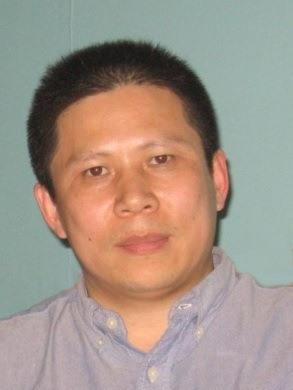
Gou Zhongshan, born in 1982 in Pingchang County, Sichuan, and formerly named Gou Zhongcan, is a rights defender who, according to Weiquanwang, was sentenced in 2006 to 13 years for supplying intelligence abroad after photographing Sichuan prisons for the US-based Laogai Research Foundation. Weiquanwang reported that Chengdu police seized him on 15 March 2019 in a case it linked to the crackdown on Early Rain Covenant Church, and that he was held for seven months. He was released on 24 October 2019 and went to his home town to recover, according to Weiquanwang.
Timeline
Released
Weiquanwang reported that he was freed that day after seven months in custody and was recovering in his home town.
Weiquanwang
Gou Zhongshan, held for seven months in the Early Rain Covenant Church case, released and recovering at home
Open original source (opens in a new tab)Lawyer told no such person was held at the county detention center
Weiquanwang said his defence lawyer went to the Pingchang County detention center and was told there was no such person. It said the lawyer then learned at a police station that the case, on suspicion of "picking quarrels and provoking trouble", was being handled by state security officers, and that the county public security bureau hung up without saying where he was. As of 18 July Weiquanwang described him as forcibly disappeared.
Weiquanwang
Gou Zhongshan of the Chengdu Early Rain Church case still forcibly disappeared, whereabouts unknown
Open original source (opens in a new tab)Father said he was held in a police basement
Weiquanwang said his father, after meeting him, stated publicly that he had been held all along in a police-station basement without daylight because he refused to hand over his computer and phone passwords.
Weiquanwang
Gou Zhongshan, held for seven months in the Early Rain Covenant Church case, released and recovering at home
Open original source (opens in a new tab)Seized by Chengdu police
Weiquanwang said Chengdu police suddenly took him away and that he lost contact afterwards. It said someone saw him on 18 March at Hangzhou East railway station, head shaved and handcuffed, escorted by several plainclothes officers.
Weiquanwang
Gou Zhongshan, held for seven months in the Early Rain Covenant Church case, released and recovering at home
Open original source (opens in a new tab)Released early after sentence reductions
Weiquanwang said he was released early after three sentence reductions, and that he was tortured in prison and spent more than three years in solitary confinement.
Weiquanwang
Gou Zhongshan, held for seven months in the Early Rain Covenant Church case, released and recovering at home
Open original source (opens in a new tab)Sentenced to 13 years
According to Weiquanwang, the Chengdu Intermediate Court sentenced him to 13 years and five years' deprivation of political rights, and the Sichuan High Court upheld the verdict on appeal. It said he served the term in Sichuan's Chuandong Prison.
Weiquanwang
Gou Zhongshan, held for seven months in the Early Rain Covenant Church case, released and recovering at home
Open original source (opens in a new tab)Placed under residential surveillance
Weiquanwang said that after he sent photographs of Sichuan prisons and execution grounds to the Laogai Research Foundation and its Observe website, the Chengdu state security bureau placed him under residential surveillance on suspicion of illegally supplying intelligence abroad. It said he was criminally detained on 28 April 2006 and formally arrested on 18 May 2006.
Weiquanwang
Gou Zhongshan, held for seven months in the Early Rain Covenant Church case, released and recovering at home
Open original source (opens in a new tab)
Sources
This page consolidates publicly available external sources. Links open the original publication.
External source
Weiquanwang
Gou Zhongshan, held for seven months in the Early Rain Covenant Church case, released and recovering at home
Open original source (opens in a new tab)External source
Weiquanwang
Gou Zhongshan of the Chengdu Early Rain Church case still forcibly disappeared, whereabouts unknown
Open original source (opens in a new tab)Cases on similar issues
December 26 citizens「12·26」公民案
Citizen activists · Mainland ChinaCHR-109549
On 26 December 2019, authorities began taking people away from a private gathering in Xiamen. Legal advocate Xu Zhiyong, lawyers Ding Jiaxi and Chang Weiping, and others had met to talk about public affairs. More than 20 citizens and lawyers were disappeared, summoned, or detained. Many were accused of inciting subversion or picking quarrels.
Detentions and prosecutions following the December 2019 gathering ·
Augustine Cui Tai崔泰
Coadjutor bishop of the unofficial Catholic Church in Xuanhua, Hebei · Mainland ChinaCHR-565919
Augustine Cui Tai is the coadjutor bishop of the unofficial Catholic Church in Xuanhua, Hebei, named by Pope Benedict XVI in 2013, who refused to join the state-backed Chinese Patriotic Catholic Association. The Hong Kong Catholic weekly Examiner reported that he had been held without any judicial procedure since 2007 and was taken away again in June 2020; AFP reported in October 2020 that he remained detained or under house arrest. ChinaAid reported in February 2023 that there had been no news of him since the spring of 2021.
· ChinaAid
Chen Hechao陳合超
Priest, unofficial Catholic community of Baoding Diocese, Hebei · Mainland ChinaCHR-514834
Chen Hechao was a priest of the unofficial Catholic community of Baoding Diocese in Hebei, which ChinaAid described as loyal to the Holy See. In a May 2022 report based on AsiaNews, ChinaAid included Chen in a list of at least ten diocesan priests it said had been forcibly disappeared during 2022. FSSPX.News reported in April 2023, citing AsiaNews, that the authorities had released, on several occasions over the previous year, ten underground priests of the diocese who disappeared in the first four months of 2022, after forcing them into indoctrination sessions.
· FSSPX.News
Events on the same issues
Persecution
Prisoners of conscience denied medical care, with deaths soon after release, Bitter Winter reports
Bitter Winter reported on 6 October 2019 that dissidents and religious believers in Chinese prisons are denied medical care, and that seriously ill prisoners are forced to do physical labour. It cites the rights activist Cao Shunli, whose relatives repeatedly asked for medical parole, granted only after she fell into a coma, and who died days after reaching hospital; Liu Xiaobo, diagnosed with late-stage liver cancer in prison, who died one month after medical parole; and the writer Yang Tongyan, whose lawyer repeatedly applied for parole, granted three months before his death. It says Huang Qi and Yao Wentian, still imprisoned, are seriously ill and their families' applications have failed. It also describes Church of Almighty God members, one forced to work 12 hours a day with cirrhosis, and says some people suspect that delayed release is a way of killing prisoners of conscience.
Persecution
Authorities detain nearly 30 Zion Church members including founder Ezra Jin Mingri
Human Rights Watch reported that on 10-11 October 2025 Chinese authorities arrested nearly 30 pastors, preachers and members of the unofficial Zion Protestant Church in seven cities, including Beijing, Shanghai and Zhejiang. Among them was the church's pastor and founder, Ezra Jin Mingri, 56, in Beihai, Guangxi; he was arrested for "illegal use of information networks", which carries up to three years in prison. According to a statement by family members cited by HRW, Jin and seven other pastors were held in Beihai City No. 2 Detention Center, and at least five of those detained had reportedly been released. NPR reported that church spokesperson Sean Long said more than 30 pastors and staff were arrested or unreachable, and that China's Foreign Ministry spokesman Lin Jian said the government manages religious affairs in accordance with the law.
Persecution
BBC reports satellite images and testimony on Xinjiang detention camps, including one at Dabancheng
The BBC reported on 24 October 2018 that a satellite image taken on 22 April 2018 showed a large, heavily guarded compound in the desert outside Dabancheng, near Urumqi, with an outer wall about two kilometres long and 16 watchtowers. The BBC says China is accused of holding hundreds of thousands of Muslims in Xinjiang without trial; the Chinese government denies this and says people attend voluntary "vocational schools" to combat "terrorism and religious extremism". According to the BBC, German scholar Adrian Zenz found Xinjiang government tender documents describing dozens of camps with watchtowers, barbed wire and guard rooms, and an Australian architecture firm's most conservative estimate was that the Dabancheng site could hold about 11,000 people. The BBC interviewed eight Uyghurs abroad whose accounts of detention it describes as consistent.
Reports on similar issues
Source record · Human Rights Watch
World Report 2021: China
Human Rights Watch's China chapter of World Report 2021 covers events of 2020. The report finds that the Chinese government's authoritarianism was on full display as it handled the Covid-19 outbreak, Beijing imposed the National Security Law on Hong Kong on 30 June, and Turkic Muslims in Xinjiang continued to face arbitrary detention, forced labor and mass surveillance, controls on Tibet, religion, the internet and rights defenders tightened, and international concern grew.
Source record · Human Rights Watch
World Report 2022: China
Human Rights Watch's China chapter of World Report 2022 covers events of 2021. The report finds that under Xi Jinping the Chinese government doubled down on repression inside and outside the country, using its zero-tolerance Covid-19 policy to strengthen its hand, and authorities devastated rights in Hong Kong. The report adds that the government is committing crimes against humanity against Uyghurs and other Turkic Muslims, Tibetans face grave abuses, and space for women's and LGBT rights shrank.
Source record · Congressional-Executive Commission on China (CECC)
Congressional-Executive Commission on China: 2025 Annual Report
The Congressional-Executive Commission on China's 2025 Annual Report covers 1 July 2024 to 30 June 2025 under the theme "promises made, promises broken": the gap between the PRC's treaty and legal commitments and its practice. Its 17 chapters document restrictions on expression and religion, arbitrary detention, Xinjiang, Tibet, Hong Kong and transnational repression. Its Political Prisoner Database held 11,262 records on 30 June 2025, 2,755 of them active detentions.