
Summary
Li Yong, who uses the online name Qi Zhiping, is a Nanjing democracy activist who took part in the 1989 student movement. Weiquanwang reported that in August 2012 Nanjing state security police stopped him from taking elderly relatives on a trip to South Korea, and that in December 2013 the Nanjing police refused to issue his Hong Kong and Macau travel permit on the ground that he might endanger national security.
Timeline
Hong Kong and Macau travel permit refused
Weiquanwang reported that Nanjing police refused Li's application for a Hong Kong and Macau travel permit, filed on 6 December 2013. The written decision he obtained said Li fell within the category of persons who may not be approved under Article 12(5) of the Exit and Entry Administration Law, which covers people whom the State Council's competent departments have decided may not leave the country because of possible harm to national security and interests. Li published an open letter to the Chinese president asking how a trip to Hong Kong could endanger national security.
Weiquanwang
Nanjing 1989 student Li Yong refused a Hong Kong and Macau travel permit
Open original source (opens in a new tab)Stopped from travelling to South Korea
Weiquanwang reported that Li planned to take elderly relatives on a trip to South Korea in August 2012 and that Nanjing state security police stopped it. The travel agency refunded the fee without telling him why, and his passport was returned to him. Li wrote that he was first told it would be better to travel after the 18th Party Congress and then that he should not travel with a sensitive person. In a statement published by Weiquanwang he also described his earlier conviction: he wrote that after 1989 the Nanjing state security bureau arrested him, the Nanjing procuratorate indicted him, the Nanjing Intermediate People's Court sentenced him, and the Jiangsu High People's Court upheld a conviction for counter-revolutionary propaganda, after which his employer dismissed him. He wrote that he finished serving the sentence about twenty years earlier.
Weiquanwang
Nanjing democracy and rights activist Li Yong stopped from travelling abroad
Open original source (opens in a new tab)
Sources
This page consolidates publicly available external sources. Links open the original publication.
External source
Weiquanwang
Nanjing democracy and rights activist Li Yong stopped from travelling abroad
Open original source (opens in a new tab)External source
Weiquanwang
Nanjing 1989 student Li Yong refused a Hong Kong and Macau travel permit
Open original source (opens in a new tab)Cases on similar issues
Abduqadir YapchanAbduqadir Yapchan
Muslim religious teacher · Mainland ChinaCHR-798947
Abduqadir Yapchan, a Uyghur religious teacher born in Kashgar, has lived in Turkey since 2002. Radio Free Asia reported that he spent 12 years in Chinese prisons across three separate jailings and that Beijing placed him on its first list of alleged terrorists in 2003. World Uyghur Congress president Rebiya Kadeer told RFA in 2016 that Turkey detained him at China's behest. In April 2021 a Turkish court rejected China's extradition request and Yapchan was released from the restrictions on him: his lawyer said he was free, and Hidayatullah Oguzkhan, president of the International Union of East Turkestan Organizations, said all restrictions had been lifted.
· Radio Free Asia
Ai Fen艾芬
Doctor, head of the emergency department at Wuhan Central Hospital · Mainland ChinaCHR-585519
Ai Fen is a doctor at Wuhan Central Hospital who, according to Chinese Human Rights Defenders, was among the first medical professionals to try to share information and sound the alarm about the new coronavirus. The group said authorities summoned her and Li Wenliang for questioning and sternly warned them to keep quiet, and that censors blocked a magazine interview with her in March 2020. In April 2025 RFA reported that her social media accounts had been shut down, a step a friend said had the support of "the relevant departments".
· Radio Free Asia
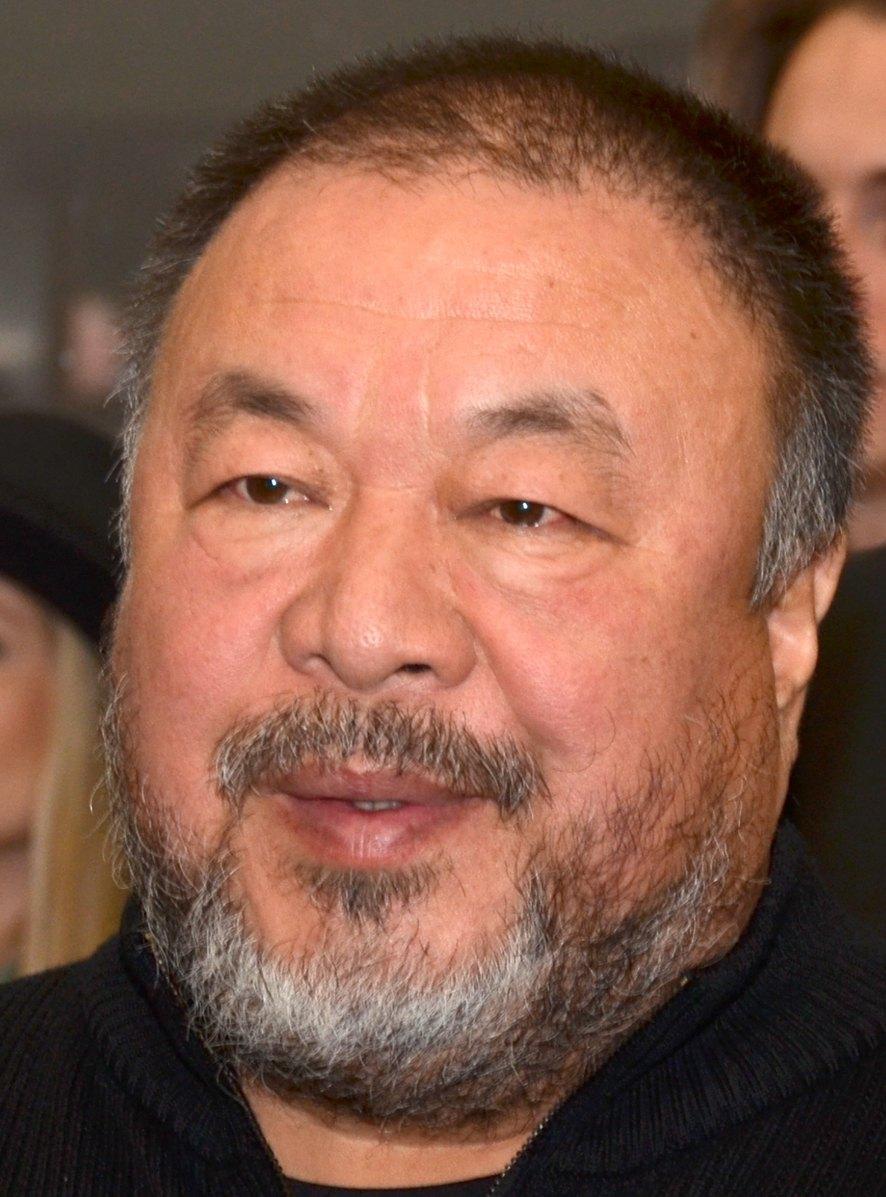
Ai Weiwei艾未未
Artist · Mainland ChinaCHR-381769
Ai Weiwei is an artist who investigated the collapse of schools in the 2008 Sichuan earthquake and criticized the government. In April 2011 he was arrested at Beijing Capital Airport for what the authorities called economic crimes and held for 81 days without charge.
A travel ban continued until his passport was returned ·
Events on the same issues
Persecution
China extends internet censorship beyond its borders to foreign platforms and companies
The New York Times reported that China, which has long censored what people read and say online inside its borders through the Great Firewall, is increasingly monitoring what people and companies say about it worldwide. According to the Times, Beijing presses foreign companies such as Google and Facebook to take down content. Citing Google's figures, the Times reported that Beijing asked Google to remove 2,290 items in the first half of 2017, more than triple the second half of 2016. It also reported that Zhang Guanghong, a human rights activist, was detained in 2017 after sharing an article critical of President Xi on WhatsApp; his lawyer said police showed him printouts of what he had shared in the group. The Times called it one of the earliest known cases of Chinese authorities using conversations on a foreign chat app as evidence.
Persecution
Prisoners of conscience denied medical care, with deaths soon after release, Bitter Winter reports
Bitter Winter reported on 6 October 2019 that dissidents and religious believers in Chinese prisons are denied medical care, and that seriously ill prisoners are forced to do physical labour. It cites the rights activist Cao Shunli, whose relatives repeatedly asked for medical parole, granted only after she fell into a coma, and who died days after reaching hospital; Liu Xiaobo, diagnosed with late-stage liver cancer in prison, who died one month after medical parole; and the writer Yang Tongyan, whose lawyer repeatedly applied for parole, granted three months before his death. It says Huang Qi and Yao Wentian, still imprisoned, are seriously ill and their families' applications have failed. It also describes Church of Almighty God members, one forced to work 12 hours a day with cirrhosis, and says some people suspect that delayed release is a way of killing prisoners of conscience.
Persecution
Mainland internet users penalized for bypassing the Great Firewall and posting on foreign platforms in 2019–2020
Bitter Winter reported that mainland Chinese internet users are punished for browsing foreign websites or using foreign social media, and that posting criticism of the government on foreign platforms can bring prison sentences. On 19 May 2020 the Ankang Public Security Bureau in Shaanxi announced that a man surnamed Yang was warned and fined 500 yuan for using "wall-climbing" software; after internet users asked why officials such as Global Times editor Hu Xijin were not punished, the notice was deleted. In February two men in Henan were detained for browsing foreign websites; one told Bitter Winter he was fined 500 yuan and wrote a repentance letter. Citing court judgments, Bitter Winter reports that in November 2019 a court in Zhongshan, Guangdong, sentenced Wang Beiyuan to one year for "defamation", finding that some of the more than 2,000 tweets he posted were harmful.
Reports on similar issues
Source record · Freedom House
China: Freedom in the World 2021 Country Report
Freedom House's Freedom in the World 2021 country report on China covers events in 2020. It gives China a total score of 9 out of 100 (down from 10 the year before), with Political Rights at -2 out of 40 and Civil Liberties at 11 out of 60, and the status Not Free. The regime has become increasingly repressive, the CCP is tightening control over the state bureaucracy, media, religion, universities and civil society, and COVID-19 was used to speed up surveillance.
Source record · Human Rights Watch
World Report 2021: China
Human Rights Watch's China chapter of World Report 2021 covers events of 2020. The report finds that the Chinese government's authoritarianism was on full display as it handled the Covid-19 outbreak, Beijing imposed the National Security Law on Hong Kong on 30 June, and Turkic Muslims in Xinjiang continued to face arbitrary detention, forced labor and mass surveillance, controls on Tibet, religion, the internet and rights defenders tightened, and international concern grew.
Source record · Freedom House
China: Freedom in the World 2022 Country Report
Freedom House's Freedom in the World 2022 country report on China covers events in 2021. It gives China a total score of 9 out of 100 (unchanged from the previous year), with Political Rights at -2 out of 40 and Civil Liberties at 11 out of 60, and the status Not Free. The regime has become increasingly repressive, the CCP keeps tightening control, and the report says new evidence showed that top leaders were directly involved in policies against Uyghurs and other minorities.