
Summary
Robert Lloyd Schellenberg, a Canadian, was detained in China on drug charges in December 2014 and sentenced to 15 years in prison in November 2018. After Canada arrested a Huawei executive at the request of the United States, a court in Dalian retried him in a one-day hearing in January 2019 and sentenced him to death, Al Jazeera reported. Prime Minister Justin Trudeau said China had chosen to apply the death penalty "arbitrarily", and according to AFP, Amnesty International called the one-day retrial "a flagrant violation of international law"; China denied any political link. In February 2026 the Supreme People's Court overturned the death sentence and sent the case back for retrial.
Timeline
Supreme People's Court overturns the death sentence
AFP reported that a Canadian official said China's highest court had overturned the death sentence; his lawyer Zhang Dongshuo said the case would be retried by the Liaoning High People's Court. The ruling followed Prime Minister Mark Carney's visit to Beijing in January 2026. Global Affairs Canada said it would continue to provide consular services to him and his family.
AFP (via France 24)
China overturns death sentence for Canadian in drug case
Open original source (opens in a new tab)Appeal rejected and death sentence upheld
AP reported that the Higher People's Court of Liaoning Province rejected his appeal and sent the case to the Supreme People's Court for review. Canada's ambassador Dominic Barton condemned the verdict, called the penalty "cruel and inhumane" and said, "I don't think it's a coincidence these are happening right now while events are going on in Vancouver."
Euronews (with AP)
Chinese court upholds death sentence for Canadian drug convict
Open original source (opens in a new tab)Sentenced to death after a one-day retrial
Al Jazeera reported that an appeals court had agreed with prosecutors that the 15-year term was too lenient and ordered a retrial with four days' notice. At the Dalian court he declared his innocence, saying "I am not a drug smuggler. I came to China as a tourist." The court said he had played a "key part" in an international drug syndicate. Trudeau said China had chosen to "arbitrarily" apply the death penalty, and China's foreign ministry rejected accusations of politicising legal issues.
Al Jazeera English
Chinese court sentences Canadian to death for drug smuggling
Open original source (opens in a new tab)Sentenced to 15 years in prison
Reuters reported that a court in Dalian sentenced him to 15 years in prison. He appealed, and at the appeal hearing prosecutors argued that the term was too light; on 29 December 2018 the appeals court ordered a retrial.
Reuters (via Yahoo News)
China court orders retrial for Canadian jailed for drug smuggling
Open original source (opens in a new tab)Detained on drug charges
Al Jazeera English
Chinese court sentences Canadian to death for drug smuggling
Open original source (opens in a new tab)
Sources
This page consolidates publicly available external sources. Links open the original publication.
External source
Al Jazeera English
Chinese court sentences Canadian to death for drug smuggling
Open original source (opens in a new tab)External source
Euronews (with AP)
Chinese court upholds death sentence for Canadian drug convict
Open original source (opens in a new tab)External source
AFP (via France 24)
China overturns death sentence for Canadian in drug case
Open original source (opens in a new tab)External source
Reuters (via Yahoo News)
China court orders retrial for Canadian jailed for drug smuggling
Open original source (opens in a new tab)Cases on similar issues
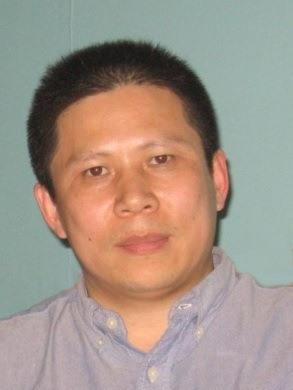
December 26 citizens「12·26」公民案
Citizen activists · Mainland ChinaCHR-109549
On 26 December 2019, authorities began taking people away from a private gathering in Xiamen. Legal advocate Xu Zhiyong, lawyers Ding Jiaxi and Chang Weiping, and others had met to talk about public affairs. More than 20 citizens and lawyers were disappeared, summoned, or detained. Many were accused of inciting subversion or picking quarrels.
Detentions and prosecutions following the December 2019 gathering ·
Abdullajan AbdulmennanAbdullajan Abdulmennan
Young Uyghur man from Yarkand county · Mainland ChinaCHR-564898
Abdullajan Abdulmennan, 21, was jailed for 11 months in Pingxiang prison in Guangxi after Vietnam returned him to China for travelling illegally, his father told RFA in October 2014. The father said Chinese police told the family that his son had died in prison with about two months of the sentence left, and said he could not believe his son died of illness.
· Radio Free Asia
Abduqeyum AblimitAbduqeyum Ablimit
Student contributor · Mainland ChinaCHR-362326
Abduqeyum Ablimit, a Uyghur student, contributed to the Xinjiang news website Uyghurbiz. CPJ says he was sentenced in 2014 to three years and six months for separatism and jailed in Urumqi. CPJ could not determine whether he was released on schedule in 2017, and as of late 2024 could not determine his health or whereabouts.
Date not established · Committee to Protect Journalists
Events on the same issues
Persecution
Authorities detain nearly 30 Zion Church members including founder Ezra Jin Mingri
Human Rights Watch reported that on 10-11 October 2025 Chinese authorities arrested nearly 30 pastors, preachers and members of the unofficial Zion Protestant Church in seven cities, including Beijing, Shanghai and Zhejiang. Among them was the church's pastor and founder, Ezra Jin Mingri, 56, in Beihai, Guangxi; he was arrested for "illegal use of information networks", which carries up to three years in prison. According to a statement by family members cited by HRW, Jin and seven other pastors were held in Beihai City No. 2 Detention Center, and at least five of those detained had reportedly been released. NPR reported that church spokesperson Sean Long said more than 30 pastors and staff were arrested or unreachable, and that China's Foreign Ministry spokesman Lin Jian said the government manages religious affairs in accordance with the law.
Persecution
Mainland internet users penalized for bypassing the Great Firewall and posting on foreign platforms in 2019–2020
Bitter Winter reported that mainland Chinese internet users are punished for browsing foreign websites or using foreign social media, and that posting criticism of the government on foreign platforms can bring prison sentences. On 19 May 2020 the Ankang Public Security Bureau in Shaanxi announced that a man surnamed Yang was warned and fined 500 yuan for using "wall-climbing" software; after internet users asked why officials such as Global Times editor Hu Xijin were not punished, the notice was deleted. In February two men in Henan were detained for browsing foreign websites; one told Bitter Winter he was fined 500 yuan and wrote a repentance letter. Citing court judgments, Bitter Winter reports that in November 2019 a court in Zhongshan, Guangdong, sentenced Wang Beiyuan to one year for "defamation", finding that some of the more than 2,000 tweets he posted were harmful.
Persecution
Mainland authorities question relatives of Hong Kong students and penalize posts and travel linked to the Hong Kong protests
Bitter Winter reported that mainland authorities were investigating people with connections to Hong Kong after the 2019 protests. In November 2019 a woman in Inner Mongolia whose son was studying in Hong Kong was repeatedly questioned by police about his views on the anti-extradition movement and made to sign a pledge that he would not take part in protests; police warned that his remarks would leave a "lifelong stain" and affect relatives on the mainland. A Jining, Shandong, resident said officials visited in November 2019 to ask about a son working in Hong Kong and said all Shandong natives there were being counted. A Henan woman was investigated by police over an article she had forwarded three months earlier, and a friend who had sent it to her was detained for a week. A Jiangxi self-employed man said he and a friend were detained for 12 and 10 days for forwarding Hong Kong posts.
Reports on similar issues
Source record · Freedom House
China: Freedom in the World 2026 Country Report
Freedom House's Freedom in the World 2026 country report on China covers 2025. It rates China Not Free with a total score of 9 out of 100 (Political Rights -2 of 40, Civil Liberties 11 of 60). The CCP oversees a repressive authoritarian regime and civil society has been devastated by a multiyear crackdown. Key 2025 developments include the expulsion of General He Weidong and eight other generals from the CCP and the PLA in October, large Sichuan protests in August and a national digital ID system in July.
Source record · Reporters Without Borders (RSF)
Reporters Without Borders: 2026 World Press Freedom Index - China
RSF's China page in the 2026 World Press Freedom Index ranks China 178th of 180 countries with a score of 13.85, against 178th and 14.80 in 2025. It calls China the world's largest prison for journalists, with more than 100 currently detained, and says its regime conducts a campaign of repression against journalism and the right to information worldwide. The page says major media groups are state-owned, the Party's Propaganda Department sends all media daily editorial guidelines and censored topics, and journalists are accused of "espionage", "subversion" or "picking quarrels and provoking trouble".
Source record · U.S. Commission on International Religious Freedom (USCIRF)
USCIRF 2026 Annual Report - China
The USCIRF 2026 Annual Report, covering 2025, says China perpetuated particularly severe violations of religious freedom and recommends that the State Department redesignate it a "country of particular concern". It says authorities sought complete control over religion and pursued the "sinicization of religion" policy, that at least half a million Uyghurs and other Turkic Muslims remained imprisoned or interned in Xinjiang, that Tibetan Buddhist monasteries were cracked down on, and that Protestant leaders including pastors Yang Rongli and Ezra Jin were targeted.