
Summary
Tong Shidong, a retired Hunan University professor, was sentenced to ten years for subversion of state power for setting up a Hunan University committee of the China Democracy Party, Weiquanwang reported. In 2014 Weiquanwang reported that, at about 80, he was seeking retirement pay withheld from him as political persecution. He died in Changsha in March 2017, Weiquanwang reported.
Timeline
Died after a fall
Weiquanwang reported that Tong, who had long lived alone without care, fell near his Hunan University home on 2 March and was taken to Changsha No. 4 Hospital, where he died nearly 40 hours later at the age of 83.
Weiquanwang
China Democracy Party founding elder and Hunan University professor Tong Shidong dies suddenly; democracy activists mourn (photos)
Open original source (opens in a new tab)Taken to a police station for questioning
Weiquanwang reported that dozens of police and plainclothes officers broke up a dinner of Changsha activists and netizens, Tong among them, and took all twelve diners, including a six-year-old child, to Zuojiatang police station for questioning.
Weiquanwang
Hunan Changsha rights activists and netizens taken away by police for questioning over a dinner
Open original source (opens in a new tab)Pressed the university over his withheld pay
Weiquanwang reported that Tong, having learned that his personnel file had been transferred to the local sub-district office, went to the Hunan University community residents' committee to raise the matter; university staff acknowledged that the authorities had convened meetings with several parties about his case.
Weiquanwang
Eighty-year-old Tong Shidong defends his rights, protests Hunan University's persecution of a political prisoner
Open original source (opens in a new tab)Changsha netizens take up his case
Weiquanwang reported that after Tong's release the authorities took back his former home and gave him a room in a student dormitory, and later, after the dormitory caught fire, two old single-storey rooms on campus; the university paid him 1,000 yuan a month in living expenses, and several groups of Changsha netizens were preparing to hire lawyers to bring an administrative lawsuit against Hunan University.
Weiquanwang
Democracy Party member Tong Shidong persecuted by Hunan University; Changsha netizens launch a rights campaign
Open original source (opens in a new tab)Joined the founding of the China Democracy Party
Weiquanwang reported that Tong, then an associate professor at Hunan University, took part in setting up the China Democracy Party and led its Hunan University preparatory committee.
Weiquanwang
China Democracy Party founding elder and Hunan University professor Tong Shidong dies suddenly; democracy activists mourn (photos)
Open original source (opens in a new tab)
Sources
This page consolidates publicly available external sources. Links open the original publication.
External source
Weiquanwang
Eighty-year-old Tong Shidong defends his rights, protests Hunan University's persecution of a political prisoner
Open original source (opens in a new tab)External source
Weiquanwang
Hunan Changsha rights activists and netizens taken away by police for questioning over a dinner
Open original source (opens in a new tab)External source
Weiquanwang
China Democracy Party founding elder and Hunan University professor Tong Shidong dies suddenly; democracy activists mourn (photos)
Open original source (opens in a new tab)External source
Weiquanwang
Democracy Party member Tong Shidong persecuted by Hunan University; Changsha netizens launch a rights campaign
Open original source (opens in a new tab)Cases on similar issues
Abduqadir YapchanAbduqadir Yapchan
Muslim religious teacher · Mainland ChinaCHR-798947
Abduqadir Yapchan, a Uyghur religious teacher born in Kashgar, has lived in Turkey since 2002. Radio Free Asia reported that he spent 12 years in Chinese prisons across three separate jailings and that Beijing placed him on its first list of alleged terrorists in 2003. World Uyghur Congress president Rebiya Kadeer told RFA in 2016 that Turkey detained him at China's behest. In April 2021 a Turkish court rejected China's extradition request and Yapchan was released from the restrictions on him: his lawyer said he was free, and Hidayatullah Oguzkhan, president of the International Union of East Turkestan Organizations, said all restrictions had been lifted.
· Radio Free Asia
Ai Fen艾芬
Doctor, head of the emergency department at Wuhan Central Hospital · Mainland ChinaCHR-585519
Ai Fen is a doctor at Wuhan Central Hospital who, according to Chinese Human Rights Defenders, was among the first medical professionals to try to share information and sound the alarm about the new coronavirus. The group said authorities summoned her and Li Wenliang for questioning and sternly warned them to keep quiet, and that censors blocked a magazine interview with her in March 2020. In April 2025 RFA reported that her social media accounts had been shut down, a step a friend said had the support of "the relevant departments".
· Radio Free Asia
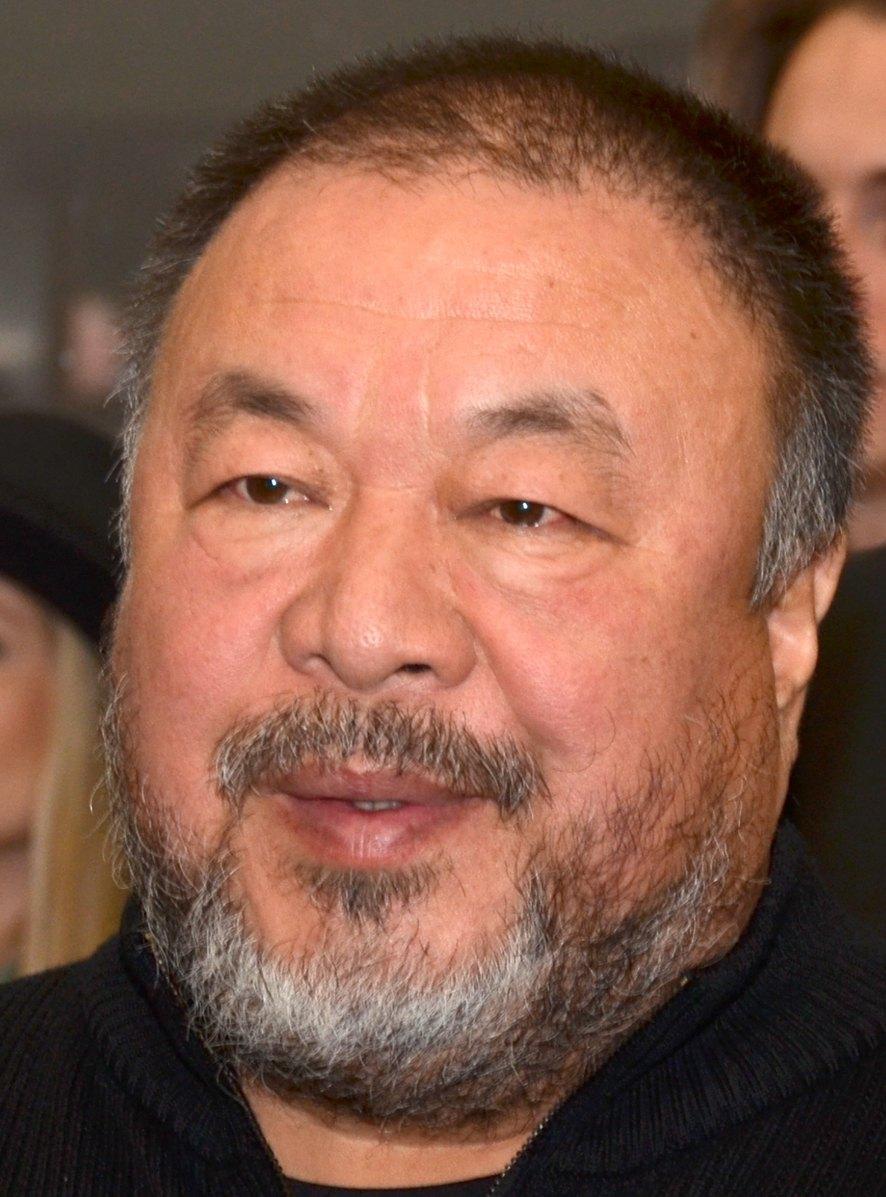
Ai Weiwei艾未未
Artist · Mainland ChinaCHR-381769
Ai Weiwei is an artist who investigated the collapse of schools in the 2008 Sichuan earthquake and criticized the government. In April 2011 he was arrested at Beijing Capital Airport for what the authorities called economic crimes and held for 81 days without charge.
A travel ban continued until his passport was returned ·
Events on the same issues
Persecution
China extends internet censorship beyond its borders to foreign platforms and companies
The New York Times reported that China, which has long censored what people read and say online inside its borders through the Great Firewall, is increasingly monitoring what people and companies say about it worldwide. According to the Times, Beijing presses foreign companies such as Google and Facebook to take down content. Citing Google's figures, the Times reported that Beijing asked Google to remove 2,290 items in the first half of 2017, more than triple the second half of 2016. It also reported that Zhang Guanghong, a human rights activist, was detained in 2017 after sharing an article critical of President Xi on WhatsApp; his lawyer said police showed him printouts of what he had shared in the group. The Times called it one of the earliest known cases of Chinese authorities using conversations on a foreign chat app as evidence.
Persecution
Prisoners of conscience denied medical care, with deaths soon after release, Bitter Winter reports
Bitter Winter reported on 6 October 2019 that dissidents and religious believers in Chinese prisons are denied medical care, and that seriously ill prisoners are forced to do physical labour. It cites the rights activist Cao Shunli, whose relatives repeatedly asked for medical parole, granted only after she fell into a coma, and who died days after reaching hospital; Liu Xiaobo, diagnosed with late-stage liver cancer in prison, who died one month after medical parole; and the writer Yang Tongyan, whose lawyer repeatedly applied for parole, granted three months before his death. It says Huang Qi and Yao Wentian, still imprisoned, are seriously ill and their families' applications have failed. It also describes Church of Almighty God members, one forced to work 12 hours a day with cirrhosis, and says some people suspect that delayed release is a way of killing prisoners of conscience.
Persecution
Mainland internet users penalized for bypassing the Great Firewall and posting on foreign platforms in 2019–2020
Bitter Winter reported that mainland Chinese internet users are punished for browsing foreign websites or using foreign social media, and that posting criticism of the government on foreign platforms can bring prison sentences. On 19 May 2020 the Ankang Public Security Bureau in Shaanxi announced that a man surnamed Yang was warned and fined 500 yuan for using "wall-climbing" software; after internet users asked why officials such as Global Times editor Hu Xijin were not punished, the notice was deleted. In February two men in Henan were detained for browsing foreign websites; one told Bitter Winter he was fined 500 yuan and wrote a repentance letter. Citing court judgments, Bitter Winter reports that in November 2019 a court in Zhongshan, Guangdong, sentenced Wang Beiyuan to one year for "defamation", finding that some of the more than 2,000 tweets he posted were harmful.
Reports on similar issues
Source record · Freedom House
China: Freedom in the World 2021 Country Report
Freedom House's Freedom in the World 2021 country report on China covers events in 2020. It gives China a total score of 9 out of 100 (down from 10 the year before), with Political Rights at -2 out of 40 and Civil Liberties at 11 out of 60, and the status Not Free. The regime has become increasingly repressive, the CCP is tightening control over the state bureaucracy, media, religion, universities and civil society, and COVID-19 was used to speed up surveillance.
Source record · Human Rights Watch
World Report 2021: China
Human Rights Watch's China chapter of World Report 2021 covers events of 2020. The report finds that the Chinese government's authoritarianism was on full display as it handled the Covid-19 outbreak, Beijing imposed the National Security Law on Hong Kong on 30 June, and Turkic Muslims in Xinjiang continued to face arbitrary detention, forced labor and mass surveillance, controls on Tibet, religion, the internet and rights defenders tightened, and international concern grew.
Source record · Freedom House
China: Freedom in the World 2022 Country Report
Freedom House's Freedom in the World 2022 country report on China covers events in 2021. It gives China a total score of 9 out of 100 (unchanged from the previous year), with Political Rights at -2 out of 40 and Civil Liberties at 11 out of 60, and the status Not Free. The regime has become increasingly repressive, the CCP keeps tightening control, and the report says new evidence showed that top leaders were directly involved in policies against Uyghurs and other minorities.