
Summary
Zhang Ruilian is a quarry owner from Zuocun town, Laizhou, in Shandong, who, according to Weiquanwang, petitioned in Beijing after the quarry area was damaged in 2009 and local police declined to open a case. Weiquanwang reported that Laizhou police held Zhang in administrative detention for petitioning in April and December 2011, and again in April and June 2012. Weiquanwang reported Zhang's release on 26 December 2011 and on 27 April 2012.
Timeline
Stopped at the petition office in Beijing; held 7 to 21 June
Weiquanwang reported that Zhang was one of six Laizhou petitioners stopped outside the State Bureau for Letters and Calls in Beijing on 6 June 2012. A local source told Weiquanwang that Laizhou police gave Zhang 15 days' administrative detention, from 7 to 21 June, for "illegal assembly".
Weiquanwang
Six Laizhou petitioners: five held for 15 days, one for 10 days
Open original source (opens in a new tab)Released after 15 days
Weiquanwang reported that Zhang ended 15 days of administrative detention on 27 April 2012 and returned home. According to Weiquanwang, the police penalty decision gave as the reason that on 21 January and 26 February 2012 Zhang and others had held banners outside the Laizhou city government without permission and had photos of the gatherings posted on Weiquanwang and Boxun.
Weiquanwang
Laizhou petitioners Zhang Ruilian and Yang Zhenting released (photo)
Open original source (opens in a new tab)Taken back from Beijing and held for 15 days
Weiquanwang reported that Beijing police and staff of Shandong's Beijing office stopped four Laizhou petitioners outside a hotel in Beijing at 6 a.m. on 12 April 2012 and took them back to Laizhou by 5 p.m. Zhang and Yang Zhenting were kept at the public-order brigade of the Laizhou public security bureau. Zhang's husband told Weiquanwang the next day that the two had been given 15 days' detention.
Weiquanwang
Laizhou petitioners Zhang Ruilian and Yang Zhenting held for 15 days
Open original source (opens in a new tab)Released
Weiquanwang reported that Jiang Shanzhu was released on 24 December and Zhang on 26 December 2011.
Weiquanwang
Laizhou petitioners Jiang Shanzhu and Zhang Ruilian, husband and wife, released (photo)
Open original source (opens in a new tab)Held in administrative detention with husband Jiang Shanzhu
Weiquanwang reported that Laizhou police held Zhang and Zhang's husband Jiang Shanzhu in administrative detention from 16 December 2011 on the same ground. Zhang's term was ten days and Jiang's eight.
Weiquanwang
Laizhou petitioners Jiang Shanzhu and Zhang Ruilian, husband and wife, released (photo)
Open original source (opens in a new tab)Held nine days for "abnormal petitioning"
Weiquanwang reported that Laizhou police held Zhang in administrative detention for nine days from 3 April 2011 for "abnormal petitioning".
Weiquanwang
Laizhou petitioners Jiang Shanzhu and Zhang Ruilian, husband and wife, released (photo)
Open original source (opens in a new tab)
Sources
This page consolidates publicly available external sources. Links open the original publication.
External source
Weiquanwang
Laizhou petitioners Jiang Shanzhu and Zhang Ruilian, husband and wife, released (photo)
Open original source (opens in a new tab)External source
Weiquanwang
Laizhou petitioners Zhang Ruilian and Yang Zhenting held for 15 days
Open original source (opens in a new tab)External source
Weiquanwang
Laizhou petitioners Zhang Ruilian and Yang Zhenting released (photo)
Open original source (opens in a new tab)External source
Weiquanwang
Six Laizhou petitioners: five held for 15 days, one for 10 days
Open original source (opens in a new tab)Relatives with profiles
husband
Jiang Shanzhu姜善珠
Quarry owner from Zhacun town, Laizhou, Shandong · Mainland ChinaCHR-468766
Jiang Shanzhu, born in 1960, runs a quarry in Zhacun town, Laizhou, Shandong province, and began petitioning in Beijing after local police declined to open a case over an attack on the quarry in 2009. Weiquanwang reported that Jiang and his wife, Zhang Ruilian, had already been detained for petitioning in December 2011. In July 2014 Laizhou officials seized Jiang at a petition office in Beijing; after hours of interrogation back in Laizhou, police issued a warning notice and released Jiang that night once a pledge to stop petitioning had been signed.
· Weiquanwang
Cases on similar issues
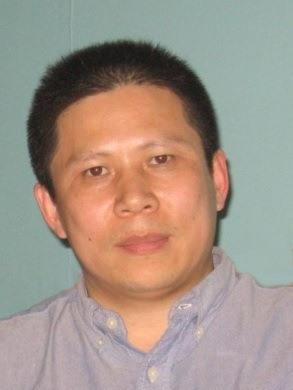
December 26 citizens「12·26」公民案
Citizen activists · Mainland ChinaCHR-109549
On 26 December 2019, authorities began taking people away from a private gathering in Xiamen. Legal advocate Xu Zhiyong, lawyers Ding Jiaxi and Chang Weiping, and others had met to talk about public affairs. More than 20 citizens and lawyers were disappeared, summoned, or detained. Many were accused of inciting subversion or picking quarrels.
Detentions and prosecutions following the December 2019 gathering ·
Abdullajan AbdulmennanAbdullajan Abdulmennan
Young Uyghur man from Yarkand county · Mainland ChinaCHR-564898
Abdullajan Abdulmennan, 21, was jailed for 11 months in Pingxiang prison in Guangxi after Vietnam returned him to China for travelling illegally, his father told RFA in October 2014. The father said Chinese police told the family that his son had died in prison with about two months of the sentence left, and said he could not believe his son died of illness.
· Radio Free Asia
Abduqeyum AblimitAbduqeyum Ablimit
Student contributor · Mainland ChinaCHR-362326
Abduqeyum Ablimit, a Uyghur student, contributed to the Xinjiang news website Uyghurbiz. CPJ says he was sentenced in 2014 to three years and six months for separatism and jailed in Urumqi. CPJ could not determine whether he was released on schedule in 2017, and as of late 2024 could not determine his health or whereabouts.
Date not established · Committee to Protect Journalists
Events on the same issues
Persecution
Prisoners of conscience denied medical care, with deaths soon after release, Bitter Winter reports
Bitter Winter reported on 6 October 2019 that dissidents and religious believers in Chinese prisons are denied medical care, and that seriously ill prisoners are forced to do physical labour. It cites the rights activist Cao Shunli, whose relatives repeatedly asked for medical parole, granted only after she fell into a coma, and who died days after reaching hospital; Liu Xiaobo, diagnosed with late-stage liver cancer in prison, who died one month after medical parole; and the writer Yang Tongyan, whose lawyer repeatedly applied for parole, granted three months before his death. It says Huang Qi and Yao Wentian, still imprisoned, are seriously ill and their families' applications have failed. It also describes Church of Almighty God members, one forced to work 12 hours a day with cirrhosis, and says some people suspect that delayed release is a way of killing prisoners of conscience.
Persecution
Mainland internet users penalized for bypassing the Great Firewall and posting on foreign platforms in 2019–2020
Bitter Winter reported that mainland Chinese internet users are punished for browsing foreign websites or using foreign social media, and that posting criticism of the government on foreign platforms can bring prison sentences. On 19 May 2020 the Ankang Public Security Bureau in Shaanxi announced that a man surnamed Yang was warned and fined 500 yuan for using "wall-climbing" software; after internet users asked why officials such as Global Times editor Hu Xijin were not punished, the notice was deleted. In February two men in Henan were detained for browsing foreign websites; one told Bitter Winter he was fined 500 yuan and wrote a repentance letter. Citing court judgments, Bitter Winter reports that in November 2019 a court in Zhongshan, Guangdong, sentenced Wang Beiyuan to one year for "defamation", finding that some of the more than 2,000 tweets he posted were harmful.
Persecution
Mainland authorities question relatives of Hong Kong students and penalize posts and travel linked to the Hong Kong protests
Bitter Winter reported that mainland authorities were investigating people with connections to Hong Kong after the 2019 protests. In November 2019 a woman in Inner Mongolia whose son was studying in Hong Kong was repeatedly questioned by police about his views on the anti-extradition movement and made to sign a pledge that he would not take part in protests; police warned that his remarks would leave a "lifelong stain" and affect relatives on the mainland. A Jining, Shandong, resident said officials visited in November 2019 to ask about a son working in Hong Kong and said all Shandong natives there were being counted. A Henan woman was investigated by police over an article she had forwarded three months earlier, and a friend who had sent it to her was detained for a week. A Jiangxi self-employed man said he and a friend were detained for 12 and 10 days for forwarding Hong Kong posts.
Reports on similar issues
Source record · Freedom House
China: Freedom in the World 2021 Country Report
Freedom House's Freedom in the World 2021 country report on China covers events in 2020. It gives China a total score of 9 out of 100 (down from 10 the year before), with Political Rights at -2 out of 40 and Civil Liberties at 11 out of 60, and the status Not Free. The regime has become increasingly repressive, the CCP is tightening control over the state bureaucracy, media, religion, universities and civil society, and COVID-19 was used to speed up surveillance.
Source record · Human Rights Watch
World Report 2021: China
Human Rights Watch's China chapter of World Report 2021 covers events of 2020. The report finds that the Chinese government's authoritarianism was on full display as it handled the Covid-19 outbreak, Beijing imposed the National Security Law on Hong Kong on 30 June, and Turkic Muslims in Xinjiang continued to face arbitrary detention, forced labor and mass surveillance, controls on Tibet, religion, the internet and rights defenders tightened, and international concern grew.
Source record · Freedom House
China: Freedom in the World 2022 Country Report
Freedom House's Freedom in the World 2022 country report on China covers events in 2021. It gives China a total score of 9 out of 100 (unchanged from the previous year), with Political Rights at -2 out of 40 and Civil Liberties at 11 out of 60, and the status Not Free. The regime has become increasingly repressive, the CCP keeps tightening control, and the report says new evidence showed that top leaders were directly involved in policies against Uyghurs and other minorities.