
Summary
Liu Yunyun is a Guangzhou rights activist. Weiquanwang reported that police seized Liu on 23 February 2013 after a banner protest against North Korea's nuclear test, and that Liu was held in the Haizhu district detention centre. Weiquanwang reported that Liu was one of nine protesters given administrative detention of seven to 15 days, and that Liu and five others sued over it.
Timeline
Power and internet cut at home
Weiquanwang reported that on the afternoon of 18 July 2013 the internet and electricity at Liu's home in Guangzhou were cut and four people removed the electricity meter, then accused Liu of stealing electricity. Weiquanwang said Liu, whose husband is American, told it that state security police had harassed Liu continually in order to drive Liu out of China.
Weiquanwang
Guangzhou rights activist Liu Yunyun harassed by state security, plans to camp at the US consulate
Open original source (opens in a new tab)Blockaded in her home for two days around June Fourth
Weiquanwang reported that on the June Fourth anniversary, state security officers came to Liu's door in Guangzhou's Haizhu district as she was about to go to a commemoration. Liu did not open the door, and the officers stayed outside for two days. Weiquanwang said the police confirmed to 110 that the people outside were police.
Weiquanwang
Guangzhou citizen Liu Yunyun blockaded in her home for two days over June Fourth
Open original source (opens in a new tab)Lawsuit filed against the detention
Weiquanwang reported that nine of the people seized on 23 February were given administrative detention of seven to 15 days, among them Liu, and that Liu and five of the others filed administrative suits at court by the 24 May 2013 deadline, saying they sued to show they had not submitted.
Weiquanwang
Guangzhou people detained over the anti-North Korea nuclear protest sue the authorities for improper enforcement
Open original source (opens in a new tab)Visited in detention by a lawyer
Weiquanwang reported that on 26 February 2013 the rights lawyer Tang Jingling and Tang's wife Wang Yanfang visited Liu in the detention centre and brought clothes and food.
Weiquanwang
Rights activists keep urging release of citizens detained in Guangzhou for protesting North Korea's nuclear test (photos)
Open original source (opens in a new tab)Seized after the anti-nuclear banner protest
Weiquanwang reported that on 23 February 2013 Liu and seven other Guangzhou democracy activists hung a banner protesting North Korea's nuclear test and were seized by police, and that several were beaten and detained. Liu was held in the Haizhu district detention centre. Weiquanwang said that when Liu had an asthma attack there, a guard said that Liu could be shut in until death without anyone knowing.
Weiquanwang
Rights activists keep urging release of citizens detained in Guangzhou for protesting North Korea's nuclear test (photos)
Open original source (opens in a new tab)
Sources
This page consolidates publicly available external sources. Links open the original publication.
External source
Weiquanwang
Rights activists keep urging release of citizens detained in Guangzhou for protesting North Korea's nuclear test (photos)
Open original source (opens in a new tab)External source
Weiquanwang
Guangzhou people detained over the anti-North Korea nuclear protest sue the authorities for improper enforcement
Open original source (opens in a new tab)External source
Weiquanwang
Guangzhou citizen Liu Yunyun blockaded in her home for two days over June Fourth
Open original source (opens in a new tab)External source
Weiquanwang
Guangzhou rights activist Liu Yunyun harassed by state security, plans to camp at the US consulate
Open original source (opens in a new tab)Cases on similar issues
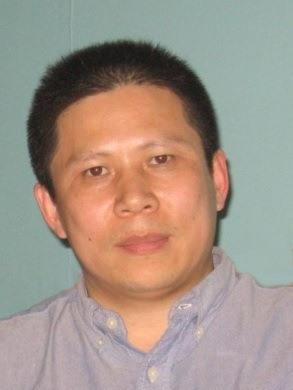
December 26 citizens「12·26」公民案
Citizen activists · Mainland ChinaCHR-109549
On 26 December 2019, authorities began taking people away from a private gathering in Xiamen. Legal advocate Xu Zhiyong, lawyers Ding Jiaxi and Chang Weiping, and others had met to talk about public affairs. More than 20 citizens and lawyers were disappeared, summoned, or detained. Many were accused of inciting subversion or picking quarrels.
Detentions and prosecutions following the December 2019 gathering ·
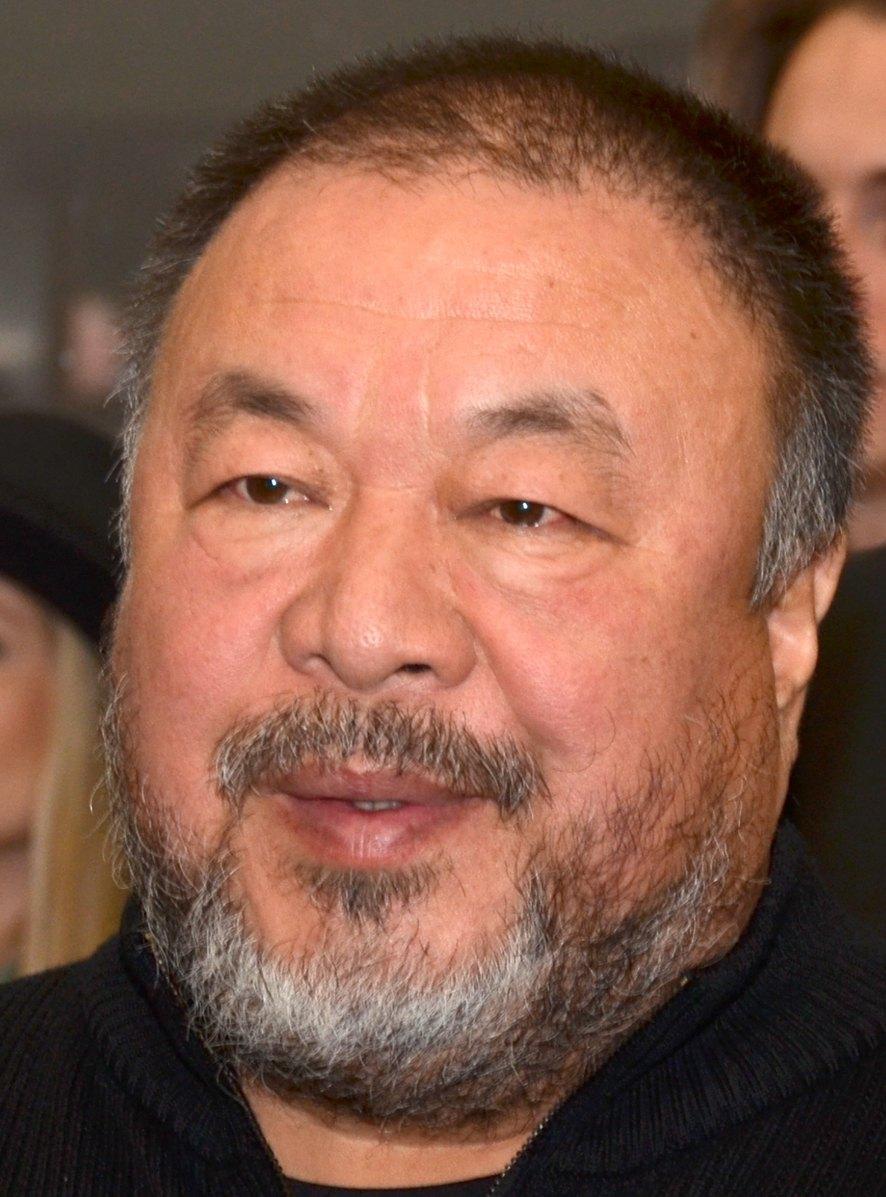
Ai Weiwei艾未未
Artist · Mainland ChinaCHR-381769
Ai Weiwei is an artist who investigated the collapse of schools in the 2008 Sichuan earthquake and criticized the government. In April 2011 he was arrested at Beijing Capital Airport for what the authorities called economic crimes and held for 81 days without charge.
A travel ban continued until his passport was returned ·
Bai Dongping白東平
Democracy activist in Beijing · Mainland ChinaCHR-813668
Bai Dongping is a Beijing democracy activist whom Weiquanwang describes as one of the founders of the 1989 Beijing Workers' Autonomous Federation. Weiquanwang reported that on the morning of 27 June 2013 police took Bai from home without showing a search or detention warrant.
Published · Weiquanwang
Events on the same issues
Persecution
Prisoners of conscience denied medical care, with deaths soon after release, Bitter Winter reports
Bitter Winter reported on 6 October 2019 that dissidents and religious believers in Chinese prisons are denied medical care, and that seriously ill prisoners are forced to do physical labour. It cites the rights activist Cao Shunli, whose relatives repeatedly asked for medical parole, granted only after she fell into a coma, and who died days after reaching hospital; Liu Xiaobo, diagnosed with late-stage liver cancer in prison, who died one month after medical parole; and the writer Yang Tongyan, whose lawyer repeatedly applied for parole, granted three months before his death. It says Huang Qi and Yao Wentian, still imprisoned, are seriously ill and their families' applications have failed. It also describes Church of Almighty God members, one forced to work 12 hours a day with cirrhosis, and says some people suspect that delayed release is a way of killing prisoners of conscience.
Persecution
Authorities detain nearly 30 Zion Church members including founder Ezra Jin Mingri
Human Rights Watch reported that on 10-11 October 2025 Chinese authorities arrested nearly 30 pastors, preachers and members of the unofficial Zion Protestant Church in seven cities, including Beijing, Shanghai and Zhejiang. Among them was the church's pastor and founder, Ezra Jin Mingri, 56, in Beihai, Guangxi; he was arrested for "illegal use of information networks", which carries up to three years in prison. According to a statement by family members cited by HRW, Jin and seven other pastors were held in Beihai City No. 2 Detention Center, and at least five of those detained had reportedly been released. NPR reported that church spokesperson Sean Long said more than 30 pastors and staff were arrested or unreachable, and that China's Foreign Ministry spokesman Lin Jian said the government manages religious affairs in accordance with the law.
Persecution
Troops fire on pro-democracy protesters in Beijing, 3–4 June 1989
Amnesty International says that on the night of 3 June 1989 heavily armed troops and hundreds of armoured vehicles moved into central Beijing to clear pro-democracy demonstrators from Tiananmen Square, firing live ammunition at unarmed crowds, and that hundreds, possibly thousands, of people were killed. Martial law had been declared on 20 May, after protests that began in April. An official report issued at the end of June 1989 said more than 200 people, including 36 college students, and several dozen soldiers died during the "riot"; Amnesty says the official toll is likely a serious under-reporting. Human Rights Watch says the government arrested thousands on "counter-revolution" and other charges, has never accepted responsibility, and has released no data on the dead; the Tiananmen Mothers have documented 202 people killed.
Reports on similar issues
Source record · Freedom House
China: Freedom in the World 2021 Country Report
Freedom House's Freedom in the World 2021 country report on China covers events in 2020. It gives China a total score of 9 out of 100 (down from 10 the year before), with Political Rights at -2 out of 40 and Civil Liberties at 11 out of 60, and the status Not Free. The regime has become increasingly repressive, the CCP is tightening control over the state bureaucracy, media, religion, universities and civil society, and COVID-19 was used to speed up surveillance.
Source record · Human Rights Watch
World Report 2021: China
Human Rights Watch's China chapter of World Report 2021 covers events of 2020. The report finds that the Chinese government's authoritarianism was on full display as it handled the Covid-19 outbreak, Beijing imposed the National Security Law on Hong Kong on 30 June, and Turkic Muslims in Xinjiang continued to face arbitrary detention, forced labor and mass surveillance, controls on Tibet, religion, the internet and rights defenders tightened, and international concern grew.
Source record · Freedom House
China: Freedom in the World 2022 Country Report
Freedom House's Freedom in the World 2022 country report on China covers events in 2021. It gives China a total score of 9 out of 100 (unchanged from the previous year), with Political Rights at -2 out of 40 and Civil Liberties at 11 out of 60, and the status Not Free. The regime has become increasingly repressive, the CCP keeps tightening control, and the report says new evidence showed that top leaders were directly involved in policies against Uyghurs and other minorities.