
Summary
Human Rights Watch says Wang Yu, a lawyer at Beijing Fengrui Law Firm, was formally arrested for subversion and was held at Tianjin No. 1 Detention Center as of 14 January 2016. Human Rights in China says she was taken in July 2015 on suspicion of inciting subversion. Human Rights in China also says bail was granted in July 2016 and that Tianjin police lifted those bail measures in July 2017.
Timeline
Bail measures lifted
Human Rights in China says the Tianjin Public Security Bureau lifted the bail measures that month.
Human Rights in China
Fifth anniversary of the 709 crackdown: updated chart
Open original source (opens in a new tab)Granted bail
Human Rights in China says bail pending trial was granted in July 2016.
Human Rights in China
Fifth anniversary of the 709 crackdown: updated chart
Open original source (opens in a new tab)Formally arrested
Human Rights Watch says she had been arrested for subversion and was at Tianjin No. 1 Detention Center. It says families of the eleven people received arrest notices dated 8 and 9 January 2016.
Human Rights Watch
China: Subversion Charges Target Lawyers
Open original source (opens in a new tab)Taken and placed under residential surveillance
Human Rights in China says she was taken that day and placed under residential surveillance at a designated location on suspicion of inciting subversion.
Human Rights in China
Fifth anniversary of the 709 crackdown: updated chart
Open original source (opens in a new tab)
Sources
This page consolidates publicly available external sources. Links open the original publication.
External source
Human Rights Watch
China: Subversion Charges Target Lawyers
Open original source (opens in a new tab)External source
Human Rights in China
Fifth anniversary of the 709 crackdown: updated chart
Open original source (opens in a new tab)Relatives with profiles
husband
Bao Longjun包龍軍
Legal activist · Mainland ChinaCHR-313854
Bao Longjun was detained during the July 2015 crackdown on lawyers. A Front Line Defenders statement says he and his son were stopped at Beijing Capital Airport, that he was arrested in January 2016 for inciting subversion, and that he was released on bail in August 2016. It says that in June 2023 unidentified people repeatedly blocked his door and kept him from leaving home.
· Front Line Defenders
son
Bao Zhuoxun包卓軒
son of lawyers Wang Yu and Bao Longjun · Mainland China · Inner MongoliaCHR-315219
Chinese Human Rights Defenders says Bao Zhuoxun, the 16-year-old son of Wang Yu and Bao Longjun, was seized with Tang Zhishun and Xing Qingxian in Mong La, Myanmar, on 6 October 2015, then returned to Inner Mongolia and placed under house arrest. A shorter entry in the same Chinese Human Rights Defenders list, which spells his name Bao Zhouxuan, says the house arrest began on 18 July, that his passport was confiscated, that he was prevented from studying abroad, and that he was questioned four times. Weiquanwang, which calls him Bao Mengmeng, reported that men seized him at Beijing Capital Airport on 9 July 2015 and that police warned him on 17 July not to expect to study abroad.
Published · Chinese Human Rights Defenders
People named in the same record
Cao Zhixin曹芷馨
Editor · Mainland ChinaCHR-973609
Cao Zhixin, an editor at Peking University Press, was held after a Beijing gathering that mourned people killed in an Urumqi apartment fire. Chinese Human Rights Defenders says police took her away again on 23 December 2022 and that she was formally arrested on 20 January 2023 for picking quarrels and provoking trouble. She was released on 19 April 2023.
· Chinese Human Rights Defenders
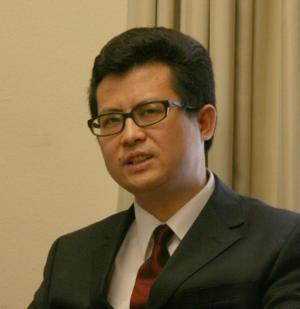
Guo Feixiong郭飛雄
Human rights defender · Mainland ChinaCHR-598374
Guo Feixiong, also known as Yang Maodong, was sentenced to six years on 28 November 2014 and left Yingde Prison on 7 August 2019 at the end of that term. His sister said he was detained again in December 2021. On 11 May 2023 the Guangzhou Intermediate People's Court sentenced him to eight years for incitement to subvert state power, his sister told Radio Free Asia.
· Radio Free Asia
Events on the same issues
Persecution
Prisoners of conscience denied medical care, with deaths soon after release, Bitter Winter reports
Bitter Winter reported on 6 October 2019 that dissidents and religious believers in Chinese prisons are denied medical care, and that seriously ill prisoners are forced to do physical labour. It cites the rights activist Cao Shunli, whose relatives repeatedly asked for medical parole, granted only after she fell into a coma, and who died days after reaching hospital; Liu Xiaobo, diagnosed with late-stage liver cancer in prison, who died one month after medical parole; and the writer Yang Tongyan, whose lawyer repeatedly applied for parole, granted three months before his death. It says Huang Qi and Yao Wentian, still imprisoned, are seriously ill and their families' applications have failed. It also describes Church of Almighty God members, one forced to work 12 hours a day with cirrhosis, and says some people suspect that delayed release is a way of killing prisoners of conscience.
Persecution
Authorities detain nearly 30 Zion Church members including founder Ezra Jin Mingri
Human Rights Watch reported that on 10-11 October 2025 Chinese authorities arrested nearly 30 pastors, preachers and members of the unofficial Zion Protestant Church in seven cities, including Beijing, Shanghai and Zhejiang. Among them was the church's pastor and founder, Ezra Jin Mingri, 56, in Beihai, Guangxi; he was arrested for "illegal use of information networks", which carries up to three years in prison. According to a statement by family members cited by HRW, Jin and seven other pastors were held in Beihai City No. 2 Detention Center, and at least five of those detained had reportedly been released. NPR reported that church spokesperson Sean Long said more than 30 pastors and staff were arrested or unreachable, and that China's Foreign Ministry spokesman Lin Jian said the government manages religious affairs in accordance with the law.
Persecution
Mainland internet users penalized for bypassing the Great Firewall and posting on foreign platforms in 2019–2020
Bitter Winter reported that mainland Chinese internet users are punished for browsing foreign websites or using foreign social media, and that posting criticism of the government on foreign platforms can bring prison sentences. On 19 May 2020 the Ankang Public Security Bureau in Shaanxi announced that a man surnamed Yang was warned and fined 500 yuan for using "wall-climbing" software; after internet users asked why officials such as Global Times editor Hu Xijin were not punished, the notice was deleted. In February two men in Henan were detained for browsing foreign websites; one told Bitter Winter he was fined 500 yuan and wrote a repentance letter. Citing court judgments, Bitter Winter reports that in November 2019 a court in Zhongshan, Guangdong, sentenced Wang Beiyuan to one year for "defamation", finding that some of the more than 2,000 tweets he posted were harmful.
Reports that name this person
Source record · Human Rights Watch
World Report 2024: China
Human Rights Watch's World Report 2024 chapter on China, covering events of 2023, says repression deepened across the country in the tenth year of Xi Jinping's rule. It reports a surge in Covid-19 deaths after the abrupt end of "zero Covid", one of the world's most stringent censorship regimes, continued crimes against humanity in Xinjiang, severe restrictions in Tibet, and Beijing's full control of Hong Kong under the National Security Law. It also records the revised Counter-Espionage Law and new pressure on foreign firms.
Reports on similar issues
Source record · Freedom House
China: Freedom in the World 2021 Country Report
Freedom House's Freedom in the World 2021 country report on China covers events in 2020. It gives China a total score of 9 out of 100 (down from 10 the year before), with Political Rights at -2 out of 40 and Civil Liberties at 11 out of 60, and the status Not Free. The regime has become increasingly repressive, the CCP is tightening control over the state bureaucracy, media, religion, universities and civil society, and COVID-19 was used to speed up surveillance.
Source record · Human Rights Watch
World Report 2021: China
Human Rights Watch's China chapter of World Report 2021 covers events of 2020. The report finds that the Chinese government's authoritarianism was on full display as it handled the Covid-19 outbreak, Beijing imposed the National Security Law on Hong Kong on 30 June, and Turkic Muslims in Xinjiang continued to face arbitrary detention, forced labor and mass surveillance, controls on Tibet, religion, the internet and rights defenders tightened, and international concern grew.